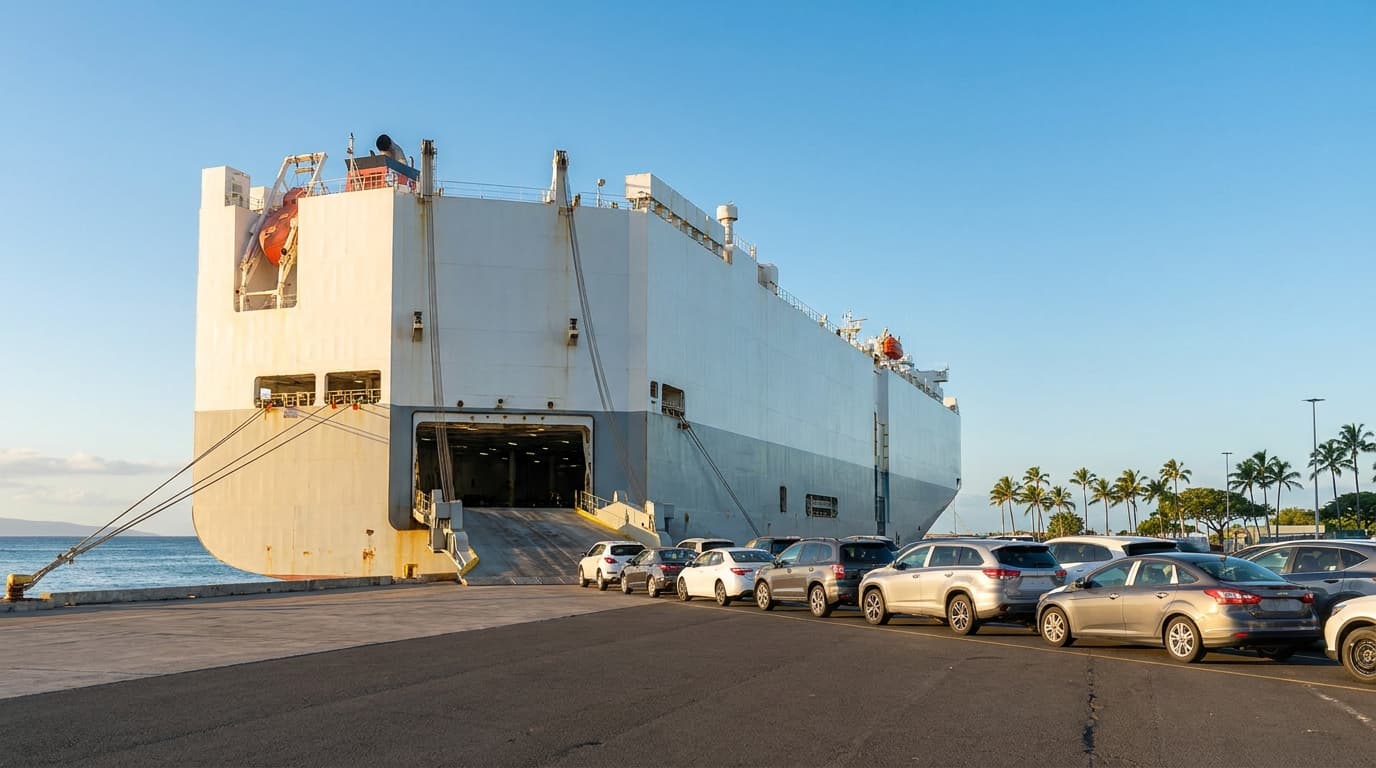
Car shipping insurance for the Hawaii crossing comes from multiple sources, and understanding which carrier covers which leg of the journey is the single most important thing to verify before booking. The ocean leg operates under Matson's bill of lading, while any overland transport on the mainland is covered by the dispatched motor carrier's own cargo policy. Neither source covers personal items, and neither pays for damage that existed before the car was loaded.
Most vehicle owners assume one blanket policy covers everything from driveway to destination. That assumption creates problems when something goes wrong and no one can figure out which carrier to file with. This guide breaks down what is actually covered, what is not, and how to document the car so a claim is provable if damage occurs.
How Car Shipping Insurance Works Across Two Separate Legs
When a vehicle ships from the mainland to Hawaii, it may travel two distinct segments: an overland leg (if using door-to-port service) and the ocean crossing itself. Each segment has its own carrier, its own insurance, and its own claims process. They do not overlap.
The ocean leg is handled by Matson, the only ocean carrier Car Shipping Hawaii uses. The vehicle moves under Matson's bill of lading, which sets the carrier's liability terms. Matson does not publish a per-vehicle coverage dollar figure on its car-shipping pages, so any broker or website claiming a specific number is either guessing or pulling from outdated information. The actual terms come with the booking confirmation.
The overland leg, if applicable, is covered by the dispatched motor carrier's cargo insurance. Car Shipping Hawaii dispatches only licensed, cargo-insured carriers and verifies each policy is in good standing before dispatch. Those carriers carry cargo coverage up to $100,000. Federal rules under 49 CFR 387.9 require a for-hire motor carrier of general freight to hold at least $750,000 in public liability coverage, but cargo coverage is set by the carrier's own policy. That is why verification matters.
What Car Shipping Insurance Does Not Cover
Personal items left in the car are never covered. This point is moot in practice because Matson refuses vehicles with visible personal items at the gate. Remove everything before drop-off: loose electronics, toll tags, extra batteries, fire extinguishers (federal rules forbid them in a shipped car), and anything that is not a factory-installed accessory or up to two child car seats.
Pre-existing damage is not covered either. A scratch that was on the fender before the car reached the port is the owner's scratch, not the carrier's liability. This is why documentation at drop-off is critical, and why a dirty car creates problems. If the inspection report cannot distinguish a new scratch from an old one, the claim fails.
"Camilo Jaime, owner of Car Shipping Hawaii, puts it plainly: 'I tell every customer the same thing. Wash the car, photograph every panel, and do not leave so much as a phone charger in the glovebox. The port inspector does a condition survey at the load port. If you cannot prove the damage is new, you cannot prove the carrier caused it. That is not a policy I made up. That is how cargo claims work.'"
One more gap: the time the car sits at the port waiting to be picked up. Port storage after the free days triggers fees, but more importantly, the owner should confirm with their own auto insurer whether the policy covers the vehicle while it is parked at a commercial port. Some policies have exclusions for vehicles not in the owner's possession.
Why Your Personal Auto Policy Still Matters
The carrier's liability covers damage caused during transit. It does not replace your own auto insurance. Owners should call their insurer before booking and ask two questions: Does my policy cover the car while it is in transit on an ocean vessel? Does my policy cover the car while it is parked at a commercial port?
Some policies do. Some do not. Some suspend coverage the moment the car leaves the owner's custody and resume it when the owner takes physical possession again. The only way to know is to ask, and the time to ask is before the car ships, not after damage appears. Keep the policy active through the entire transit window so the car is insured the moment you drive it off the port.
This matters for westbound shipments, but it matters even more for vehicles shipping from Hawaii back to the mainland. The eastbound process requires additional documents, and the car may sit at the mainland port for a day or two before pickup. During that window, the owner's policy is the backstop.
How to Document the Car So a Claim Is Provable
A claim without documentation is a claim that gets denied. Carriers do not pay based on the owner's memory. They pay based on written records and photographs with timestamps.
Wash the car before drop-off. A clean exterior lets the port inspector see every existing scratch, scuff, and dent. That inspection report is the baseline. If the car arrives dirty, the inspector may note "vehicle too dirty to inspect" or simply miss existing damage. Either way, the owner loses the ability to prove what was already there.
Photograph every panel, the roof, the wheels, and the odometer. Use a phone that embeds the date in the image metadata. Shoot the front, rear, driver side, passenger side, and each corner. Get close-ups of any existing damage so there is no ambiguity. Do the same thing at pickup, before driving away from the port.
At pickup, inspect the car thoroughly. If there is new damage, note it on the release paperwork at the port before leaving. Once the owner signs off and drives away, proving the damage happened during transit becomes much harder. Report any damage to Car Shipping Hawaii the same day. The company will identify which carrier handled the leg where the damage occurred and walk the owner through the correct claims process.
The drop-off day guide covers the full preparation checklist, but documentation is the piece that protects the insurance claim.
What Car Shipping Hawaii Does on Insurance Verification
Car Shipping Hawaii is a vehicle transportation broker with 18 years of experience. It arranges the ocean leg with Matson and the overland leg with licensed motor carriers. It is not a carrier itself and does not own vessels or trucks.
On insurance, the company's role is verification and coordination. Before dispatching any overland carrier for a door-to-port shipment, Car Shipping Hawaii confirms the carrier is licensed and that its cargo insurance policy is in good standing. The carriers it dispatches carry cargo coverage up to $100,000.
For the ocean leg, the liability terms come from Matson's bill of lading. Car Shipping Hawaii provides the booking documents that include those terms. If damage occurs, the company tells the owner which carrier to file with and what documentation to send. The claim itself goes to Matson or to the overland carrier, depending on where the damage happened.
Owners who want to understand the full process before booking can see the step-by-step breakdown on the site. The key point on insurance is that coverage exists, but the owner must document the car properly to make it usable.
Avoiding Common Insurance-Related Mistakes
One of the most frequent mistakes owners make is assuming that cargo insurance works like auto insurance, covering any damage regardless of cause. It does not. Cargo insurance covers damage caused by the carrier during transit. Mechanical failure, pre-existing rust, or a cracked windshield that was already there before loading is not a cargo claim.
Another mistake is leaving personal items in the car and then expecting coverage when they disappear. Matson's published vehicle preparation rules require removal of all personal belongings. The only items allowed are up to two child car seats and factory-installed accessories. A car that shows up with luggage in the back seat gets turned away at the port. If somehow it did ship, the items inside would not be covered.
A third mistake is not keeping a copy of the condition report. The port inspector creates one at load and another at discharge. Owners should request copies or photograph the paperwork. This is the official record, and it is the basis for any claim.
Frequently Asked Questions
Does Car Shipping Hawaii provide insurance for my vehicle? Car Shipping Hawaii arranges transport with carriers that carry their own cargo insurance. The ocean leg is covered under Matson's bill of lading terms, and the overland leg is covered by the dispatched motor carrier's policy. The company verifies that overland carriers are licensed and insured before dispatch.
Should I buy additional insurance for my car during shipping? Some owners choose to purchase supplemental coverage through third-party insurers. Whether this makes sense depends on the vehicle's value and the owner's risk tolerance. At minimum, owners should confirm their personal auto policy covers the car while in transit.
What happens if my car is damaged during shipping? Inspect the car at pickup before leaving the port. Note any new damage on the release paperwork, photograph it, and contact Car Shipping Hawaii the same day. The company will identify which carrier handled the leg where the damage occurred and provide the claims process for that carrier.
Are roof racks and aftermarket accessories covered? Matson's preparation rules require removal of non-factory roof racks, bike racks, and roof cargo carriers. If an accessory is left on and gets damaged, it may not be covered. Factory-installed accessories that remain attached are noted on the condition survey.
How long do I have to file a damage claim? Timelines vary by carrier. The critical step is documenting the damage at pickup and reporting it the same day. Waiting days or weeks makes it harder to prove the damage happened during transit.
To verify coverage details for a specific route and service, get a free instant quote at carshippinghawaii.com. The booking confirmation includes the liability terms for the ocean leg, and Car Shipping Hawaii's team can answer questions about overland carrier coverage before the car ships.
About Car Shipping Hawaii: Car Shipping Hawaii is a vehicle transportation broker with 18 years of experience, arranging door-to-port and port-to-port vehicle shipping between the US mainland and the Hawaiian Islands. Instant online quotes available at carshippinghawaii.com.