The Budget-Friendly Choice for Relocating
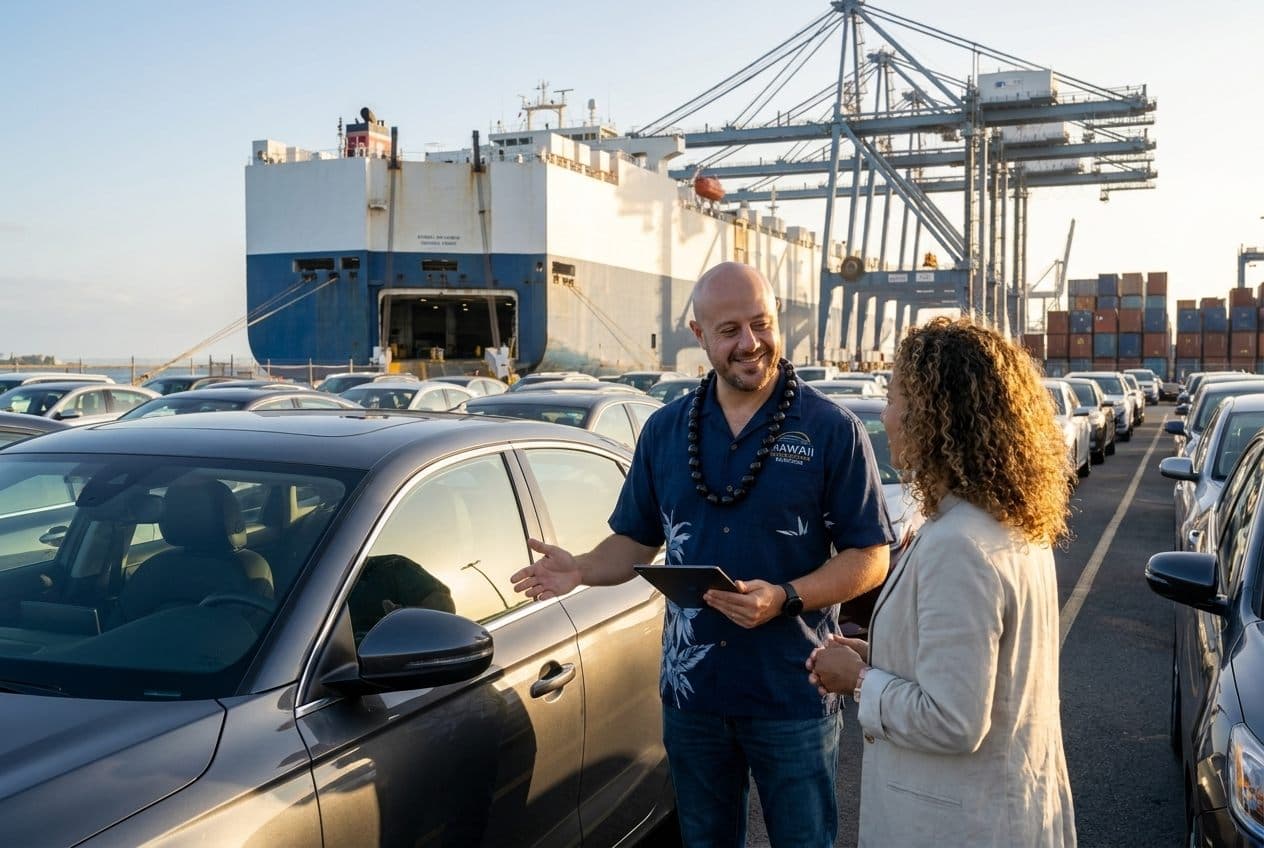
Port-to-Port shipping is the most cost-effective auto transport method because it eliminates the cost of land trucking. If you live near a major West Coast gateway (or are willing to drive your car to the Port), you drop it off directly at Long Beach Port or Oakland Port.
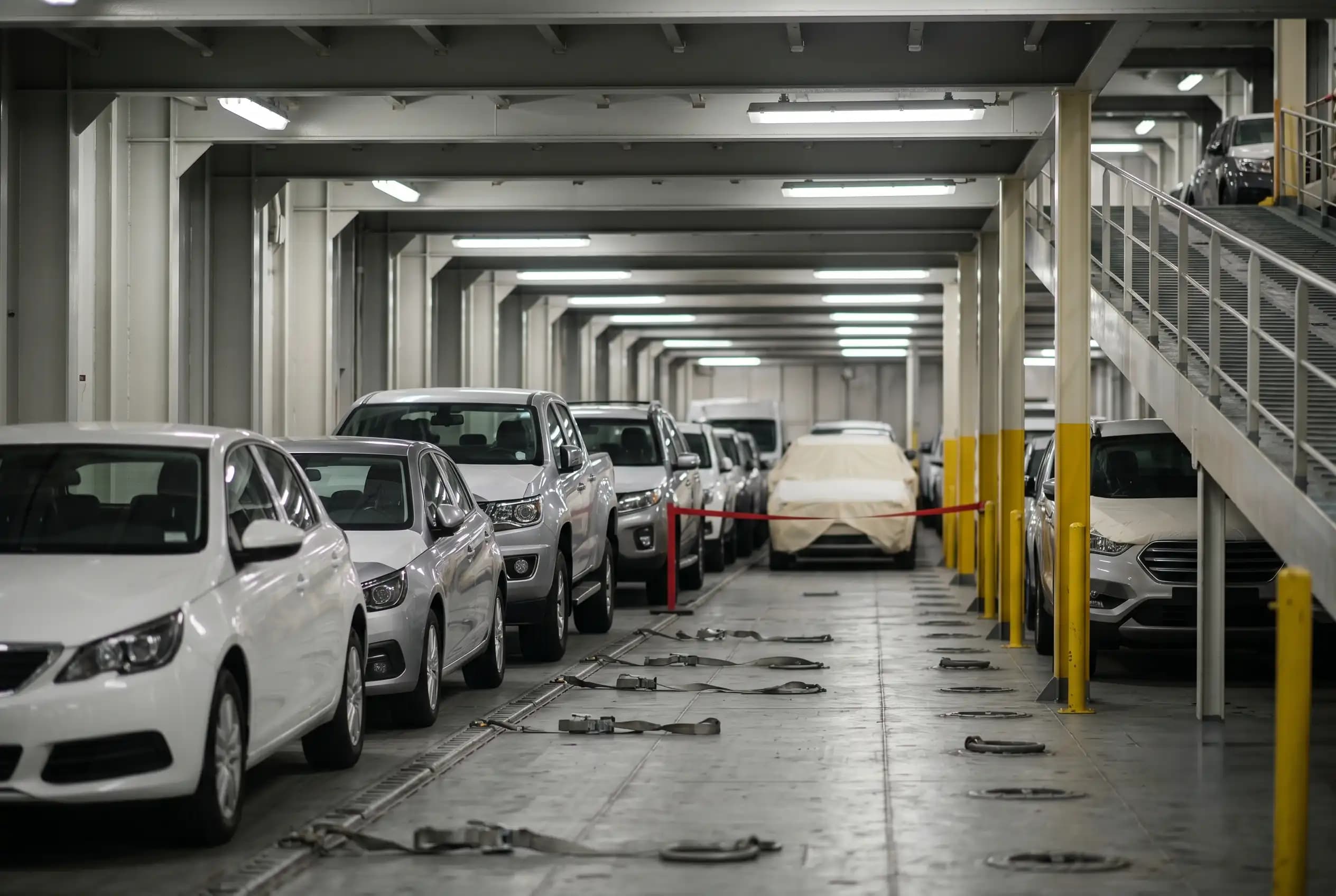
Once shipped, the vehicle travels securely on enclosed Roll-on/Roll-off (RoRo) decks. Upon port arrival, you simply clear the USDA biosecurity inspection and collect your vehicle in Honolulu.
Matson Rate Integrity
We book your ocean freight space directly with Matson under secured block contracts, ensuring you get transparent pricing with no hidden broker markups.
USDA Clearance Support
All vehicles arriving in Hawaii undergo strict agricultural checks. We prepare you with a precise preparation checklist to avoid port rejections.
Real-Time Matson Tracking
Get a direct Matson booking number from day one. Track your vessel location across the Pacific as it approaches Oahu.
The Port-to-Port Journey
Our coordinators manage the paperwork. All you need to do is follow these four simple steps to get your car to Hawaii.
Reserve Your Sailing
Secure your spot on a Matson sailing with a $150 deposit. We issue your booking number and confirm the route-specific receiving deadline and port hours.
Prepare & Drop Off at Port
Ensure fuel is above ⅛ tank and below ¼ tank and the cabin is empty. Drive the vehicle to your assigned port (Long Beach or Oakland) for gate inspection.
Pacific Ocean Crossing
Matson carries your vehicle to Honolulu. We confirm the handling for the booked vessel and show its current arrival and vehicle-availability estimates separately.
Pick Up in Honolulu
The vehicle arrives, is unloaded, and passes USDA biosecurity inspection. Pick up your car at Honolulu Port on Sand Island within 1–2 days.
West Coast Departure Ports
We route your vehicle through the closest Port to minimize your drive. Both Ports use identical Matson RoRo ocean equipment.
Long Beach Port
Routes South, East & Midwest StatesServing vehicles originating from Southern California, Southwest, South, Midwest, and East Coast states. Features a high height clearance, accommodating larger trucks.
Address: 1320 Pier C St, Long Beach, CA 90813
Hours: Mon–Fri, 8:00–11:30 AM and 1:00–4:00 PM
Height Limit: 7 feet 0 inches max height
Oakland Port
Routes West & Pacific NW StatesBest for Northern California, Oregon, Washington, Idaho, and Montana. Features a slightly shorter sea crossing, typically cutting transit times by 1 to 2 days compared to Long Beach.
Address: 1195 Middle Harbor Rd, Oakland, CA 94607
Hours: Mon–Fri, 8:00–11:30 AM and 1:00–4:00 PM
Height Limit: 76 inches (6'4") max height
Starting at $1,680 All-Inclusive
Our port-to-port rate includes all ocean charges. No hidden surprises.
$150 Booking Deposit
Applied directly to your total shipping balance — never an extra fee.
Need Door Pickup Instead?
If driving your vehicle to the Port is not convenient, we can coordinate a professional carrier to pick up your car directly from your driveway.
Port-to-Port FAQ
What do I need to bring to the Matson Port?
You must bring the vehicle, the Matson booking number (provided by our team once deposit is cleared), a valid government-issued photo ID, and the vehicle registration or title. If the vehicle is financed or leased, you must also present a written authorization letter from the lienholder allowing ocean transport.
Do I need a scheduled appointment to drop off my vehicle?
No. Matson Ports accept drop-off any weekday during posted gate hours — no appointment needed. Just arrive before your cutoff, which is typically 5 days prior to sailing in Long Beach and 7 days in Oakland.
What is the fuel requirement for ocean transit?
For safety regulations on ocean freight vessels, your vehicle's fuel level must be above one-eighth (1/8) tank and below one-quarter (1/4) tank.
Can I leave personal belongings inside the vehicle?
No. Matson has a strict zero-personal-items policy. The vehicle must be completely empty of all personal effects. Only child safety seats, jumper cables, and the spare tire/jack are permitted. All compartments (glove box, console, trunk) will be inspected at the gate.
Can I ship non-running vehicles or electric vehicles port-to-port?
We only ship running vehicles on our standard routes. The vehicle must steer, roll, and brake under its own power. Furthermore, we do not ship electric vehicles (EVs) or plug-in hybrids (PHEVs) on these standard decks due to carrier safety rules.