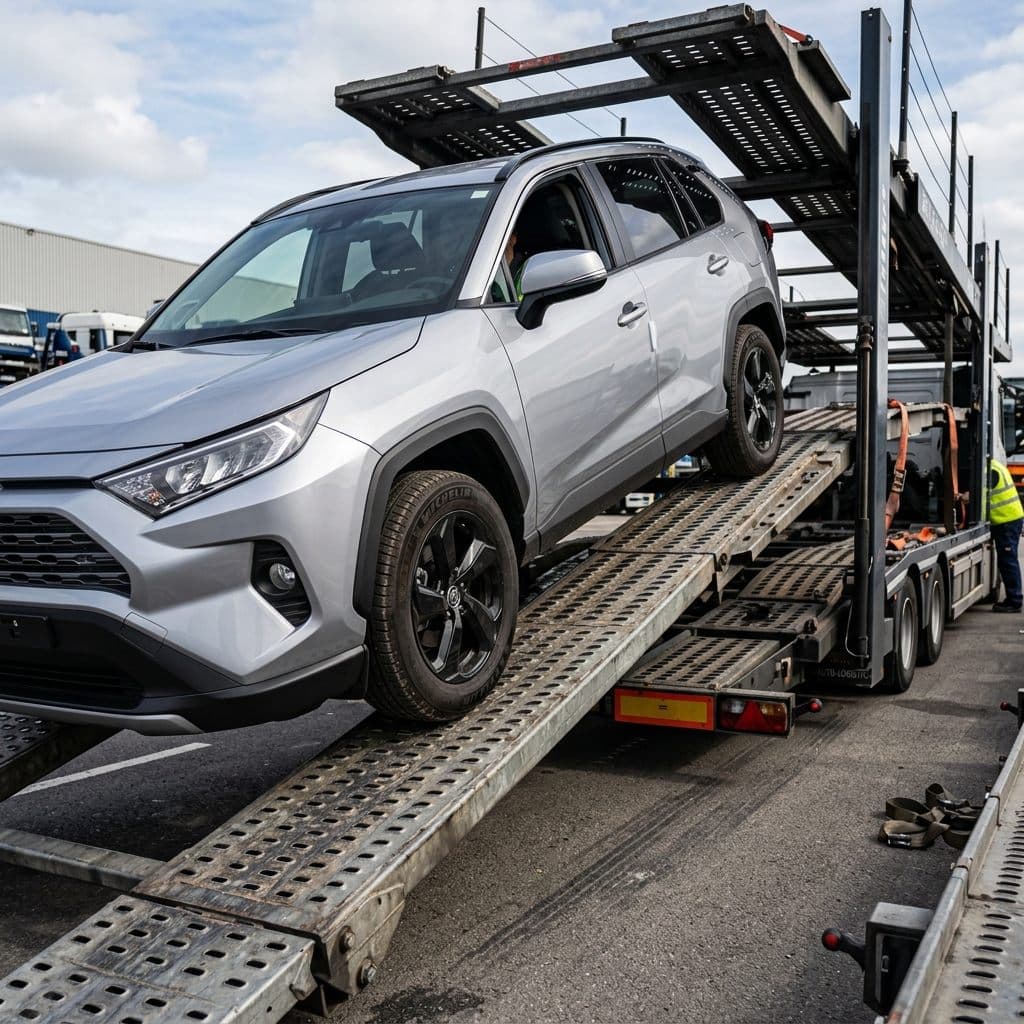
To prepare your car for shipping to Hawaii, you need to complete four things before you reach the port: fuel the tank to between 1/8 and 1/4 full, remove every personal item from the vehicle, wash the car inside and out (including the undercarriage), and document the vehicle's condition with dated photos. The process at the port itself takes about 20 minutes if you arrive ready, but showing up unprepared can mean getting turned away and missing your sailing.
Drop-off day is when all the prep work either pays off or falls apart. The steps below cover exactly what Matson requires, what happens at the gate, and what to expect after your car sails.
What Matson Requires Before You Prepare Your Car for Shipping to Hawaii
Matson is the ocean carrier for all shipments Car Shipping Hawaii arranges, and their published vehicle preparation rules are non-negotiable. A car that fails inspection at the port doesn't ship.
Fuel level matters more than most people realize. Matson requires between 1/8 and 1/4 of a tank. Never fill above 1/4. An empty tank is also a problem: the car must move under its own power at both the origin and destination ports. If you're driving to Long Beach Port or Oakland Port, calculate how much fuel you'll burn getting there and adjust accordingly.
The vehicle must be mechanically sound. Any check-engine, airbag, or tire warning light will get your car rejected. The emergency brake must work. Ground clearance needs to be at least 6 inches. Cracked or damaged windshield glass triggers a case-by-case review, and Matson can refuse the vehicle. If your car has any of these issues, address them before drop-off day, not at the gate.
"I've seen people drive two hours to the port only to get turned away for a check-engine light they thought didn't matter," says Camilo Jaime, owner of Car Shipping Hawaii. "That light means the car doesn't ship. Fix it first, even if you're sure it's just a sensor."
Cleaning Standards and Agricultural Inspection
Hawaii's agricultural inspection applies to every vehicle entering the state, and it's stricter than most people expect. The USDA inspects for soil, plant material, seeds, and insects. Matson won't accept a dirty vehicle because the condition survey at the load port requires a clean exterior to document scratches, dents, and paint condition accurately.
Wash the exterior thoroughly. Then wash it again underneath. Wheel wells and undercarriage areas collect mud and debris that can harbor seeds or insects. A vehicle that fails the agricultural inspection at the Hawaii port won't be released until it's cleaned at the owner's expense and re-inspected. That delay adds days to your timeline.
The interior needs to be vacuumed and dry. Remove floor mats and shake them out. Check under seats, in door pockets, and in the trunk. Any dirt, grass, or organic debris can flag the inspection. The time you spend cleaning before drop-off is far less than the time you'd lose dealing with a failed inspection in Honolulu.
Removing Personal Items: What Stays, What Goes
Matson's rule is straightforward: remove all personal belongings. The only exceptions are up to two child car seats and accessories the manufacturer installed.
Everything else must come out. This includes: • Aftermarket electronics that aren't bolted in (dash cams, GPS units, phone mounts) • Paperwork, registration cards, insurance documents in the glove box • Toll tags and parking passes • Loose change, sunglasses, phone chargers • Anything in the trunk, including spare emergency kits • Fire extinguishers (federal rules prohibit them in a shipped vehicle) • Car covers and any non-factory roof racks, bike racks, or cargo carriers • Any ignition interlock device
A vehicle with visible personal items gets rejected at the gate. Port staff won't wait while you clean it out, and they won't store your belongings for you. The car simply doesn't ship that day.
Disable your alarm system before drop-off. Port workers need to move the vehicle, and an alarm that triggers repeatedly creates problems. Bring only one key on a single ring. No heavy keychains, no extra fobs, no house keys attached.
For a fuller breakdown of common oversights, including ones that catch even experienced shippers, the guide on mistakes people make when shipping a car to Hawaii covers the most frequent issues.
Documenting Your Vehicle's Condition
Take dated photos before you leave for the port. This is the single most important thing you can do to protect yourself.
Photograph every panel: front, rear, both sides, the hood, the roof, and the trunk. Get close-ups of any existing scratches, dents, or chips. Photograph each wheel and tire. Capture the windshield and all windows from an angle that shows the glass condition. Take a photo of the odometer with the date visible on your phone's camera settings.
This documentation establishes the vehicle's condition at the moment you handed it over. If damage occurs during transit, your photos are evidence. Without them, proving that a scratch wasn't there before becomes nearly impossible.
At the port, you'll sign an inspection report. Read it before signing. The report notes the vehicle's condition as the port sees it. If something looks wrong or incomplete, say so before you sign. Once you sign, the document becomes the official record.
What Happens at the Port Gate
Arrive with time to spare. The port has a sailing cutoff, and if you miss it, your car waits for the next vessel. Depending on the sailing schedule, that could be several days.
At the gate, you'll need:
1. A government-issued photo ID matching the name on the booking 2. Your booking confirmation number
That's it for westbound (mainland to Hawaii) shipments. There are no title or registration documents required when shipping to Hawaii.
Eastbound shipments (Hawaii to mainland) have different requirements. The title (front and back) and current registration must be emailed to Car Shipping Hawaii at least 24 hours before drop-off, with the booking number in the subject line. If the vehicle is financed, a lienholder authorization letter from your bank replaces the title. At Hilo Port, you'll also need the current safety check certificate. The full document requirements page explains each scenario, including what to do when two names appear on the title or someone else is dropping off on your behalf.
At the gate, port staff will inspect the vehicle and complete the condition report. Read it, confirm it matches what you documented, then sign. The car moves to the staging area for loading.
If you're using door-to-port service instead of port-to-port, you hand the car to the overland carrier at your location rather than driving to the port yourself. Every preparation step above still applies. The overland carrier will document the vehicle's condition at pickup, and the car will be transported to Long Beach Port or Oakland Port for the ocean crossing.
What Happens After Your Car Sails
Once your car loads onto the vessel, it crosses on the next scheduled sailing. Matson's published transit from the West Coast to Hawaii ranges from 9 to 45 days total. That range includes 5 to 8 sailing days, 3 to 5 days for loading and unloading, and (for neighbor island destinations) 14 to 32 days of inter-island barge time. The specific timeline depends on the sailing schedule and your destination port.
You'll receive a text notification when the vessel arrives. You can also track your vehicle through the process.
At the destination port, the car clears agricultural inspection. This typically takes about one business day. Most customers pick up within one to two days of arrival. Honolulu Port is located at 1411 Sand Island Parkway. Kahului Port, Hilo Port, and Nawiliwili Port each have their own pickup procedures, confirmed at booking.
When you arrive to pick up the car, inspect it carefully before signing the release paperwork. Walk around the entire vehicle. Check every panel, the wheels, the glass. If you see any new damage that wasn't on the original inspection report, note it on the release document before you sign. This is your only opportunity to document issues on the official paperwork.
Report any damage to Car Shipping Hawaii the same day. The claim goes to the carrier responsible for the leg where the damage occurred. If you signed the release without noting the damage, proving when it happened becomes difficult. The car shipping insurance guide explains what coverage applies during each phase of transit and what your own policy may or may not cover.
Pick up promptly. Ports charge storage fees after their free days. These are port fees, not something Car Shipping Hawaii or Matson controls.
How Car Shipping Hawaii Coordinates the Process
Car Shipping Hawaii is a transportation broker, not a carrier. The company arranges the ocean leg with Matson and, for door-to-port customers, coordinates the overland transport with licensed, cargo-insured motor carriers.
Booking is handled online with an instant quote. Car Shipping Hawaii serves standard personal vehicles only: cars, SUVs, pickups, and vans. Motorcycles, RVs, trailers, boats, and oversized vehicles are not accepted. Battery-electric and plug-in hybrid vehicles cannot ship on the standard Matson service. Regular hybrids (non-plug-in) require verification of the year, make, model, and battery system before acceptance can be confirmed.
The step-by-step process page walks through each phase from booking to pickup. Timing, port assignments, and specific instructions come with your booking confirmation.
Frequently Asked Questions
What happens if I arrive at the port with more than 1/4 tank of fuel?
The car will be rejected. Matson's fuel requirement is between 1/8 and 1/4 of a tank, no exceptions. You'd need to drive off and burn fuel or find a way to drain some before returning, which likely means missing your sailing cutoff.
Can someone else drop off my car if I can't be there?
Yes, but you need a notarized power of attorney authorizing them to act on your behalf. The person dropping off must also bring their own government-issued photo ID. For eastbound shipments, the same document rules apply, and the title and registration must still be emailed at least 24 hours in advance.
What if my car fails the agricultural inspection in Hawaii?
The car won't be released until it's cleaned and re-inspected. The cleaning is done at your expense, and the delay can add days to your pickup timeline. Thorough cleaning before drop-off, especially the undercarriage and wheel wells, prevents this.
Do I need to be present when the car arrives in Hawaii?
You or an authorized person with proper identification and documentation must pick up the vehicle. The car won't be released to someone whose name isn't on the booking unless they have notarized authorization.
What should I do if I notice damage when I pick up my car?
Note the damage on the release paperwork before signing, and photograph it immediately. Contact Car Shipping Hawaii the same day. The claim will be filed with the carrier responsible for the leg where the damage occurred.
Drop-off day doesn't need to be stressful. Prepare the car according to Matson's requirements, document its condition thoroughly, and arrive at the port with your ID and booking number. For a free instant quote on shipping your vehicle between the mainland and Hawaii, visit carshippinghawaii.com.
About Car Shipping Hawaii: Car Shipping Hawaii is a vehicle transportation broker with 18 years of experience, arranging door-to-port and port-to-port vehicle shipping between the US mainland and the Hawaiian Islands. Instant online quotes available at carshippinghawaii.com.