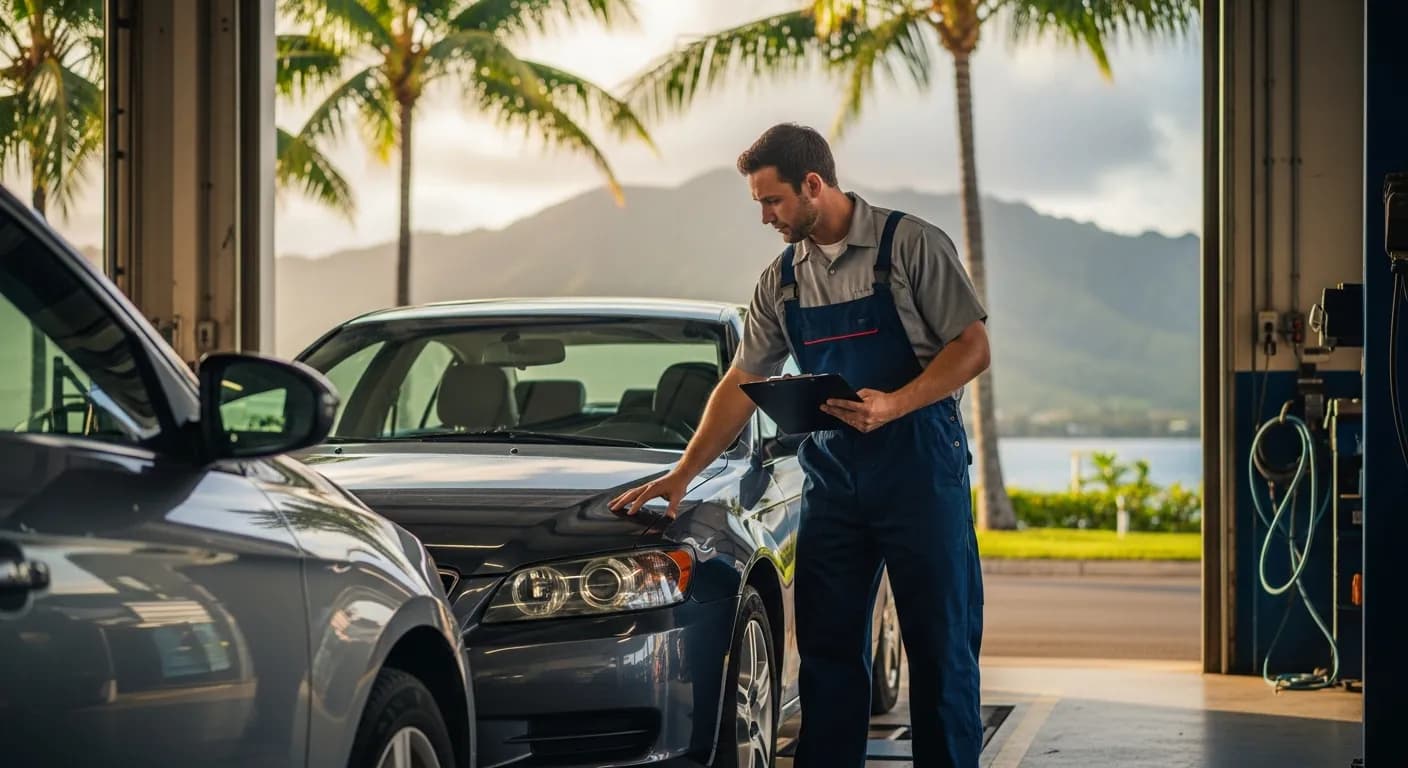
Just moved to Hawaii, or about to? Once your vehicle is on-island, the clock starts on registering it, and there's one step mainland moves don't have: a Hawaii safety inspection. Here's exactly how it works, what you'll need, and where the car you shipped over fits in.
You Have 30 Days
Hawaii gives new residents 30 days from arrival to register an out-of-state vehicle, or to get an out-of-state permit that keeps you legal while your mainland plates are still valid. Miss the window and you risk citations, so it's worth handling in your first couple of weeks on the island.
First, Pass a Hawaii Safety Inspection
Hawaii requires an annual safety check (often called a safety inspection), and for a newly arrived car it comes before registration. A licensed station checks brakes, lights, tires, wipers, and mirrors, and most passenger cars pass in about 20 minutes.
One catch that trips up mainland movers: your car needs both a front and a rear license plate to pass. If your mainland state only issued a rear plate, sort that out first, because the station won't pass a vehicle that's missing one.
What You'll Need to Register
Before you go, gather these documents: your current out-of-state vehicle registration; the vehicle title (or your lien-holder's information if the car is financed); your bill of lading or shipping receipt, which shows the date your car arrived in Hawaii and starts your registration clock; a completed Hawaii Certificate of Safety Inspection; a government-issued photo ID; and the permit or registration fee (for example, a $5 out-of-state permit on Hawaii Island, though fees vary by county).
That shipping receipt matters more than people expect: if you shipped your car over, keep the paperwork your carrier gave you, because you can't finish registration without proof of the arrival date.
The Steps
The process itself is short. Start by making an appointment with your county's Vehicle Registration and Licensing office. Get the safety inspection at an authorized station (remember, two plates). Submit your application and documents to the county, then receive your permit or plates. An out-of-state permit is valid until your mainland plates expire or for twelve months, whichever comes first, or you can go straight to Hawaii plates if the car is staying for good.
It Varies a Little by Island
Each county runs its own office: the City and County of Honolulu (Oahu), Maui County, Hawaii County (the Big Island), and Kauai County. The 30-day window and the safety-check requirement are the same statewide, but fees and appointment systems differ, so confirm the specifics with your county's DMV before you go.
Shipping Your Car to Hawaii First?
Registration is step two. Step one is getting the car here. If you haven't shipped yet, see how car shipping to Hawaii works and what it costs. Every customer gets the bill of lading you'll need for registration. And when it's time to head back to the mainland, shipping a car from Hawaii works the same way in reverse.
Frequently Asked Questions
How long do I have to register my car in Hawaii after moving? New residents have 30 days from the vehicle's arrival to register it or obtain an out-of-state permit.
Do I need a safety inspection to register a car in Hawaii? Yes. A current Hawaii safety inspection certificate is required before you can register, and for a newly arrived car it has to be done first.
Why does my car need two license plates for the Hawaii safety check? Hawaii requires both a front and a rear plate. If your mainland state issued only a rear plate, the inspection station can't pass the vehicle until both are mounted.
Do I need my shipping receipt or bill of lading to register? Yes. The county uses your bill of lading or shipping receipt to confirm the date your car arrived in Hawaii, so keep whatever paperwork your carrier gave you.
Can I keep my mainland plates for a while after moving to Hawaii? You can, using an out-of-state permit, which is valid until your mainland plates expire or for twelve months, whichever comes first.