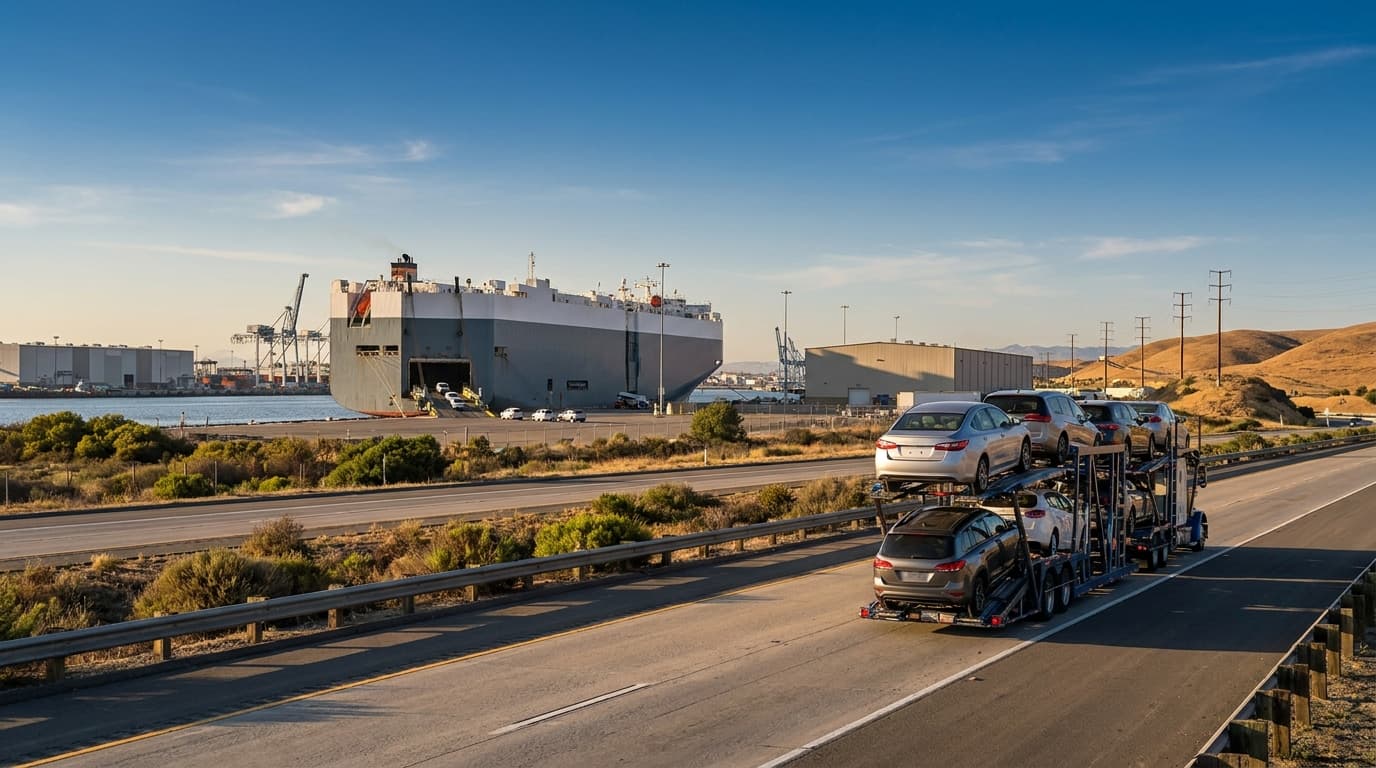
Yes, car shipping Seattle to Hawaii is available, but the vehicle does not sail from Washington. Matson's Hawaii auto service through Tacoma is suspended, so an eligible car, SUV, pickup, or van from the Seattle area normally reaches Hawaii through Oakland Port.
That distinction matters because Tacoma still appears in some broader cargo schedules. Someone searching for a Seattle or Tacoma departure can reasonably see those schedules, assume personal-vehicle service is available, and keep searching when a quote points to California. The route is not being hidden: the shipment simply has an added mainland carrier leg before or after the ocean crossing, depending on direction.
Can a Car Ship Directly From Seattle or Tacoma to Hawaii?
Not currently. Matson's current vehicle FAQ says Tacoma serves Alaska, Guam, and Saipan vehicles only and that auto shipments to or from Hawaii through Tacoma are suspended. Matson's public notice does not state a reason. The current Matson vehicle FAQ is the primary source to check because a general sailing schedule can cover cargo that is not accepted as a personal vehicle.
This does not mean shipping a car between Washington and Hawaii is unavailable. It means the ocean portion uses an active California Port. For an eligible vehicle in Seattle, Tacoma, Bellevue, Federal Way, or elsewhere in western Washington, Oakland Port is normally the closest active option. A licensed mainland carrier can move the vehicle between Washington and Oakland, or the customer can handle that leg personally.
The same distinction applies in reverse. A vehicle can move from Hawaii to the Seattle area, but it first sails to Oakland Port. The final movement from Oakland to Washington is a separate mainland carrier leg unless the customer collects the vehicle at Oakland Port.
How the Seattle to Hawaii Route Works
The trip has two coordinated parts. First, the vehicle moves from the Seattle area to Oakland Port. Second, Matson moves it from Oakland Port to the confirmed Hawaii Port.
With door-to-port service, Car Shipping Hawaii arranges a licensed, cargo-insured mainland carrier to collect the vehicle at a Washington address and deliver it to Oakland Port. The ocean booking then moves the vehicle to Honolulu Port, Kahului Port, Hilo Port, or Nawiliwili Port. Service ends at the confirmed Hawaii Port, where the customer picks up the vehicle.
With port-to-port service, the customer drives the vehicle to Oakland Port instead of adding a mainland carrier. That removes the arranged Washington-to-Oakland carrier leg, but the customer is responsible for reaching Oakland and arranging transportation home afterward.
Neither choice changes the current Tacoma suspension. The practical decision is whether having a carrier handle the Oakland leg is worth the added cost compared with driving the vehicle to Oakland personally. The instant quote can price the full route for the exact pickup location and vehicle so the two approaches can be compared honestly.
How Shipping From Hawaii Back to Seattle Works
For the return direction, the route reverses. The customer delivers the vehicle to the confirmed Hawaii Port, Matson moves it to Oakland Port, and a mainland carrier can then transport it to the Seattle area. This is port-to-door service. The customer can alternatively collect the vehicle at Oakland Port and handle the trip to Washington personally.
Hawaii-to-mainland shipments have document requirements that do not apply in the same way to mainland-to-Hawaii shipments. The title and current registration must be provided before drop-off, with additional authorization when the vehicle is financed, has two titled owners, or is being dropped off by someone other than the owner. The complete current requirements are on the vehicle documents page.
Arrival dates are estimates, not guarantees. From vessel sail date, Matson publishes an average of 9 to 24 days to or from Honolulu Port and 33 to 45 days to or from Kahului Port, Hilo Port, or Nawiliwili Port through Honolulu. The Washington carrier leg occurs outside that ocean transit range. The Hawaii car-shipping transit guide explains how the sailing and mainland portions fit together.
Why Tacoma Still Appears in Hawaii Shipping Information
A Port can support several kinds of freight without accepting every kind of shipment. Tacoma remains part of Matson's broader network, and cargo schedules can still show a Tacoma-to-Honolulu movement. The suspension applies specifically to Hawaii auto shipments through Tacoma.
That is why two statements that appear contradictory can both be true: a Matson vessel or cargo service may connect Tacoma and Honolulu, while a privately owned vehicle is not accepted there for Hawaii auto service. A customer should verify the personal-vehicle acceptance rule, not rely only on a general vessel schedule or an older company page.
This is also why a quote may list Oakland even when the customer's requested destination is Seattle. Oakland is the ocean arrival Port. Seattle is the final mainland destination reached through the added carrier leg. A complete quote should make both portions visible rather than presenting Oakland as though it were the customer's final destination.
Does Every Washington Vehicle Use Oakland Port?
Oakland Port is normally the closest active Hawaii personal-vehicle Port for Washington, but the vehicle must fit Oakland's limits. Oakland accepts vehicles at most 260 inches long, strictly under 76 inches high including roof racks or roof carriers, and strictly under 76 inches from outside tire to outside tire.
Long Beach Port allows vehicles up to 260 inches long, 96 inches wide, and 84 inches high. An otherwise eligible lifted truck, large SUV, or vehicle with attachments that does not fit Oakland may need Long Beach Port if it fits those limits. The exact Port should be confirmed only after checking the vehicle's dimensions.
A category name is not enough to decide. Two pickups of the same model can measure differently because of lifts, tires, racks, or other equipment. Removable roof carriers and non-factory roof racks must be removed before the vehicle is delivered to the Port. Exact measurements prevent a refusal after the mainland carrier leg has already been completed.
What Should You Ask When Comparing Seattle Shipping Quotes?
Ask which Port is the actual ocean departure or arrival point. If the answer is Seattle or Tacoma, ask the company to verify that personal vehicles are currently accepted for the Hawaii route rather than relying on a general cargo schedule.
Ask whether the quoted total includes the mainland carrier between Washington and Oakland. A low ocean-only number is not the same product as a full route that includes Seattle-area pickup or delivery.
Ask whether the vehicle has been checked against Oakland's exact height and outside-tire width limits. If it does not fit, ask whether Long Beach Port is available for that vehicle and how that changes the mainland leg.
Finally, ask which portion of the stated timeline begins at vehicle pickup and which begins at vessel sailing. That separates mainland carrier timing from Matson's published ocean range and makes the comparison more useful.
Frequently Asked Questions
Can I drop my car at Tacoma Port for Hawaii?
No, not under Matson's current Hawaii personal-auto service. Matson says Hawaii auto shipments through Tacoma are suspended, even though Tacoma continues to appear in other parts of its network.
Can Car Shipping Hawaii still pick up a vehicle in Seattle?
Car Shipping Hawaii can arrange a licensed, cargo-insured mainland carrier from a Seattle-area address to Oakland Port. Car Shipping Hawaii is the broker arranging the carrier and ocean booking; it does not own the truck or vessel.
Can a car be delivered from Hawaii to a Seattle address?
Yes, through a multi-leg route. The vehicle sails from the confirmed Hawaii Port to Oakland Port, then an arranged mainland carrier can transport it to the Seattle area.
Is Oakland always the correct Port for a Washington vehicle?
No. Oakland is normally the closest active option, but the vehicle must meet its stricter dimensions. An otherwise eligible vehicle that does not fit Oakland may need Long Beach Port if it meets the Long Beach limits.
How do I compare the cost of the two options?
Compare a full-service quote that includes the Washington carrier leg with a port-to-port quote where you handle the trip to or from Oakland. Pricing depends on the exact location, route, service, and vehicle, so a static article cannot determine which option makes sense for a particular shipment.
The Seattle route remains workable once each leg is stated clearly. Oakland Port is normally the ocean gateway, the Washington movement is either an arranged carrier leg or a trip the customer handles, and Long Beach remains the dimension-based exception. Request a free instant quote to compare the available service for the exact vehicle and location.
About Car Shipping Hawaii: Car Shipping Hawaii is a vehicle transportation broker operating since 2006, arranging door-to-port and port-to-port vehicle shipping between the US mainland and the Hawaiian Islands. Instant online quotes available at carshippinghawaii.com.