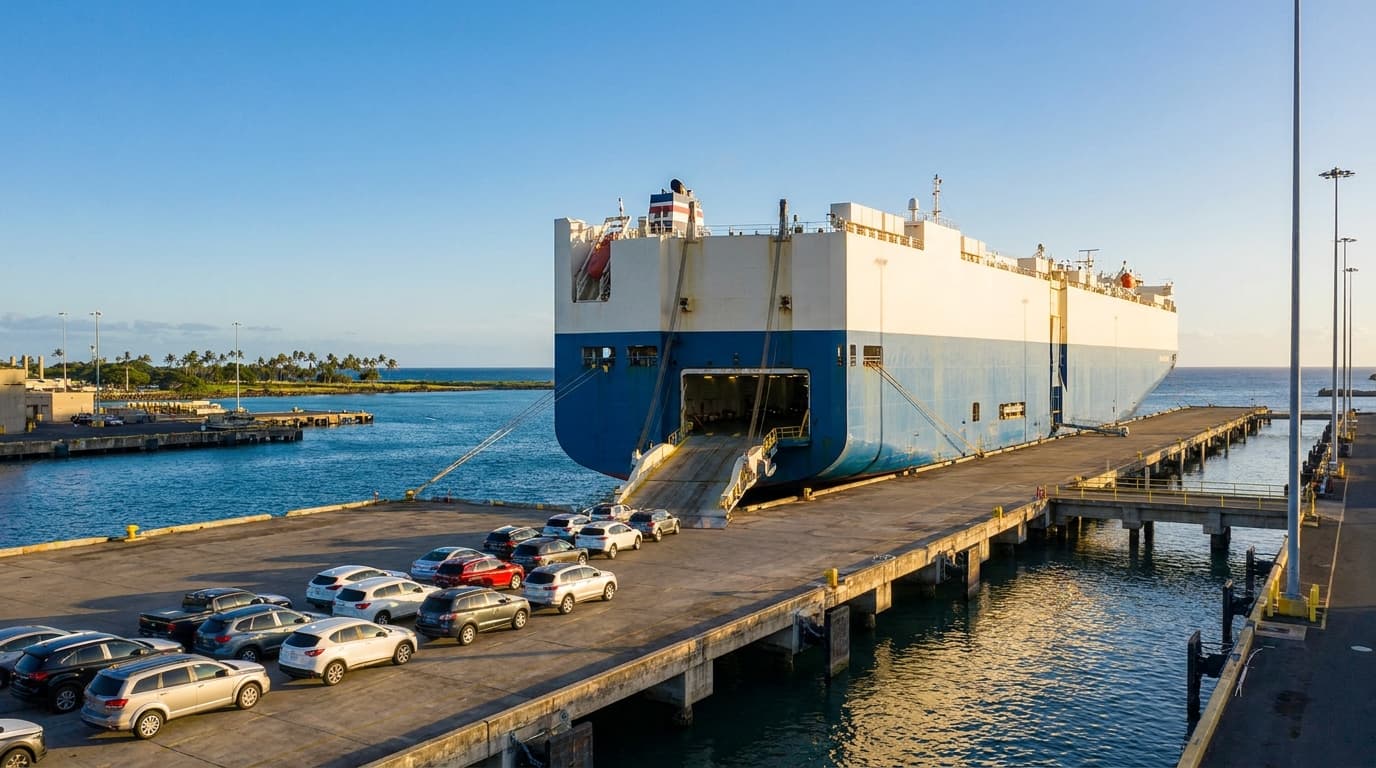
If you find damage when collecting your vehicle, document it and report it through the carrier's claims process promptly. Inspect the car before leaving the port and note visible damage on the release paperwork; photographs and the inspection records help establish its condition before and after transport.
The process is straightforward when done right. Here is what to know about coverage, documentation, and what to do if something goes wrong.
How Vehicles Are Covered During Transit
A shipment to or from Hawaii has two possible legs, each with its own coverage:
The ocean leg. The vehicle moves under Matson's bill of lading, which sets the carrier's liability terms. Those terms come with the booking. Matson does not provide insurance; the bill-of-lading liability terms are not the same thing as an insurance policy. Your own auto policy may or may not cover the car while it is on a vessel, so call your insurer before the shipment and ask explicitly.
The overland leg (door-to-port service). If an overland carrier picks up the car at the customer's address and brings it to Long Beach Port or Oakland Port, that carrier's own cargo insurance covers the vehicle. Car Shipping Hawaii dispatches only licensed, cargo-insured carriers and verifies each policy is in good standing before dispatch. Those carriers hold cargo coverage up to $100,000.
What is not covered on either leg: • Personal items left in the car. Matson refuses vehicles with visible personal belongings, and anything left inside is not covered. • Pre-existing damage. Scratches, dents, or chips documented before drop-off cannot become claims later.
For a deeper look at coverage questions, see Car Shipping Insurance for the Hawaii Crossing.
Documentation That Makes a Claim Provable
Dated photographs and inspection paperwork help document the vehicle's condition at each handoff. Keep both and provide them with the information the carrier requests when reviewing a claim.
Before Drop-Off
1. Wash the car. A dirty vehicle hides existing damage and makes the Port's inspection report less accurate. Matson's published vehicle preparation rules require a clean exterior and interior; a car that fails USDA agricultural inspection for mud, grass, or seeds is not shipped until cleaned and re-inspected at the owner's expense. 2. Take dated photos of every surface. Walk around the car and photograph each panel, the roof, all four wheels, every piece of glass, and the odometer. Use your phone's timestamp or hold a piece of paper with the date. Get close enough to show any existing scratches, chips, or dents. 3. Keep those photos until the car is home. Do not delete them after drop-off.
At Drop-Off
The Port records the vehicle's condition on an inspection report. Read it before signing. If you see something the inspector missed, say so and ask for it to be added. The condition documented here is the baseline.
At Pickup
Inspect the car before driving away. Daylight makes damage easier to spot. • Compare the car against your drop-off photos. • Look at every panel, the roof, the wheels, and the glass. • If you see new damage, note it on the release paperwork at the Port before you leave. Report visible damage before leaving the port. Matson's vehicle-shipping FAQ provides an exception for concealed or non-apparent damage reported within three calendar days of pickup. Follow the carrier's current instructions and the terms applicable to your booking. • Photograph the new damage next to the release paperwork so the photo shows both the damage and the written note.
A report made after pickup needs careful documentation of when the damage was discovered. Follow the applicable reporting deadline and provide the evidence requested by the carrier; acceptance of a claim depends on the circumstances and the governing terms.
What to Do If You Find Damage
1. For damage visible at pickup, note it on the release paperwork before leaving the port. Follow the carrier's instructions for concealed damage discovered later. 2. Photograph the damage and the paperwork together. 3. Contact Car Shipping Hawaii the same day. The company will identify which leg the damage occurred on and tell you the correct claim process.
If the damage happened on the ocean leg, the claim goes to Matson. If it happened during an overland pickup, the claim goes to the motor carrier that transported the car. Car Shipping Hawaii handles the coordination and tells the customer exactly what to submit.
A Practical Checklist
Use this before and after the shipment:
Before drop-off: • [ ] Exterior washed, interior vacuumed, wheel wells free of mud • [ ] Dated photos of all panels, roof, wheels, glass, odometer • [ ] Photos saved somewhere you will not lose them • [ ] Inspection report read and signed at the Port
At pickup: • [ ] Inspect the car in daylight if possible • [ ] Compare to drop-off photos • [ ] Any new damage noted on release paperwork before leaving • [ ] New damage photographed next to the paperwork • [ ] Car Shipping Hawaii contacted the same day if damage is found
How Car Shipping Hawaii Handles Damage Reports
Car Shipping Hawaii is a transportation broker, not a carrier. It arranges the ocean leg with Matson and the overland leg with licensed motor carriers, but does not own vessels or trucks. When a customer reports damage, the company identifies which carrier is responsible and walks the customer through that carrier's claim process.
For overland carriers, Car Shipping Hawaii verifies cargo insurance before dispatch. For the ocean leg, the terms are set by Matson's bill of lading. The company does not adjudicate claims itself, but it does make sure the customer knows where to file and what documentation to send.
If you are unsure whether you have the right documentation or what the next step is, contact Car Shipping Hawaii directly. The FAQ page covers additional questions about the process.
Frequently Asked Questions
Does my personal auto insurance cover the car during shipping?
It depends on your policy. Some policies extend coverage to vehicles in transit; others do not. Call your insurer before booking and ask specifically about ocean and overland transport.
Are personal items in the car covered if they are stolen or damaged?
No. Matson refuses vehicles with visible personal belongings, and anything left inside is not covered by any carrier's cargo policy. Leave the car empty except for manufacturer-installed accessories and up to two child car seats.
What if I notice damage after I have already driven away from the Port?
Report it promptly and keep photographs, inspection reports and booking paperwork. Matson's vehicle-shipping FAQ allows three calendar days from pickup to report concealed or non-apparent damage. That exception does not replace the instruction to identify and report visible damage before leaving the port. Ask Car Shipping Hawaii for help identifying the carrier and claim process for the affected transport leg.
Shipping a car to Hawaii is a routine process when the vehicle is prepared correctly and the owner documents its condition. If you are ready to book, get a free instant quote at Car Shipping Hawaii.
About Car Shipping Hawaii: Car Shipping Hawaii is a vehicle transportation broker operating since 2006, arranging door-to-port and port-to-port vehicle shipping between the US mainland and the Hawaiian Islands. Instant online quotes available at carshippinghawaii.com.