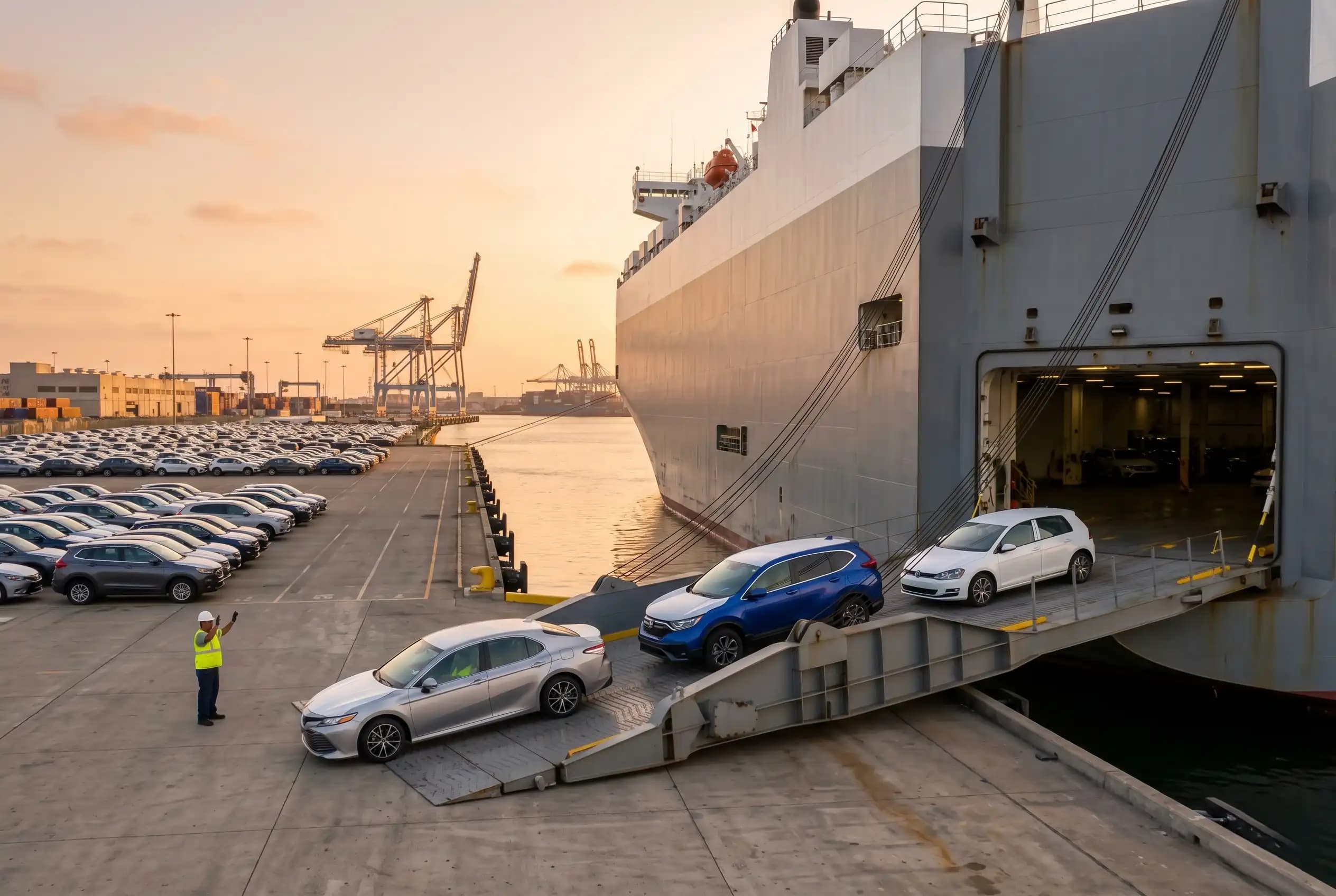
The question of whether to buy a car in California and ship it to Hawaii or purchase one after arrival comes down to simple math: compare what you would pay for a comparable vehicle on the islands against the cost of shipping what you already own. Most people who run the numbers find that shipping a mainland car makes sense when the vehicle is paid off or nearly so, in good condition, and worth more than a few thousand dollars. The secondary question readers often ask, "are cars more expensive in Hawaii," has a straightforward answer: yes, and the reasons are structural rather than temporary.
This guide walks through the factors that tilt the decision one way or the other, preparation requirements for shipping, and how to get an accurate quote before committing.
Why Are Cars More Expensive in Hawaii, and How Much Does It Matter?
Hawaii's vehicle market operates under constraints that mainland buyers never think about. The islands have no car factories, no rail lines connecting dealer lots, and a much smaller population spread across four main islands. Every car sold in Hawaii, new or used, arrived by ship at some point, and that freight cost is baked into the sticker price. Dealers pass along not just the ocean crossing but also the cost of maintaining smaller inventories, higher commercial rents, and the logistics of moving cars between islands.
Used-car inventory is thinner, too. Mainland buyers can search a hundred-mile radius and find dozens of examples of a given model. An Oahu shopper may see three or four, with less room to negotiate. Private-party listings are scarcer, and the cars that do appear have lived their whole lives in salt air. Rust underneath, sun-cracked dashboards, and faded paint are common on island cars that would look rough compared to a California equivalent with the same mileage.
None of this means buying locally is always wrong. A buyer who needs a cheap beater for a short stay, or who plans to sell within a year, may find the math favors a local purchase and resale. But anyone moving long-term, or anyone who already owns a reliable vehicle, should price out the alternative before deciding.
How to Buy a Car in California and Ship It to Hawaii: Comparing the Real Costs
The honest way to decide is to gather three numbers: the private-party value of the car you own now, the price of a similar car on the islands, and the cost of shipping. The first two are easy to look up. The third requires an actual quote, not a guess, because shipping prices vary by the route, the service level, and the size of the vehicle.
Car Shipping Hawaii's free instant quote tool returns a price in seconds. Enter the vehicle, the origin, and the destination island, and the system calculates the rate for both port-to-port and door-to-port service. A customer in Los Angeles would drive to Long Beach Port for port-to-port, while someone in Phoenix or Denver would use door-to-port and have an overland carrier bring the car to the mainland port.
Once you have the shipping cost, the comparison is direct. If the car you own is worth $12,000 on the mainland and a similar car in Honolulu sells for $15,000, shipping makes sense whenever the quote is less than $3,000. If the car is worth $2,500 and the shipping quote is $1,800, the margin is thinner and the decision depends on how much you trust the vehicle to last. A car worth far less than the cost of shipping is a weak candidate. A car you like, know the history of, and would have to replace at island prices is a strong one.
"I tell people to forget the sentimental argument and run the numbers," says Camilo Jaime, owner of Car Shipping Hawaii. "If you already own a car that runs well, fits your life, and would cost you more to replace in Honolulu than to ship from Long Beach, the answer is obvious. If the car is on its last legs, ship nothing and buy local."
What Vehicles Can Be Shipped, and What Cannot
Car Shipping Hawaii arranges ocean transport on Matson, the carrier that operates between the West Coast and Hawaii. Matson accepts standard personal vehicles: cars, SUVs, pickups, and vans. The vehicle must run under its own power, have a working emergency brake, and show no check-engine, airbag, or tire warning lights. Ground clearance must be at least six inches.
Battery-electric and plug-in hybrid vehicles are not accepted on the standard routes Car Shipping Hawaii books. Regular non-plug-in hybrids require verification of the year, make, model, and battery system before Matson can confirm acceptance. Motorcycles, RVs, trailers, and boats are outside the scope of what Car Shipping Hawaii handles.
Size limits matter for larger trucks and SUVs. From Long Beach Port, a vehicle can be up to 260 inches long, 96 inches wide, and 84 inches high. From Oakland Port the width and height limits are stricter: under 76 inches in each dimension, including roof racks. A vehicle that fails Oakland's limits but fits Long Beach's can still ship from Long Beach Port. The how it works page explains the booking and measurement steps.
Documents, Prep, and Drop-Off: What the Process Actually Requires
Shipping a car from California to Hawaii is lighter on paperwork than most people expect. Westbound, the customer needs no documents at all. No title, no registration copy, no notarized letter. At the port gate, the driver shows a government-issued photo ID that matches the name on the booking, along with the booking confirmation number. That is it. Even a financed car ships without lender paperwork on the westbound leg. Full details are on the documents page.
Preparation follows Matson's published rules. Fuel must be between one-eighth and one-quarter of a tank, never above one-quarter. The exterior should be washed, the interior vacuumed and dry. Dirty vehicles are refused because a condition survey happens at the load port, and the USDA inspects for mud, grass, and seeds. A car that fails the agricultural inspection does not ship until it is cleaned and re-inspected at the owner's expense.
Remove everything that is not factory-installed. Child car seats (up to two) are allowed. Roof cargo carriers, bike racks, loose electronics, toll transponders, extra batteries, and fire extinguishers must come out. Alarms should be disengaged. The drop-off day guide covers the full checklist.
Timing: When Will the Car Arrive?
Matson publishes transit times that range from 9 to 45 days, depending on the destination and the sailing schedule. The sailing itself takes 5 to 8 days. Loading and unloading at the ports adds 3 to 5 days. For neighbor-island destinations like Kahului Port (Maui), Hilo Port (Big Island), or Nawiliwili Port (Kauai), the car also moves by inter-island barge, which adds 14 to 32 days. Honolulu Port on Oahu is the fastest destination because no barge leg is needed.
Summer months and holiday periods often see heavier booking volume, which can push sailings out. The transit time guide explains how the schedule works and what to expect. Customers who need a vehicle immediately after landing should book well ahead or plan to rent for the first few weeks.
What About Shipping the Car Back When You Leave?
One overlooked advantage of shipping a mainland car to Hawaii is that the same car can ship back when you move away. The eastbound process is slightly different: the customer must email the title (front and back) and current registration at least 24 hours before drop-off. A financed car substitutes a lienholder authorization letter from the bank. Hilo Port also asks for the current safety check certificate. The eastbound service page covers the requirements.
A car bought on the islands, especially one that has spent years in salt air, may be harder to sell or worth less when you leave. A mainland car that you shipped over and maintained well can ship back and re-enter mainland markets without that stigma.
Frequently Asked Questions
Is it cheaper to buy a car in Hawaii or ship one from California? In most cases, shipping a reliable car you already own costs less than the price premium you would pay for a comparable vehicle on the islands. The only way to know for certain is to get a shipping quote and compare it against local listings.
Do I need to pay off my car loan before shipping to Hawaii? No. A financed car ships westbound without any lender paperwork. The title stays with the lienholder, and Car Shipping Hawaii does not need a copy for the mainland-to-Hawaii route.
Can I ship an electric car to Hawaii? Battery-electric and plug-in hybrid vehicles are not accepted on the standard Matson routes that Car Shipping Hawaii books. Regular non-plug-in hybrids may be accepted after Matson verifies the battery system.
How do I know if my car will fit the size limits? Measure the vehicle including any roof racks or attachments. From Long Beach Port, the limits are 260 inches long, 96 inches wide, and 84 inches high. From Oakland Port, width and height must each be under 76 inches.
What if my car arrives with damage? Take dated photos before drop-off and again at pickup. Note any new damage on the release paperwork before leaving the port, and report it to Car Shipping Hawaii the same day. Claims go to the carrier responsible for the leg where the damage occurred.
Ready to see what shipping actually costs for your vehicle? Get a free instant quote at carshippinghawaii.com and compare it against local prices before you decide.
About Car Shipping Hawaii: Car Shipping Hawaii is a vehicle transportation broker with 18 years of experience, arranging door-to-port and port-to-port vehicle shipping between the US mainland and the Hawaiian Islands. Instant online quotes available at carshippinghawaii.com.