What Are the Military Bases in Hawaii?
Hawaii is home to some of the most strategically important military installations in the United States. Positioned at the geographic center of the Pacific Ocean, the Hawaiian Islands serve as the forward operating hub for U.S. military presence across an enormous and critically important region that spans from the West Coast of the Americas to the shores of Asia and down into the South Pacific.
Multiple branches of the U.S. military maintain major installations across Hawaii, including the Army, Navy, Air Force, and Marine Corps. These bases support everything from Indo-Pacific fleet operations and air mobility to ground combat training and special operations readiness. Tens of thousands of active duty service members, Department of Defense civilians, and military family members live and work on or near these installations at any given time.
This guide provides a complete overview of the major military bases in Hawaii, explains the role each installation plays in national defense, and helps military families understand what to expect when receiving orders to the islands. Car Shipping Hawaii is a veteran-owned vehicle shipping company that proudly supports service members and their families during PCS relocations to and from Hawaii.
Why Hawaii Is Strategically Important for the U.S. Military
Hawaii's strategic value to the United States military is rooted in its location. Situated roughly 2,400 miles from the California coast and approximately 3,900 miles from Japan, the Hawaiian Islands sit at the midpoint of the Pacific, making them an ideal command and logistics hub for operations across the entire region. No other U.S. territory offers the same combination of geographic centrality, port infrastructure, and airfield capacity in the Pacific.
The U.S. military's presence in Hawaii traces back to the late 19th century, with the establishment of Pearl Harbor as a naval coaling station in 1887. The December 7, 1941 attack on Pearl Harbor transformed Hawaii's role permanently, elevating it from a remote outpost to the central command and staging point for the entire Pacific Theater of World War II. That strategic designation has only deepened in the decades since.
Today, Hawaii serves as the headquarters of the U.S. Indo-Pacific Command (INDOPACOM), the largest unified combatant command in the world by area of responsibility. INDOPACOM oversees military operations across a region that covers 52 percent of the Earth's surface, from the West Coast of the United States to the western border of India, encompassing 36 nations and more than half the world's population. Hawaii's position at the geographic heart of that command makes every installation on the islands essential to U.S. national security strategy.
Read Also: Moving to Hawaii? Here Is What to Know Before You Ship Your Car
How Many Military Bases Are in Hawaii?
Hawaii is home to more than 60 military installations, training areas, and defense facilities spread across the islands, though the majority of the largest and most significant bases are concentrated on Oahu. The island of Oahu houses the headquarters of all four major service branches operating in Hawaii and accounts for the vast majority of the state's military population and infrastructure.
The list of military bases in Hawaii includes major joint, Army, Navy, Air Force, and Marine Corps installations, as well as numerous smaller facilities including radar stations, communications sites, training ranges, and logistical support locations on Maui, the Big Island of Hawaii, and Kauai. While the smaller facilities perform important roles in the overall defense network, the major bases on Oahu are where the bulk of service members and their families live and work.
The total military population in Hawaii, including active duty personnel across all branches, exceeds 50,000 service members, and when family members and Department of Defense civilian employees are included, the military community represents a significant and deeply integrated part of the state's overall population and economy.
Read Also: Vehicle Shipping to Hawaii: A Complete Guide for First-Time Shippers
Army Bases in Hawaii
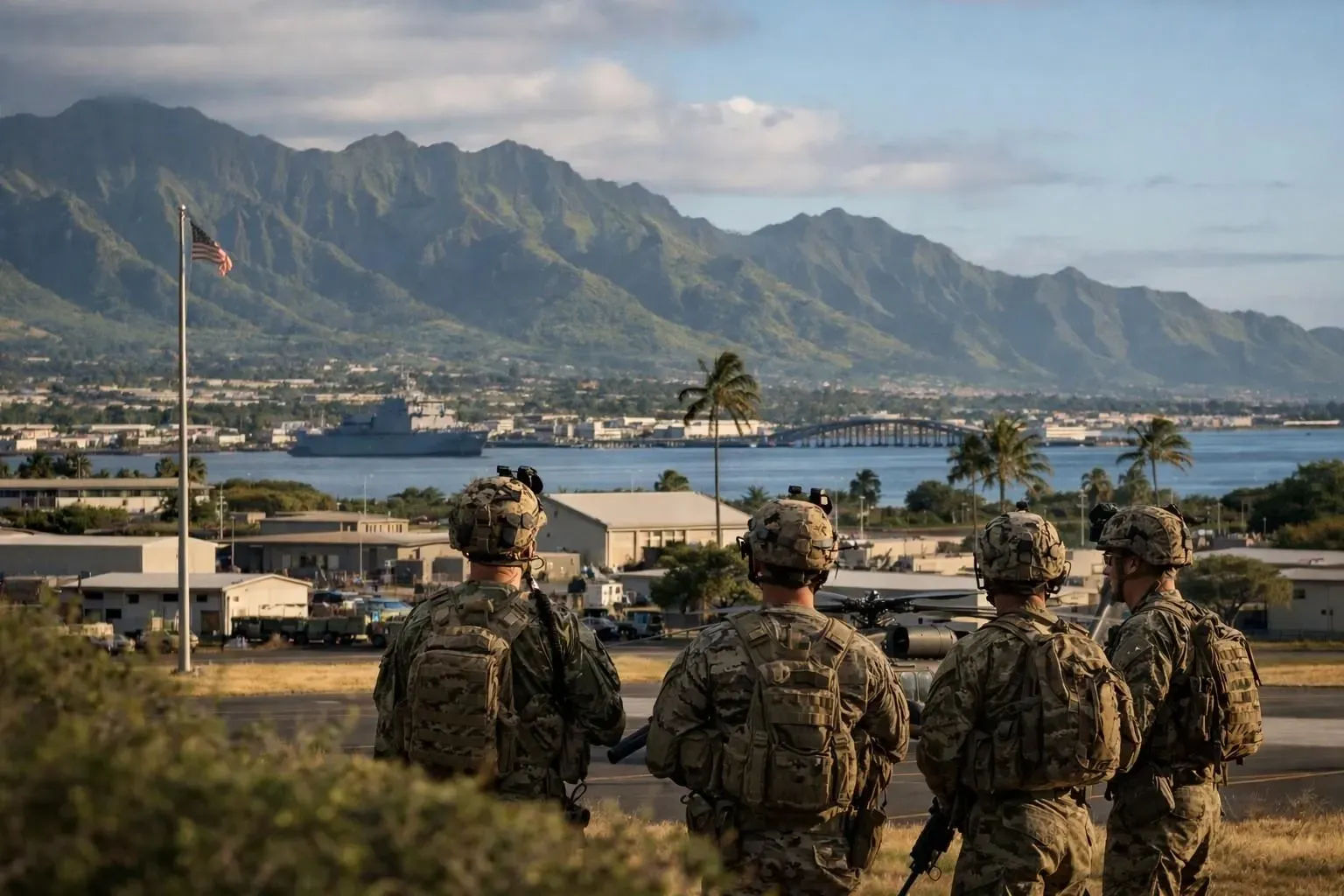
The U.S. Army maintains a substantial presence in Hawaii, operating several major installations on Oahu that support training, readiness, and strategic operations across the Indo-Pacific region. Hawaii's Army bases are home to the 25th Infantry Division, one of the most operationally experienced and strategically positioned divisions in the entire U.S. Army
Schofield Barracks
Schofield Barracks is the largest Army installation in Hawaii and one of the largest active Army posts in the United States. Located in the central Oahu plateau near the town of Wahiawa, Schofield is the headquarters of the 25th Infantry Division, known as Tropic Lightning, and supports more than 14,000 soldiers and their families. The installation offers a full range of on-post housing, schools, recreational facilities, and support services, and its central location on Oahu provides reasonable access to both the North Shore and Honolulu. Schofield Barracks is the most common destination for Army PCS orders in Hawaii and the base most military families mean when they refer to an Army assignment to the islands.
Fort Shafter
Fort Shafter is the oldest active military installation in Hawaii, established in
1905 and located on the outskirts of Honolulu near Pearl Harbor. The installation serves as the headquarters of U.S. Army Pacific (USARPAC), the Army component command of U.S. Indo-Pacific Command. Fort Shafter is primarily an administrative and command headquarters rather than a large troop post, but its role coordinating Army operations across the entire Pacific theater makes it one of the most consequential installations in the region.
Wheeler Army Airfield
Wheeler Army Airfield is located adjacent to Schofield Barracks and serves as the Army's primary aviation installation on Oahu. Wheeler supports rotary-wing aviation units including helicopter battalions assigned to the 25th Infantry Division and provides airfield infrastructure for Army aviation training and operations across the Hawaiian Islands. Wheeler also has a residential community and on-post facilities that serve soldiers assigned to both Wheeler and nearby Schofield.
Naval Bases in Hawaii
The U.S. Navy has maintained a commanding presence in Hawaii since the late 1800s, and its installations remain among the most operationally significant in the entire Pacific Fleet. Naval bases in Hawaii serve as the homeport for submarines, surface ships, and aviation units that project American power across the Indo-Pacific.
Joint Base Pearl Harbor Hickam
Joint Base Pearl Harbor Hickam is the premier military installation in Hawaii and one of the most strategically important bases in the world. Created in 2010 through the merger of Naval Station Pearl Harbor and Hickam Air Force Base, the joint base encompasses more than 10,000 acres on the southern shore of Oahu near Honolulu. It serves as the homeport for the Pacific Fleet's submarine force, with Pearl Harbor hosting dozens of nuclear-powered submarines and the infrastructure to support, maintain, and crew them. The installation is also home to Commander, U.S. Pacific Fleet, the naval component of INDOPACOM, and serves as a major hub for naval aviation, logistics, and fleet support operations. Pearl Harbor's historical significance, iconic status in American military history, and current operational importance make Joint Base Pearl Harbor Hickam the single most recognized and consequential us military base in Hawaii by any measure.
Naval Computer and Telecommunications Area Master Station Pacific
Located at Wahiawa in central Oahu, Naval Computer and Telecommunications Area Master Station Pacific (NCTAMS PAC) provides the Navy's primary communications infrastructure for the Pacific and Indian Oceans. While smaller and less visible than Pearl Harbor, NCTAMS PAC plays an essential role in enabling fleet-wide communications that support naval operations across the entire Indo-Pacific command area.
Air Force Bases in Hawaii
The U.S. Air Force's primary installation in Hawaii operates as part of the joint base structure at Pearl Harbor Hickam, giving the Air Force direct access to one of the most capable airfields in the Pacific. Air Force operations in Hawaii focus on global air mobility, Pacific air defense, and support for combatant commanders across the Indo-Pacific region.
The Hickam side of Joint Base Pearl Harbor Hickam houses the 15th Wing of Pacific Air Forces (PACAF), which is responsible for providing air superiority, global mobility, and precision strike capability across the Pacific. Hickam Field has been a major Air Force installation since World War II, and today it operates as a major hub for long-range mobility aircraft, tankers, and reconnaissance platforms that support operations across the Pacific theater.
The airfield's infrastructure and strategic location make it an indispensable component of U.S. air power projection in the region.
Additional Air Force facilities in Hawaii include Kaena Point Satellite Tracking Station on Oahu's northwestern tip, which supports space surveillance and satellite tracking operations, and the Pacific Missile Range Facility on Kauai, which while primarily a Navy installation also supports Air Force test and training missions.
Marine Corps Base Hawaii
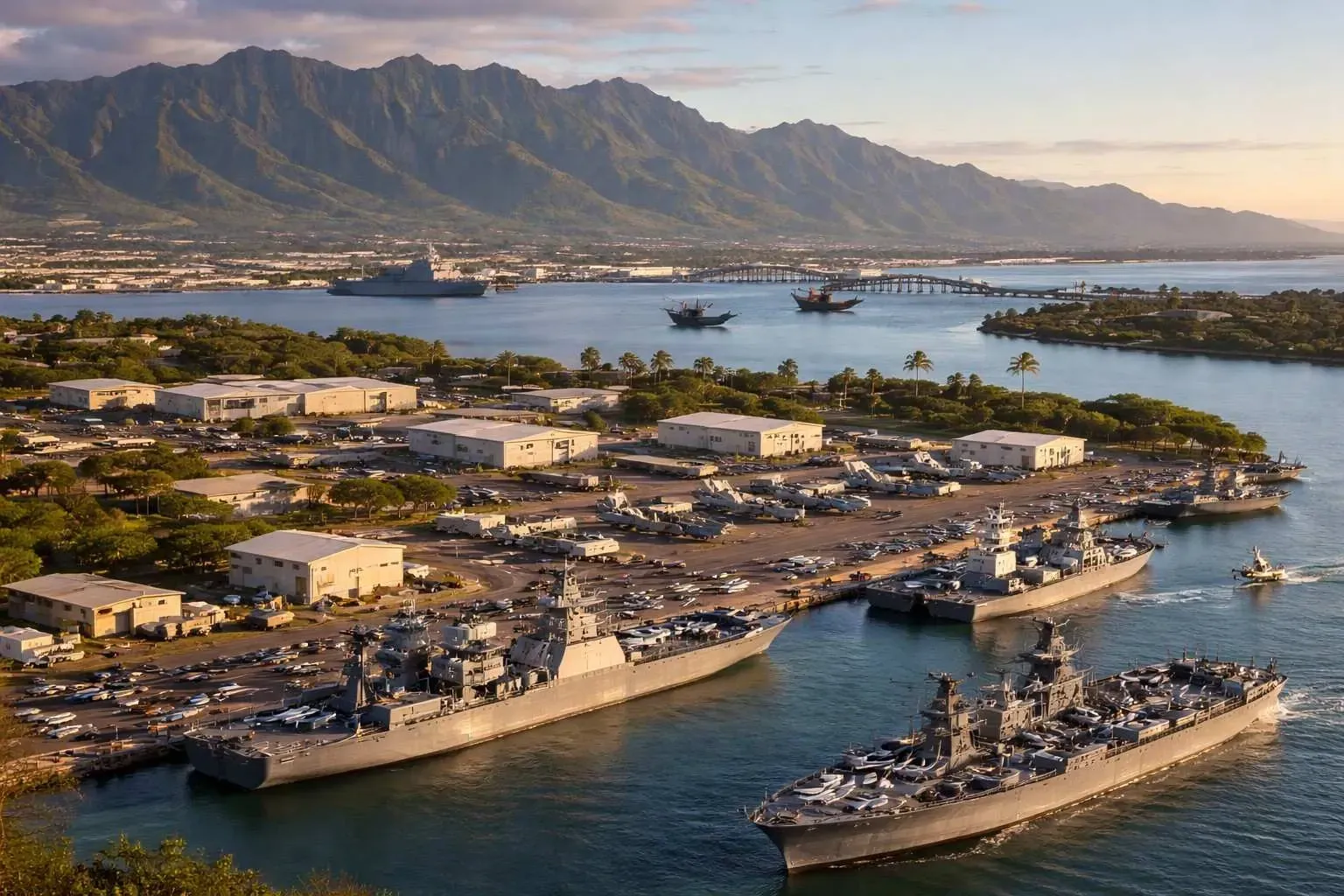
Marine Corps Base Hawaii (MCBH) is located at Kaneohe Bay on the windward side of Oahu, approximately 12 miles northeast of Honolulu. The installation sits on a peninsula between Kaneohe Bay and the Pacific Ocean, offering some of the most visually striking scenery of any military base in the country. MCBH encompasses approximately 2,800 acres and is home to the III Marine Expeditionary Force's forward-deployed element in Hawaii along with several subordinate commands.
Marine Corps Base Hawaii supports Marine ground combat, aviation, and logistics elements that are structured for rapid deployment across the Pacific. The base is home to Marine Aircraft Group 24, which operates heavy-lift and medium-lift helicopter squadrons that provide aviation support to Marine ground forces and joint operations across the region. The combination of shipboard access through Kaneohe Bay and organic aviation capability makes MCBH one of the most complete and self-sufficient Marine installations in the Pacific.
Life at Marine Corps Base Hawaii is defined by the installation's setting on the windward coast, which is generally cooler, greener, and windier than the Honolulu and Pearl Harbor side of the island. Families stationed at MCBH often describe it as one of the most desirable duty stations in the Marine Corps, with a strong on-base community, direct beach access, and good schools within the surrounding Kaneohe and Kailua communities.
Map of Military Bases in Hawaii: Where Are They Located?
The map of military bases in Hawaii reveals a concentration of installations on Oahu that reflects both the island's infrastructure capacity and its central role in the state's military mission. Oahu is home to every major service branch installation in Hawaii, and the geography of the island has shaped exactly where each base sits.
Joint Base Pearl Harbor Hickam occupies a large portion of Oahu's southern coast near the entrance to Pearl Harbor, providing direct access to the harbor for naval vessels and an adjacent airfield for Air Force and Navy aviation. Schofield Barracks and Wheeler Army Airfield sit in the central plateau, taking advantage of open terrain suitable for training ranges and aviation operations away from the congestion of Honolulu. Marine Corps Base Hawaii is positioned on the windward coast at Kaneohe Bay, where deep water access and separation from the island's main population center suit Marine amphibious operations. Fort Shafter sits between Pearl Harbor and downtown Honolulu, reflecting its role as a headquarters command rather than a combat or training installation.
Outside Oahu, military installations are smaller and more specialized. The Pacific Missile Range Facility (PMRF) on Kauai's western coast is the world's largest instrumented multi-environment range and supports Navy and joint testing of missiles and other weapons systems. Pohakuloa Training Area (PTA) on the Big Island of Hawaii provides large-scale ground combat training ranges that are not available on Oahu due to land constraints. Maui hosts the Maui Space Surveillance Complex, a key node in the nation's space domain awareness network.
Military Life in Hawaii
Being stationed in Hawaii is widely regarded as one of the most desirable assignments in the U.S. military, and for good reason. The islands offer a combination of natural beauty, outdoor recreation, cultural richness, and community that is difficult to match at any other duty station. At the same time, Hawaii's unique geography and high cost of living present real practical challenges that service members and their families need to plan for carefully.
Housing near military installations in Hawaii ranges from on-post privatized housing communities to off-base rentals in surrounding civilian neighborhoods.
On-base housing at Schofield Barracks, JBPHH, and MCBH is managed through privatized housing programs and is generally well-maintained, though waitlists can be long and availability at the right rank and family size is not guaranteed. Off-base housing in communities like Mililani, Kapolei, Aiea, Pearl City, Kailua, and Kaneohe is popular with military families, though rental prices are significantly higher than the national average and the Basic Allowance for Housing (BAH) rate for Hawaii reflects that reality.
Commuting on Oahu is a daily reality for most military families, particularly those living off-base. The H1 Freeway corridor that connects west Oahu to Honolulu and the Pearl Harbor area can be heavily congested during morning and evening rush hours. Having your own vehicle is essentially a necessity for getting around the island efficiently. For families PCSing to Hawaii, shipping your vehicle rather than selling it and buying another on arrival is almost always the smarter financial decision.
How Car Shipping Hawaii Helps Military Families Relocate
Car Shipping Hawaii is a veteran-owned and operated vehicle shipping company based in Honolulu. We were founded to serve the unique needs of people relocating to Hawaii, and military families on PCS orders represent a core part of the community we support every day.
We understand that PCS moves are not like civilian relocations. You are working against a hard report date, coordinating the movement of your household goods through your Transportation Office, managing family logistics across multiple states, and trying to minimize disruption to your children's schooling and your family's routine. The last thing you need is uncertainty about whether your vehicle will be there when you arrive.
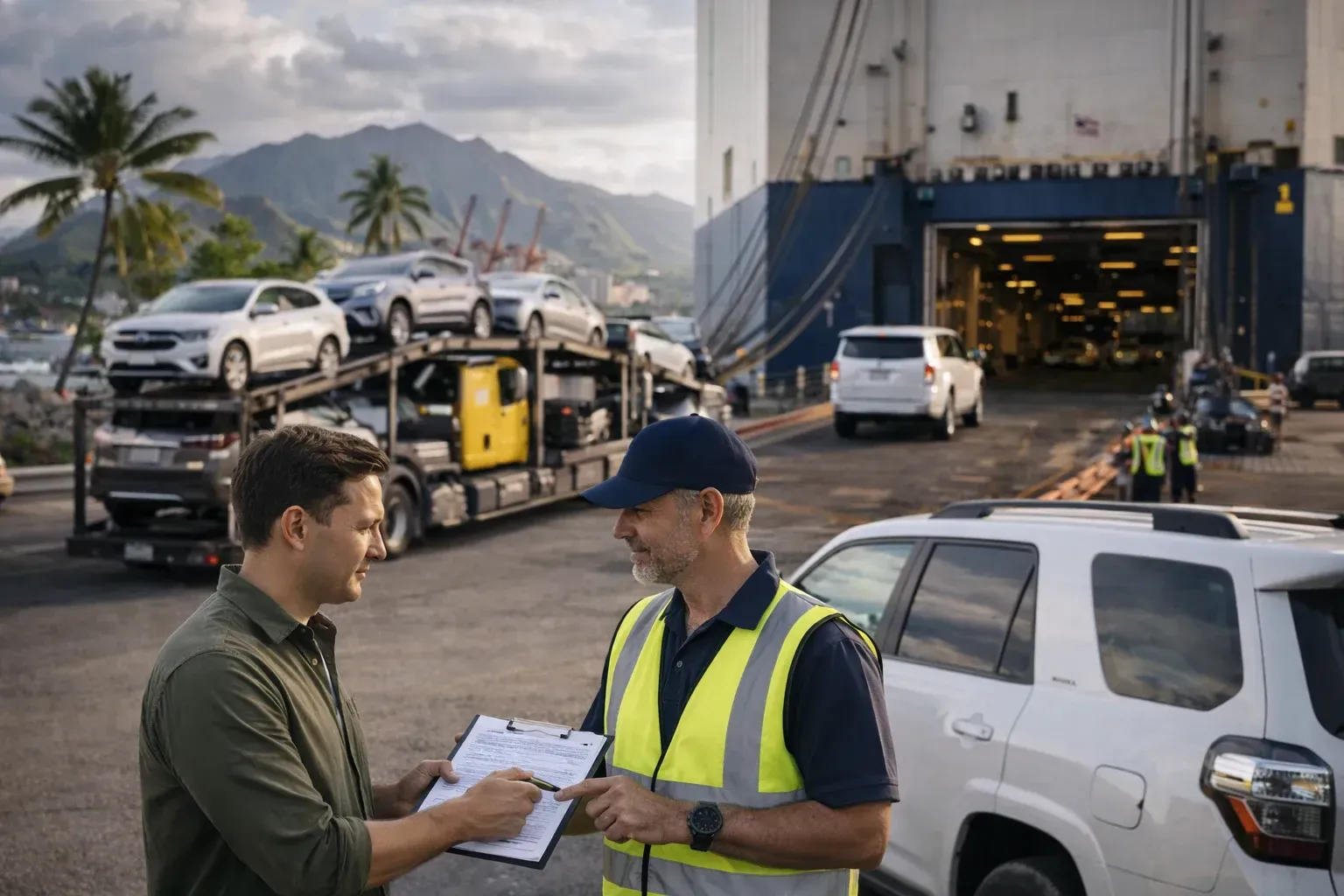
We coordinate military vehicle shipping with the precision and timeline awareness that PCS orders demand. We work with Matson, Hawaii's primary ocean carrier, on a weekly sailing schedule from multiple West Coast ports including Long Beach, Oakland, and Tacoma. We offer both Port-to-Port and Door-to-Port service options to accommodate your pickup situation on the mainland, whether you are leaving from a duty station near a major port or shipping from an inland location that requires ground transport to the port.
Every vehicle we ship goes through a full photographic condition inspection at pickup, and we keep you updated on your shipment's status throughout the process. We are licensed, insured, and USDOT and FMCSA compliant. Our team is reachable by phone Monday through Friday during business hours and is accustomed to working with service members who have tight timelines and specific logistical requirements.
Final Thoughts on Military Bases in Hawaii
- Hawaii hosts more than 60 military installations across the islands, with the largest and most operationally significant concentrated on Oahu.
- Joint Base Pearl Harbor Hickam is the premier installation in Hawaii, combining the historic Pearl Harbor naval complex with Hickam Air Force Base into a joint facility that supports the Pacific Fleet, Pacific Air Forces, and INDOPACOM headquarters.
- Schofield Barracks is the largest Army installation in Hawaii and the primary duty station for soldiers assigned to the 25th Infantry Division.
- Marine Corps Base Hawaii at Kaneohe Bay serves the Marine Corps' aviation and ground combat elements on the windward side of Oahu and is consistently rated one of the most desirable Marine duty stations in the Pacific.
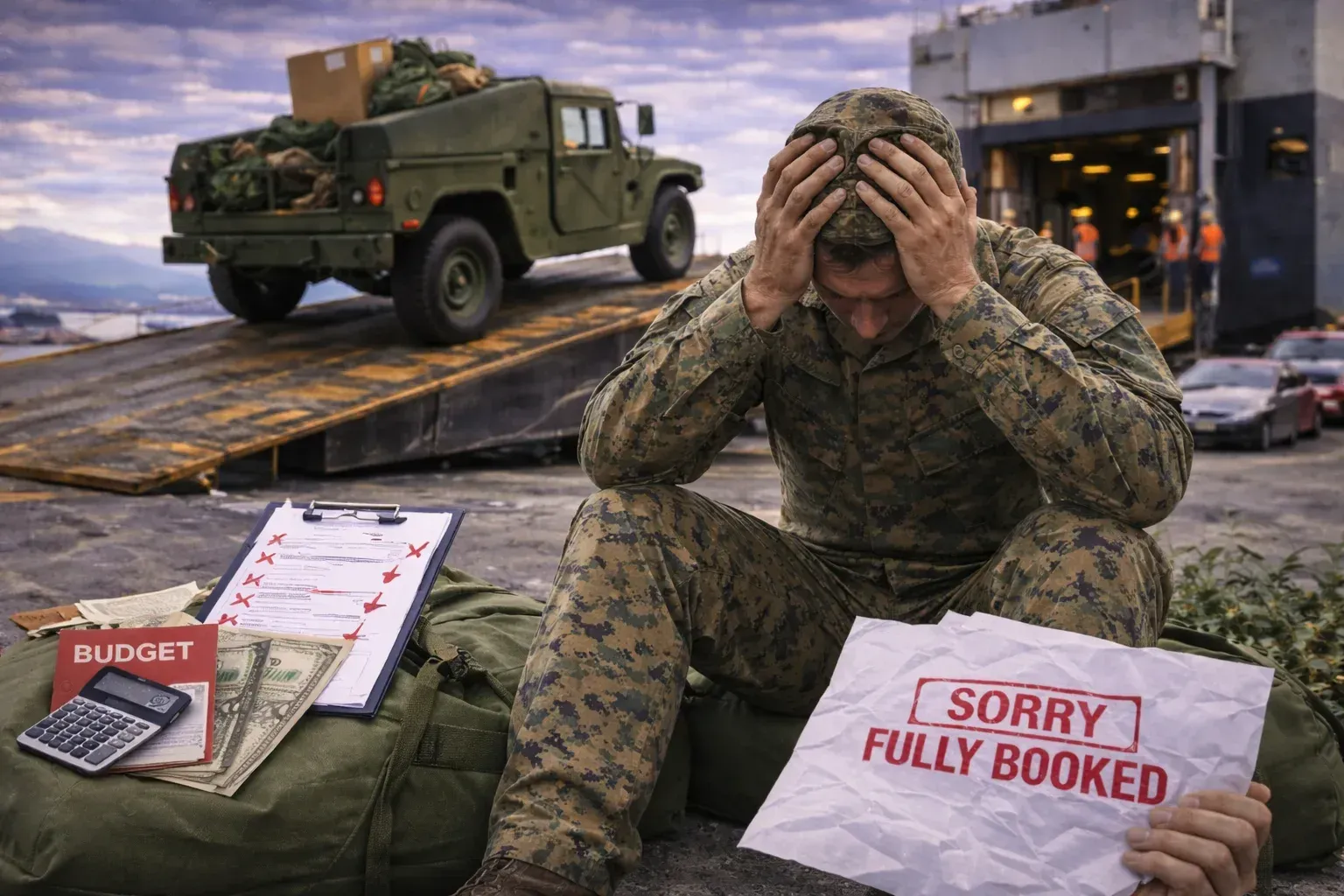
- Military families PCSing to Hawaii should plan their vehicle shipping well in advance of their report date to secure a sailing and avoid the significant expense and inconvenience of arriving without a vehicle on an island where personal transportation is a practical necessity.
Preparing for a PCS move to Hawaii?
Car Shipping Hawaii helps military families transport their vehicles safely so they can focus on settling into their new duty station.
Camilo Jaime
Camilo Jaime is an experienced Hawaii auto transport specialist with deep knowledge in car shipping logistics, Matson vessel coordination, port protocols, military PCS relocations, and a wide range of ocean freight services. He understands the challenges that come with shipping vehicles to and from the Hawaiian islands for families, service members, and businesses alike.
Through his blogs at Car Shipping Hawaii, Camilo shares practical shipping tips, cost-saving advice, and insights drawn from real coordination experience. His goal is to help readers make confident decisions about Hawaii vehicle transport and learn straightforward ways to navigate port requirements, sailing schedules, and service options. With a clear and honest writing style, Camilo focuses on real solutions that make the car shipping process simple, stress-free, and affordable for every customer.
You Might Also Like