Shipping A Car To Hawaii When You Get PCS Orders
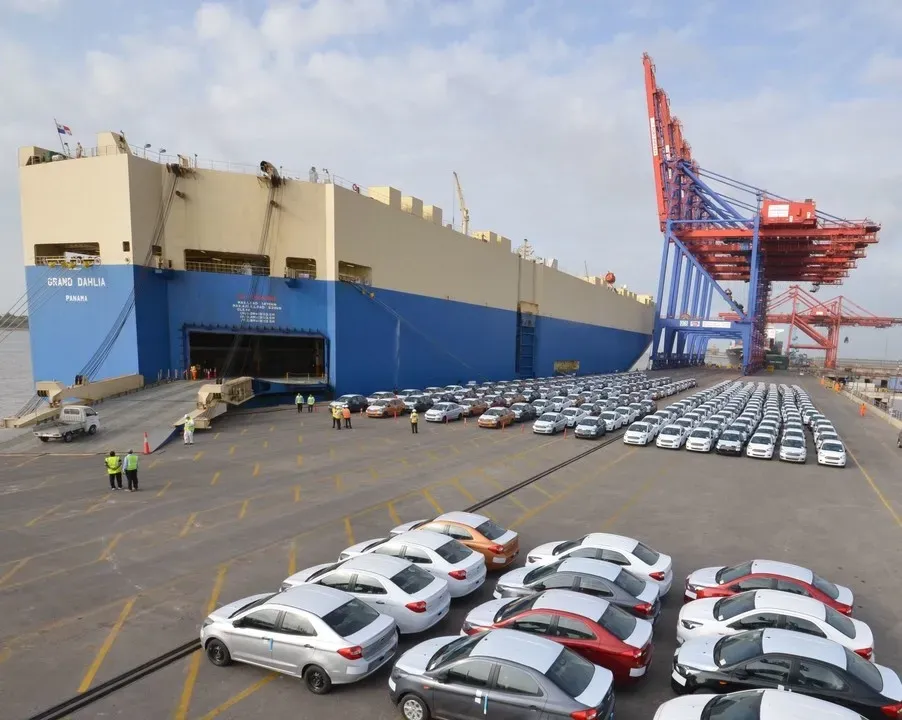
If you receive PCS orders to Hawaii, one of the biggest relocation decisions involves what to do with your vehicle. Selling the car before departure and purchasing a replacement after arrival in Hawaii is one option, but it means giving up a paid-off or preferred vehicle, navigating Hawaii’s higher vehicle prices, and starting from scratch in a new market during what is already one of the most stressful transitions a military family faces. For most service members, shipping the vehicle to Hawaii is the more practical and financially sound choice, and the military car shipping Hawaii process, while it has specific steps and documentation requirements, is straightforward when you understand how it works and give yourself adequate lead time to execute it.
PCS vehicle shipping to Hawaii differs from a standard civilian relocation in one significant respect: Hawaii is not accessible by road, which means the entire vehicle transport is an ocean freight operation from a West Coast port.
There is no option to drive the vehicle partway and ship it the rest of the distance, and there is no mainland auto transport carrier that can deliver a vehicle to the front door of a Honolulu address. The process is a two-leg journey for service members not already located on the West Coast, with an inland auto transport leg from the current duty station to a departure port followed by an ocean crossing on a Matson vessel to the Port of Honolulu.
This guide walks through the complete military vehicle shipping Hawaii process for PCS orders, from confirming relocation details through Honolulu port pickup, and covers documents, preparation, Hawaii car shipping cost, military discount options, and how to choose among military car shipping companies. For families ready to begin the process, Car Shipping Hawaii’s dedicated military shipping service is built specifically around the documentation and timeline requirements of PCS moves.
Understanding PCS Orders and Vehicle Shipping
A Permanent Change of Station, or PCS, is an official military relocation order that transfers a service member from their current duty station to a new one, typically with a report date that determines the timeline for the entire move. PCS orders to Hawaii are issued to service members assigned to installations including Schofield Barracks, Fort Shafter, Pearl Harbor Naval Station, Marine Corps Base Hawaii at Kaneohe Bay, Hickam Air Force Base, and Coast Guard Sector Honolulu, among other facilities across Oahu. The volume of PCS orders to Hawaii generates one of the highest concentrations of military car shipping activity of any relocation destination in the US military system.
Military families shipping a vehicle during PCS relocation typically do so at their own expense rather than through the government’s household goods transportation system. The Defense Personal Property System manages the shipment of household goods on behalf of the military, but private vehicles are generally the service member’s personal responsibility to arrange and fund. Some service members receive a Dislocation Allowance or other relocation stipends that can be applied toward vehicle shipping costs, and the specific entitlements available depend on rank, dependent status, and the specific nature of the PCS orders. Service members should review their orders and consult with their installation transportation office to understand which allowances apply to their situation before booking vehicle transport.
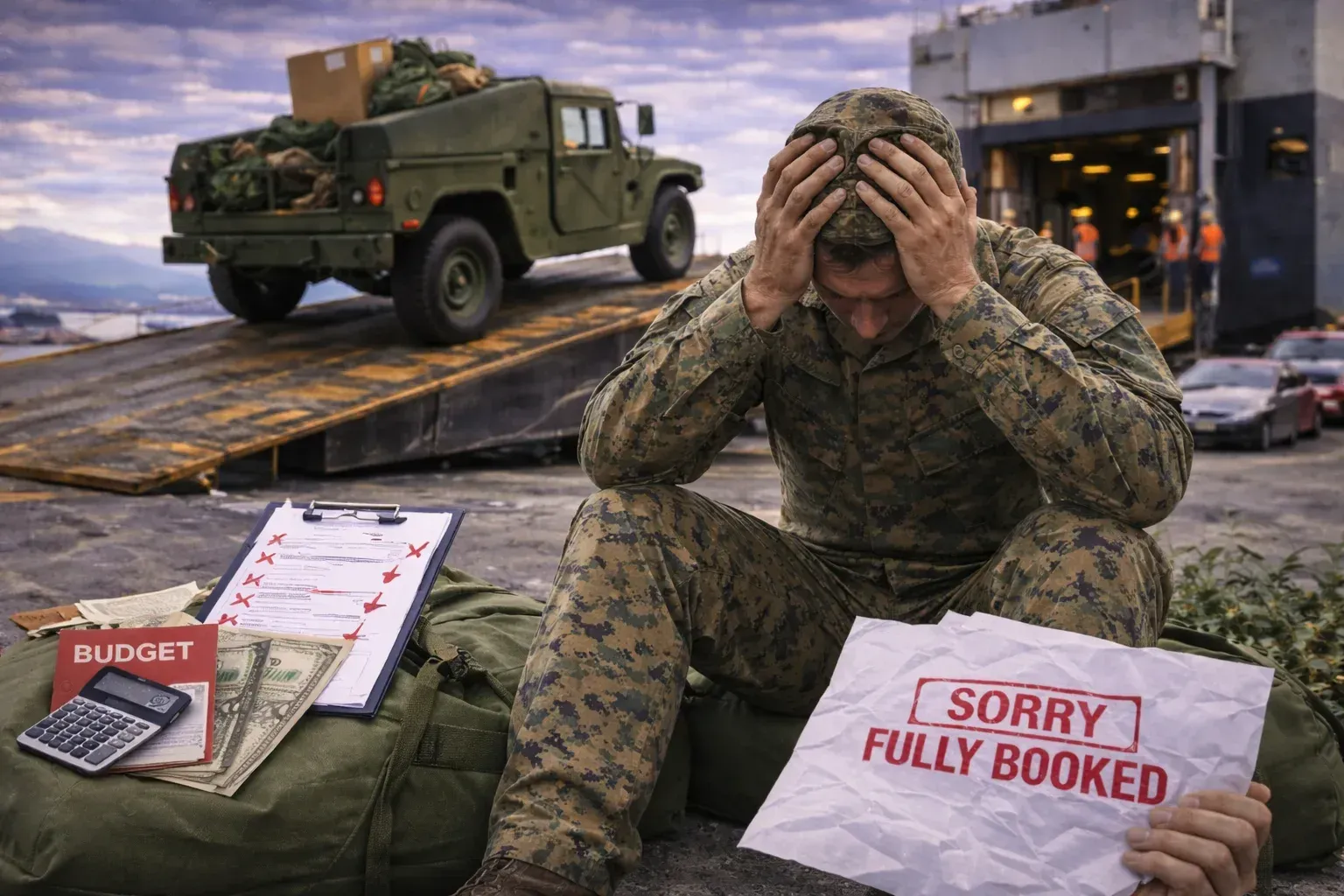
The most important planning principle for PCS vehicle shipping is to start early. Hawaii car shipping operates on Matson’s weekly sailing schedule, and demand for vessel space peaks during the summer PCS season between May and August when the majority of annual military rotations occur. Service members who receive PCS orders with a summer report date and wait until the month before they need to depart to book vehicle shipping may find that their preferred sailing dates are fully booked or that carrier availability for the inland transport leg requires longer lead times than the remaining schedule allows. Booking vehicle transport as soon as PCS orders are confirmed, even if the exact report date has some flexibility, is the most effective way to secure preferred timing and avoid last-minute complications.
Read Also: How Long to Ship a Car to Hawaii
Military Car Shipping to Hawaii Explained
Military car shipping Hawaii operates through the same ocean freight infrastructure as civilian Hawaii auto transport:
Matson Navigation Company vessels sailing weekly
from Long Beach, Oakland, and Tacoma to the Port of Honolulu. Military families do not have access to a separate government-operated vehicle shipping system for privately owned vehicles, and the commercial Hawaii auto transport market serves military and civilian customers through the same vessels and port terminals.
What distinguishes military car shipping companies from general auto transport providers is their familiarity with the specific documentation requirements of PCS moves, their experience coordinating vehicle shipping timelines with military report dates, and their ability to work with service members who may have limited flexibility in their departure and arrival schedules due to the constraints of military orders. Military-experienced carriers understand that PCS report dates are not negotiable the way civilian relocation timelines sometimes are, and they structure their scheduling and communication around the need to have the vehicle available in Hawaii on a timeline that supports the service member’s reporting obligations.
The route structure for military vehicle shipping Hawaii follows the same West Coast departure port framework as all Hawaii auto transport. Service members stationed in California, Oregon, or Washington have the most convenient access to departure ports, while those stationed in the South, Midwest, Mountain West, or East Coast require an additional inland transport leg to get the vehicle from the current duty station to the West Coast departure port. For a family stationed at Fort Bragg in North Carolina or Joint Base Lewis-McChord in Washington, the logistics of getting a vehicle from the current duty station to a West Coast port are part of the planning process that needs to begin as soon as PCS orders are received.
How to Ship a Car to Hawaii During PCS Orders
Step 1 — Confirm Relocation Details from PCS Orders
Review your PCS orders carefully to identify your report date, the specific installation to which you are assigned, and any relocation entitlements that apply to your move. Contact your installation’s transportation office to understand which allowances are available for vehicle shipping and whether any government programs apply to your situation. Establish your target vehicle arrival date in Hawaii based on your report date and the typical fourteen to twenty-five day door-to-Honolulu timeline for PCS vehicle shipping, then count backward to determine when the vehicle needs to leave your current location.
Step 2 — Choose a Reliable Military Car Shipping Company
Select a carrier that has demonstrated experience with PCS vehicle shipping and a direct working relationship with Matson Navigation Company for Hawaii sailings. Confirm the carrier’s FMCSA registration, request confirmation of cargo insurance coverage, and read customer reviews from military families who have used the service for Hawaii PCS moves specifically. Military car shipping companies that understand PCS logistics will ask about your report date, explain how they coordinate the sailing schedule with your timeline, and provide clear milestone communication from booking through Honolulu pickup.
Step 3 — Prepare the Vehicle and Gather Documentation
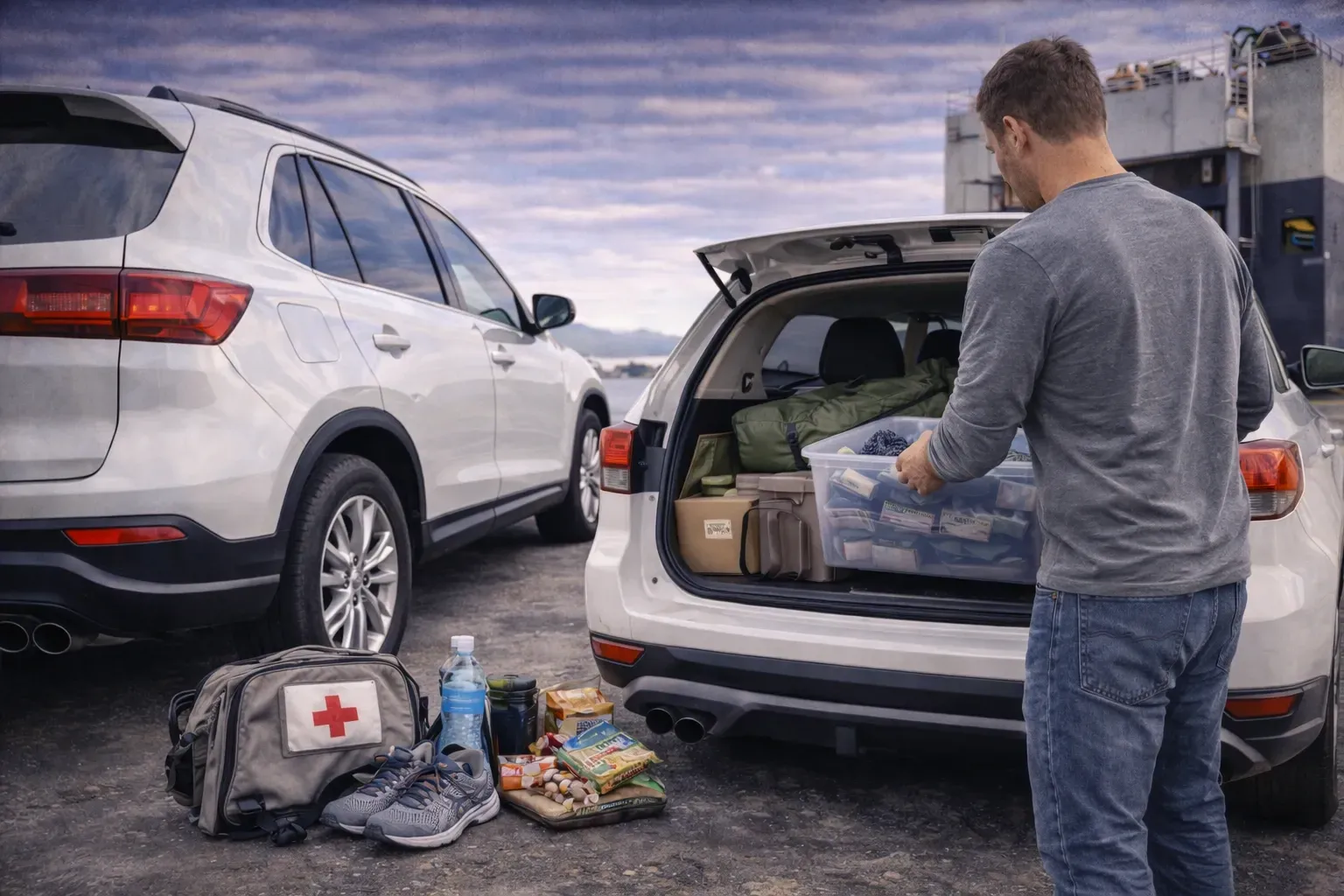
Gather all required documents before the carrier arrives for pickup or before you deliver the vehicle to the port. Clean the vehicle thoroughly, remove all personal belongings, reduce the fuel level to one quarter or less, and take independent photographs of the entire vehicle. Confirm the vehicle is in operable condition for drive-on loading. Complete any outstanding maintenance items that could affect the vehicle’s ability to be driven onto the vessel.
Step 4 — Deliver the Vehicle to the Port or Schedule Pickup
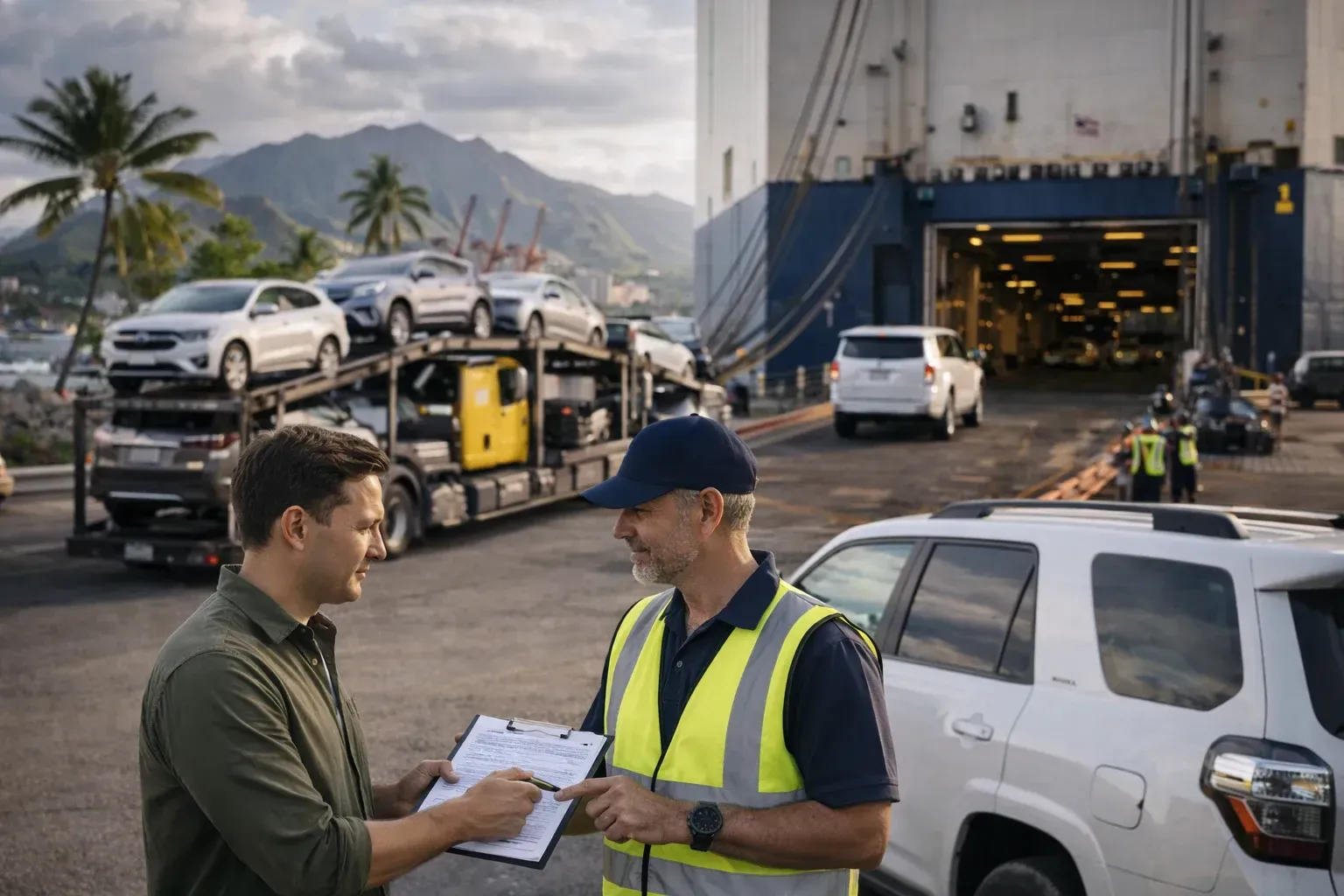
For Door-to-Port service, the carrier driver will pick up the vehicle from your current duty station location on the scheduled date and transport it to the West Coast departure port. For Port-to-Port service, you deliver the vehicle yourself during the port acceptance window. At port check-in, the inspector will conduct a condition inspection and generate the bill of lading. Review and sign the bill of lading only after confirming that all pre-existing damage is accurately documented.
Step 5 — Track the Shipment and Pick Up in Honolulu
Your shipping coordinator will provide milestone updates including port delivery confirmation, vessel departure confirmation, and arrival notification at the Port of Honolulu. When the vehicle is available for pickup, bring the original bill of lading and valid military ID or other government-issued photo identification to the Matson terminal at Sand Island. Inspect the vehicle thoroughly before leaving the port and note any damage on the delivery documentation before signing.
Documents Required for Military Vehicle Shipping
The documentation required for PCS vehicle shipping includes both the standard documents required for all Hawaii car shipping and the military-specific documentation that confirms the service member’s authorization to ship the vehicle in connection with official orders.
- Copy of PCS orders: your official PCS orders confirm the nature of the relocation and are required by many military car shipping companies to process the shipment and apply any military-specific pricing or service arrangements. Keep multiple copies readily accessible throughout the shipping process.
- Vehicle title: the original vehicle title or a certified copy confirming legal ownership. The name on the title must match the name on the orders and the identification presented at port check-in. Financed vehicles require a lien authorization letter from the lender authorizing the shipment.
- Government-issued photo identification: a valid military ID, CAC card, driver’s license, or passport with the name exactly matching the vehicle title and shipping authorization.
- Current vehicle registration: confirms the vehicle is legally registered and allows the carrier to verify the VIN, make, model, and year against the title.
- Lien authorization letter: required if the vehicle is financed and the lender holds the title. Contact the lender at least one week before the scheduled port delivery or carrier pickup date to allow time for the letter to be issued. Many lenders have a standard form for this purpose that can be requested by phone or through online account management.
- Power of attorney: if the vehicle will be delivered to the port or claimed in Honolulu by someone other than the registered owner, a notarized power of attorney is required. This is common in PCS situations where the service member reports to Hawaii before the family completes the mainland move, or where the service member is already at the receiving installation and a family member is managing the vehicle shipment.
Read Also:
What to Prepare Before Shipping Your Vehicle: A Complete Checklist
Preparing Your Vehicle for Shipment
Proper preparation before handing the vehicle over for PCS vehicle shipping protects the vehicle during the ocean crossing and ensures smooth port check-in at both ends. The preparation steps are consistent regardless of which military car shipping companies you use.
- Clean the exterior and interior thoroughly: a clean vehicle allows the port inspector to accurately document pre-existing damage on the bill of lading. Existing scratches, dents, or paint chips that are obscured by dirt or road grime can create disputes about when damage occurred if a claim arises after delivery. Wash the undercarriage as well, particularly for vehicles from duty stations in states with salted roads, as soil and debris on the undercarriage can trigger agricultural quarantine inspection at the Honolulu port.
- Remove all personal belongings without exception: personal items left inside the vehicle are not covered by the carrier’s cargo insurance, may violate the carrier’s terms, and can create complications at the Honolulu agricultural inspection. This includes items in the trunk, glove compartment, under seats, and in any storage compartments. Military families sometimes attempt to use the vehicle as additional moving container space, which carriers will not permit.
- Reduce fuel to one quarter tank: ocean freight carriers require a maximum of one quarter tank of fuel for fire safety reasons. Arriving at port check-in with more fuel than permitted requires on-site fuel removal, adding time and cost to the check-in process.
- Confirm operable condition: the vehicle must start reliably and drive normally. Check battery charge, tire pressure, and fluid levels. If the vehicle has any mechanical issues that prevent normal operation, notify the carrier before pickup so that special handling for inoperable vehicles can be arranged in advance.
- Document the vehicle condition independently: take photographs of all exterior surfaces, the interior, and the odometer before the carrier arrives or before you drive to the port. These photos, taken on your personal device with a timestamp, supplement the carrier’s bill of lading inspection record and provide independent evidence for any damage claims that arise after delivery.
Hawaii Car Shipping Cost for Military Moves
The Hawaii car shipping cost for a PCS move reflects the same cost components as civilian Hawaii auto transport: ocean freight for the West Coast to Honolulu crossing, inland transport for the leg from the current duty station to the departure port, and port handling fees. Understanding these components helps service members budget accurately and evaluate quotes from multiple military car shipping companies.
- Ocean freight rate: the West Coast to Honolulu ocean freight component for a standard passenger vehicle typically ranges from approximately one thousand to fifteen hundred dollars depending on the carrier, time of year, and fuel surcharges. This rate is consistent for all customers, military and civilian, on the same vessel and service tier.
- Inland auto transport: service members stationed away from West Coast departure ports need Door-to-Port service, which adds the inland transport cost based on the distance from the current duty station to the departure port. Families at duty stations in California may add two to four hundred dollars for the land leg, while those in the South, Midwest, or East Coast add progressively more based on distance.
- Summer PCS season pricing: Hawaii car shipping cost may be higher during the summer PCS season peak due to increased demand for vessel space and carrier availability. Booking early, as soon as PCS orders are confirmed, is the most effective way to access standard pricing before peak-season rate adjustments affect available quotes.
- Vehicle size: standard passenger sedans and compact SUVs ship at the base rate. Full-size trucks, large SUVs, and vehicles with non-standard dimensions may incur surcharges that reflect the additional deck space they require.
Cost to Ship a Car to Hawaii from California
The
cost to ship a car to Hawaii from California
is the most common Hawaii car shipping cost benchmark because California is home to two of the three West Coast departure ports and is the origin state for a large share of both military and civilian Hawaii shipments. Service members stationed at bases in California, including Camp Pendleton, Vandenberg, Fort Irwin, Travis Air Force Base, and Naval Base San Diego, are among the best-positioned military customers for minimizing total car shipping Hawaii cost because their proximity to Long Beach or Oakland departure ports reduces or eliminates the inland transport component.
For Port-to-Port service from a California departure port, the all-in Hawaii car shipping cost for a standard passenger vehicle typically ranges from approximately one thousand to sixteen hundred dollars when booked at standard timing. This range reflects the ocean freight rate plus port handling fees at both ends, with variation driven by vehicle size, fuel surcharges, and seasonal demand. Service members who can self-deliver their vehicle to the Long Beach or Oakland terminal during the acceptance window for their target sailing access the lowest available cost to ship car to Hawaii from California by eliminating carrier pickup fees entirely.
For Door-to-Port service from California locations more than two hours from a departure port, the inland transport addition typically adds two to four hundred dollars to the total cost. For Southern California bases like Camp Pendleton that are close to Long Beach, Door-to-Port additions are minimal. For Northern California bases that are within practical driving distance of Oakland, Port-to-Port self-delivery is often the most economical and convenient option.
Military Discounts for Car Shipping
Many military car shipping companies offer military discount car shipping pricing as a direct recognition of the service community’s business and as a competitive differentiator in the significant military relocation market. Military discount car shipping programs vary in structure and value across different carriers, and understanding what each discount represents helps service members evaluate quotes accurately rather than selecting based on advertised discount percentage alone.
- Percentage discounts on base rates: the most common form of military discount car shipping reduces the base ocean freight or total service rate by a fixed percentage for active duty military customers who present their orders and military identification. Typical discounts in this category range from five to fifteen percent of the base rate, which translates to fifty to two hundred dollars in savings on a standard Hawaii shipment.
- Waived fees: some carriers offer military customers waivers on specific fees such as fuel surcharges, port handling fees, or storage fees for vehicles that arrive at the port before the target sailing date and need to be held briefly. Fee waivers can be more valuable than percentage discounts depending on the specific fees involved.
- Priority scheduling: military-friendly carriers may offer priority placement in the carrier scheduling queue for service members with tight PCS report date timelines, ensuring that their vehicle gets the earliest available sailing alignment rather than being placed in a general availability queue.
- Evaluating military discount offers: when comparing military car shipping companies, request a fully itemized quote with the military discount applied and compare the all-in total rather than the discount percentage alone. A carrier offering a fifteen percent discount on a higher base rate may cost more than a carrier with no advertised military discount but a lower base rate structure.
Military Moving Checklist for Vehicle Shipping
A structured military moving checklist for the vehicle shipping component of a PCS move to Hawaii helps service members track the sequential steps and avoid the documentation and timing errors that cause delays.
- As soon as PCS orders are confirmed: calculate your target vehicle arrival date based on your report date, contact military car shipping companies for quotes, confirm lien status and request lien authorization letter if needed, and locate your vehicle title and current registration.
- Four to six weeks before departure: book the vehicle shipment with your selected carrier, confirm the sailing date and port acceptance window, schedule the Door-to-Port pickup if applicable, and request power of attorney documentation if someone else will be managing port delivery or Honolulu pickup.
- Two weeks before departure: begin cleaning the vehicle, confirm all documents are gathered and accessible, schedule any outstanding maintenance that needs to be completed before shipping, and take a full set of timestamped photos of the vehicle’s condition.
- One week before departure: confirm the carrier pickup date or port delivery window, verify that fuel level will be at one quarter or less at the time of delivery, do a final sweep to remove all personal belongings, and confirm contact information for the shipping coordinator who will provide milestone updates.
- At the port or at pickup: review the bill of lading condition documentation carefully before signing, note any discrepancy between the inspector’s documentation and your own photos, retain the original bill of lading for Honolulu pickup, and confirm the estimated vessel departure date and Honolulu arrival notification process.
Read Also:
Hawaii Vehicle Inspection Requirements for Shipped Cars
How Car Shipping Hawaii Supports Military Families
Car Shipping Hawaii is a veteran-owned vehicle shipping company based in Honolulu with a dedicated military shipping service designed around the specific requirements of PCS moves to Hawaii. We are a Matson-certified shipping specialist with direct access to weekly sailings from Long Beach, Oakland, and Tacoma, and our team understands the documentation requirements, timeline constraints, and planning challenges that distinguish a military PCS relocation from a standard civilian move.
We work with service members from the moment their PCS orders arrive to build a vehicle shipping plan that aligns the Matson sailing schedule with their report date, accommodates the inland transport leg from their current duty station, and provides the clear milestone communication that military families need to coordinate vehicle arrival with the rest of their relocation logistics. Every vehicle we ship receives a thorough photographic condition inspection at pickup, and we walk every customer through the lien authorization, power of attorney, and documentation requirements before their vehicle leaves their hands.
We offer Port-to-Port service for service members stationed near West Coast departure ports, Door-to-Port service for families at duty stations anywhere in the continental US, and military discount car shipping pricing for active duty service members with current PCS orders. Our team is available Monday through Friday, 8AM to 6PM HST, to answer questions about the PCS vehicle shipping process and help military families plan their Hawaii relocation with confidence.
Final Thoughts on Shipping a Car to Hawaii During PCS Orders
- Military car shipping Hawaii follows the same ocean freight infrastructure as civilian Hawaii auto transport, with Matson weekly sailings from West Coast departure ports to the Port of Honolulu, but requires military-specific documentation including PCS orders and lien authorization letters, and benefits from carriers experienced with the timeline constraints and reporting obligations of PCS moves.
- PCS vehicle shipping planning should begin as soon as orders are confirmed, with booking ideally four to six weeks before the target departure date to secure preferred sailing alignment, particularly during the summer PCS peak season when demand for Hawaii auto transport vessel space is highest.
- Hawaii car shipping cost for military PCS moves consists of the ocean freight rate plus inland transport for service members not near West Coast departure ports, with military discount car shipping reducing the base rate at carriers that recognize military customers, and the cost to ship car to Hawaii from California being the lowest available for service members at California installations who can self-deliver to the port.
- The military moving checklist for vehicle shipping covers order confirmation, booking, document gathering, lien authorization, vehicle preparation, photo documentation, pickup or port delivery, bill of lading review, and Honolulu port pickup, with each step having a recommended completion timeline relative to the PCS report date.
- Choosing among military car shipping companies should prioritize Matson direct access, PCS experience, transparent military discount pricing, FMCSA registration, and proactive milestone communication over advertised discount percentage alone, as the best value comes from a carrier that executes reliably and communicates clearly throughout the process rather than one that offers the largest nominal discount.
Received PCS orders to Hawaii? Car Shipping Hawaii helps military families transport their vehicles safely so they can focus on a smooth relocation.
Camilo Jaime
Camilo Jaime is an experienced Hawaii auto transport specialist with deep knowledge in car shipping logistics, Matson vessel coordination, port protocols, military PCS relocations, and a wide range of ocean freight services. He understands the challenges that come with shipping vehicles to and from the Hawaiian islands for families, service members, and businesses alike.
Through his blogs at Car Shipping Hawaii, Camilo shares practical shipping tips, cost-saving advice, and insights drawn from real coordination experience. His goal is to help readers make confident decisions about Hawaii vehicle transport and learn straightforward ways to navigate port requirements, sailing schedules, and service options. With a clear and honest writing style, Camilo focuses on real solutions that make the car shipping process simple, stress-free, and affordable for every customer.
You Might Also Like