Shipping A Car From Hawaii To Mainland: US Regulations You Need To Know
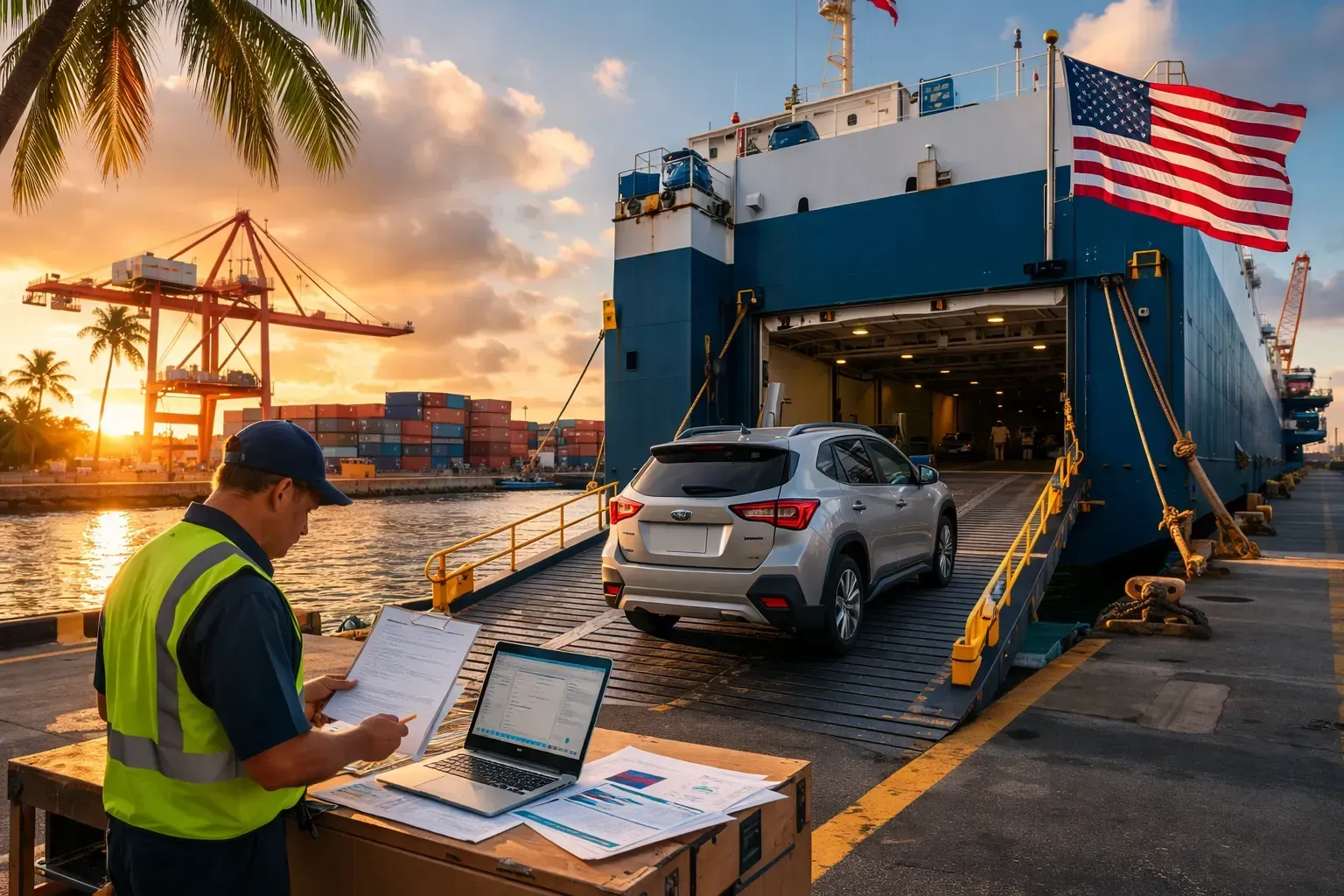
Shipping a vehicle from Hawaii to the mainland United States involves more than simply booking transport. Understanding the regulations and requirements can help avoid delays and unexpected issues that turn what should be a straightforward relocation into a frustrating experience. Whether you are a Hawaii resident relocating to the continental United States, a military family completing a PCS transfer from one of Oahu’s installations, or a vehicle owner selling or delivering a car to a mainland buyer, the process follows the same core sequence of documentation, preparation, port procedures, and ocean transit.
Hawaii to mainland car shipping operates entirely via ocean freight carriers, because there is no road or rail connection between the islands and the continental United States. Vehicles are loaded onto ocean vessels at the Honolulu port, transported across the Pacific, and unloaded at West Coast mainland ports where they are either collected by the owner or transferred to a ground carrier for delivery to an inland destination. The logistics of that process are well-established and routinely handled by specialized vehicle shipping companies, but individual shippers who do not understand the documentation requirements, preparation standards, and port procedures involved can experience delays that add days or weeks to their timeline.
This guide explains how Hawaii to mainland car shipping works, what US regulations apply, what documents are required, how to prepare a vehicle for the ocean crossing, what the process looks like step by step, and how to estimate the cost to ship a car from Hawaii to mainland. Car Shipping Hawaii provides reliable vehicle transport in both directions and helps customers navigate every stage of the process.
Understanding Hawaii to Mainland Car Shipping
Hawaii to mainland car shipping moves in the reverse direction of the more commonly discussed mainland-to-Hawaii route but follows the same fundamental ocean freight model. The vehicle originates at the Honolulu port on Oahu, which is the primary departure point for virtually all vehicle shipments leaving Hawaii for the mainland. Vehicles shipping from the Neighbor Islands must first be transported to Oahu by inter-island barge before they can be loaded onto a mainland-bound vessel, which adds time and cost to the overall shipment that owners on Maui, the Big Island, Kauai, or Molokai should account for in their planning.
The primary ocean carrier for Hawaii vehicle shipments in both directions is Matson Navigation Company, which operates a regular schedule of vehicle-carrying vessels between Honolulu and multiple West Coast ports. Matson’s sailing schedule is fixed by week, meaning that a vehicle that misses the cutoff for a given week’s sailing will wait for the following week’s departure. Understanding the sailing schedule and building enough lead time into the booking to comfortably meet the port cutoff is one of the most important planning steps for anyone shipping a car from Hawaii to mainland on a timeline tied to a report date, a closing date, or any other fixed commitment on the mainland end.
Mainland arrival ports for Hawaii vehicle shipments served by Matson include Long Beach and Oakland in California, Tacoma in Washington, and Portland in Oregon. Car shipping Hawaii to California is the most common route by volume, reflecting California’s large population, its role as the primary destination for Hawaii residents relocating to the mainland, and the frequency of Matson sailings to its California terminals relative to the Pacific Northwest ports. Transit time from Honolulu to Long Beach or Oakland is approximately five to seven days depending on the specific sailing schedule and weather conditions during the crossing.
US Regulations for Shipping a Car From Hawaii
Because Hawaii to mainland car shipping is domestic transport entirely within the United States, it does not involve international customs clearance, import duties, or foreign vehicle compliance requirements. The vehicle moves between two US jurisdictions under domestic transportation law, which simplifies the regulatory framework considerably compared to international vehicle shipping. However, domestic does not mean unregulated, and the US regulations that apply to vehicle shipping from Hawaii are specific and consequential for shippers who fail to comply.
US Customs and Border Protection is involved in the departure process for vehicles shipping from Hawaii to the mainland even though the shipment is domestic. CBP requires that vehicles be registered in the Automated Export System if their value exceeds $2,500, which applies to virtually all motor vehicles. The AES filing must be completed before the vessel departs, and the carrier typically handles this filing on behalf of the shipper as part of the booking process. Shippers should confirm with their carrier that the AES filing requirement is included in the service and that their vehicle has been filed before the vessel sailing date.
The vehicle must have a clear title, meaning no outstanding liens or loans against it, before it can be accepted for shipment from Hawaii to the mainland. If a loan exists against the vehicle, the lender must provide written authorization for the vehicle to be shipped, and in some cases the lender may require early payoff of the loan before release for transport. Title clearance verification is a standard step in the port acceptance process, and vehicles that arrive at the Honolulu port without a clear title or lender authorization will be refused until the documentation issue is resolved.
Documents Required to Ship a Car From Hawaii to Mainland
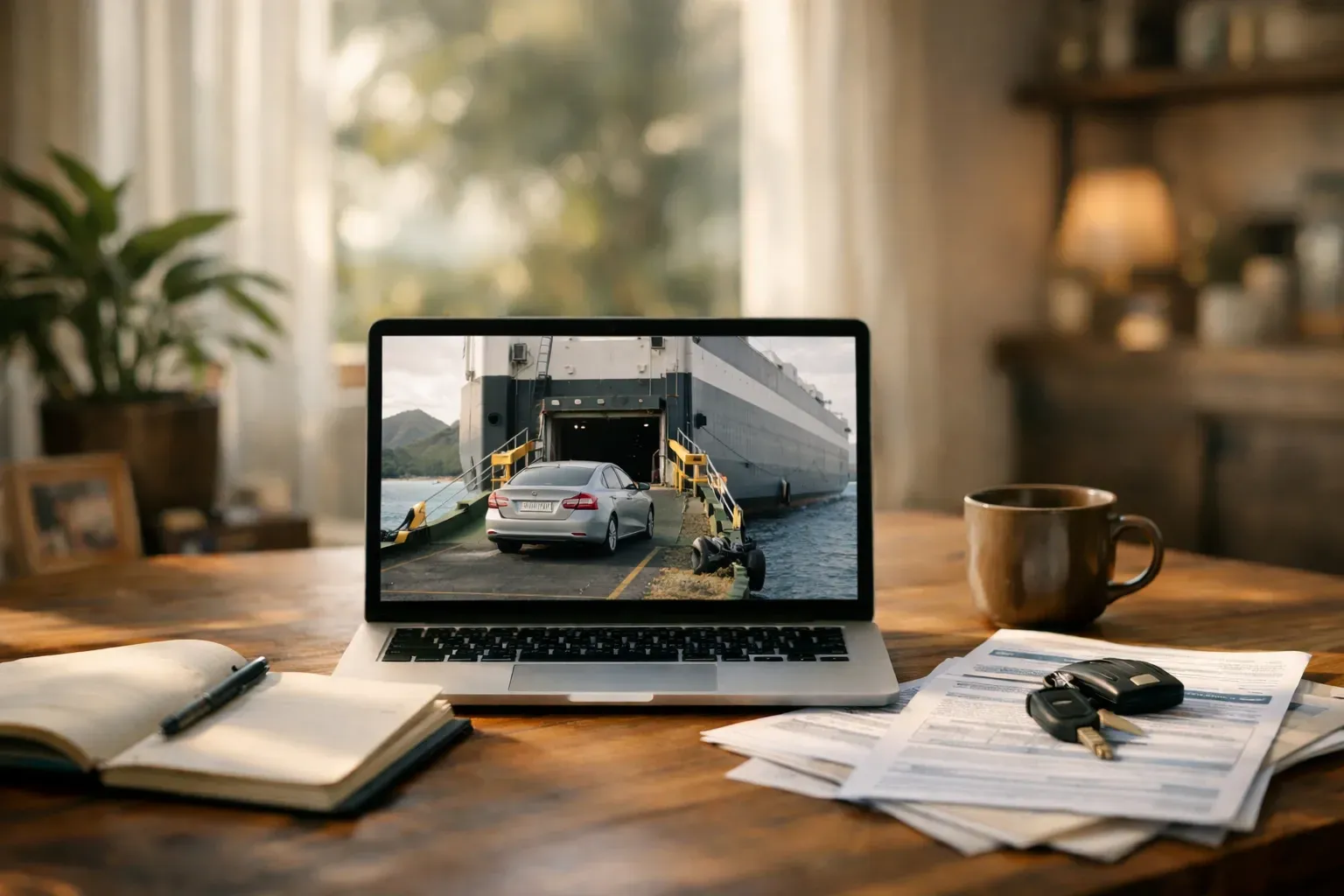
The documents needed to ship a car from Hawaii are specific and must be assembled before the vehicle is presented at the Honolulu port terminal. Incomplete documentation at port check-in is the most common cause of preventable shipping delays, and the time pressure of a fixed sailing schedule means that a documentation problem discovered at the terminal frequently cannot be resolved before the vessel departs.
- Original vehicle title: the original title document must be presented, not a photocopy. The title must show the owner’s name as it appears on their government-issued identification, and it must be free of any lien notations unless a lender authorization letter accompanies it. A lost title must be replaced through the Hawaii DMV before the vehicle can be shipped.
- Valid vehicle registration: current Hawaii registration confirms the vehicle is legally registered and provides a reference document for the vehicle’s identification number, make, model, and owner information. Registration that has lapsed may create complications at the port that require resolution before the vehicle is accepted.
- Government-issued photo identification: the vehicle owner or their authorized representative must present a valid driver’s license, passport, or other government-issued photo ID at the port terminal. The name on the ID must match the name on the vehicle title and the shipping booking confirmation.
- Shipping agreement and bill of lading: the carrier will issue a shipping agreement and a pre-shipment bill of lading that documents the vehicle’s condition at port check-in. Both documents must be signed before the vehicle is loaded. The owner should retain their copy of the bill of lading throughout the transit period and present it at the mainland port to claim the vehicle.
- Lender authorization letter (if applicable): vehicles with outstanding loans require written authorization from the lender confirming that the lender consents to the vehicle being transported from Hawaii to the mainland. The letter must be on official lender letterhead and should reference the vehicle’s VIN and the loan account number.
Preparing Your Vehicle for Shipping
Vehicle preparation for ship car Hawaii to mainland follows the same standards that apply to any ocean freight vehicle shipment. The Honolulu port terminal conducts a condition inspection at check-in that documents every pre-existing scratch, dent, and damage notation on the bill of lading. The vehicle’s condition at that inspection becomes the baseline against which any damage discovered at mainland delivery is measured, making thorough pre-shipment preparation and documentation directly important to the shipper’s ability to file a claim if damage occurs during transit.
- Clean the vehicle inside and out before the port inspection. A clean exterior ensures all pre-existing condition details are visible and accurately recorded. A clean interior confirms that no personal items remain, which is both a carrier requirement and a practical protection against items shifting and causing interior damage during the ocean crossing.
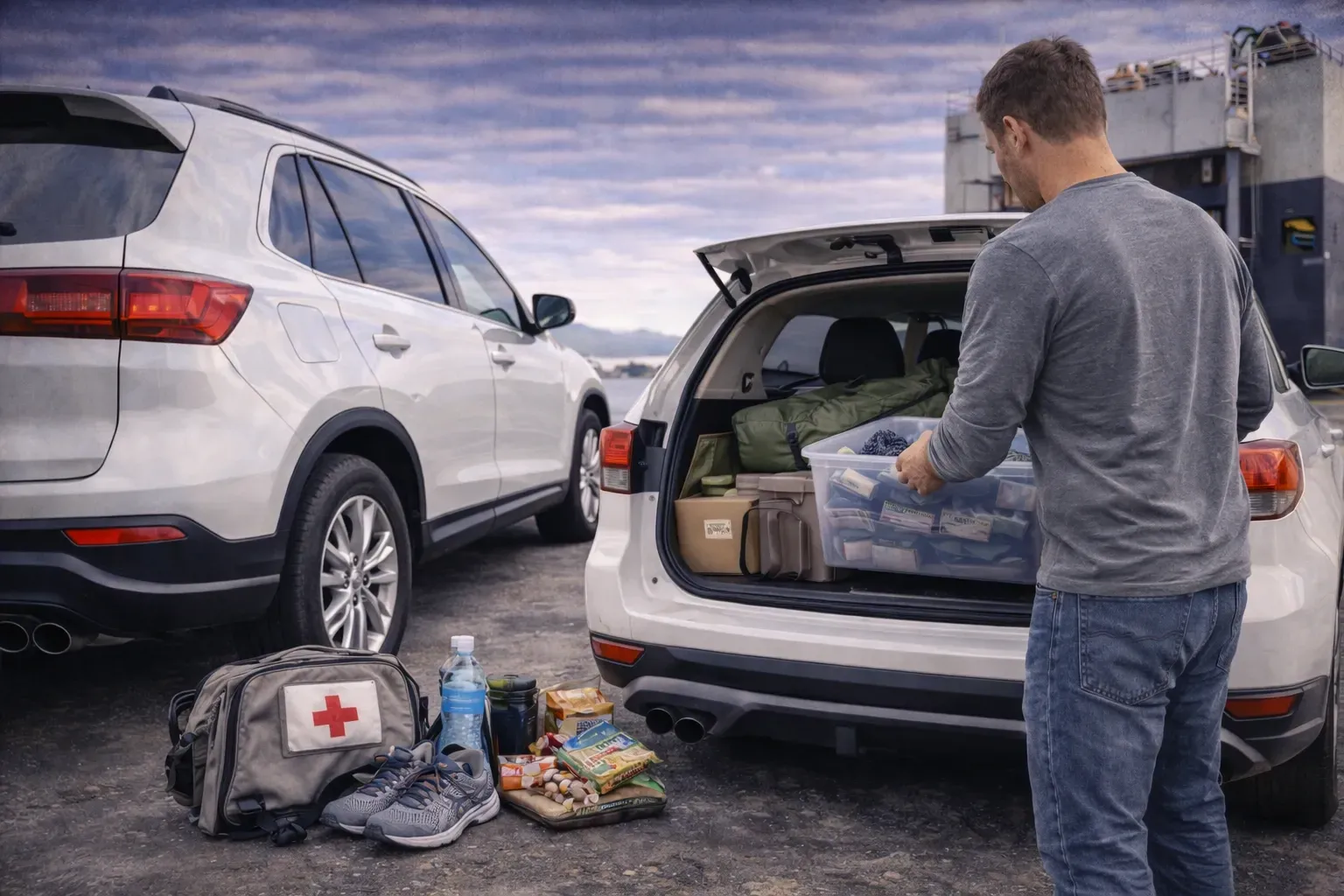
- Remove all personal belongings from the vehicle. Carriers prohibit personal items inside shipped vehicles, and anything that remains is not covered by vehicle transport insurance during transit. This includes items in the trunk, glove compartment, door pockets, and any storage areas specific to the vehicle.
- Reduce the fuel level to one quarter tank or less. Port terminals and ocean vessels impose fuel level restrictions for fire safety reasons. A vehicle arriving at the Honolulu port with a full or near-full tank may be refused until fuel is reduced to the permitted level, which creates a logistical problem on port grounds where fuel removal is not straightforward.
- Check the battery and mechanical condition. The vehicle must be drivable at both the departure port and the arrival port, as it will be driven on and off the carrier during loading and unloading. A dead battery, a flat tire, or a mechanical failure that makes the vehicle unable to move under its own power creates port handling problems that delay release and may generate additional fees.
- Document the vehicle’s condition independently with your own photographs covering all four sides, the roof, all glass surfaces, the wheels, and the interior before delivering to the port. This documentation supplements the official bill of lading inspection and is the strongest evidence available if a damage dispute arises at the mainland end of the shipment.
Read Also: What to Prepare Before Shipping Your Vehicle: A Complete Checklist
How to Ship a Car From Hawaii to the Mainland
Step 1 — Choose a Reliable Vehicle Shipping Company
Select a carrier with a documented track record in Hawaii to mainland car shipping, a valid USDOT number, and cargo insurance coverage that protects the vehicle’s full value during transit. Request a written quote that itemizes all fees including port handling charges, ocean freight, and any fuel surcharges. Verify the carrier’s sailing schedule from Honolulu and confirm which mainland port the vehicle will arrive at before booking.
Step 2 — Gather Required Documents
Assemble the original vehicle title, current registration, government-issued photo ID, and any lender authorization letter before the port cutoff date. Confirm with the carrier whether the AES export filing is included in their service or must be arranged separately. Create a complete document package so that nothing is missing at port check-in, which eliminates the most common source of preventable delay.
Step 3 — Prepare the Vehicle for Port Delivery
Complete all preparation steps described above: clean the vehicle, remove personal items, reduce fuel to one quarter tank, confirm mechanical operability, and photograph the vehicle’s full condition from multiple angles. Address any known mechanical issues before the port delivery date, as vehicles that cannot be driven under their own power face additional handling fees and potential rejection at the terminal.
Step 4 — Deliver the Vehicle to the Honolulu Port Terminal
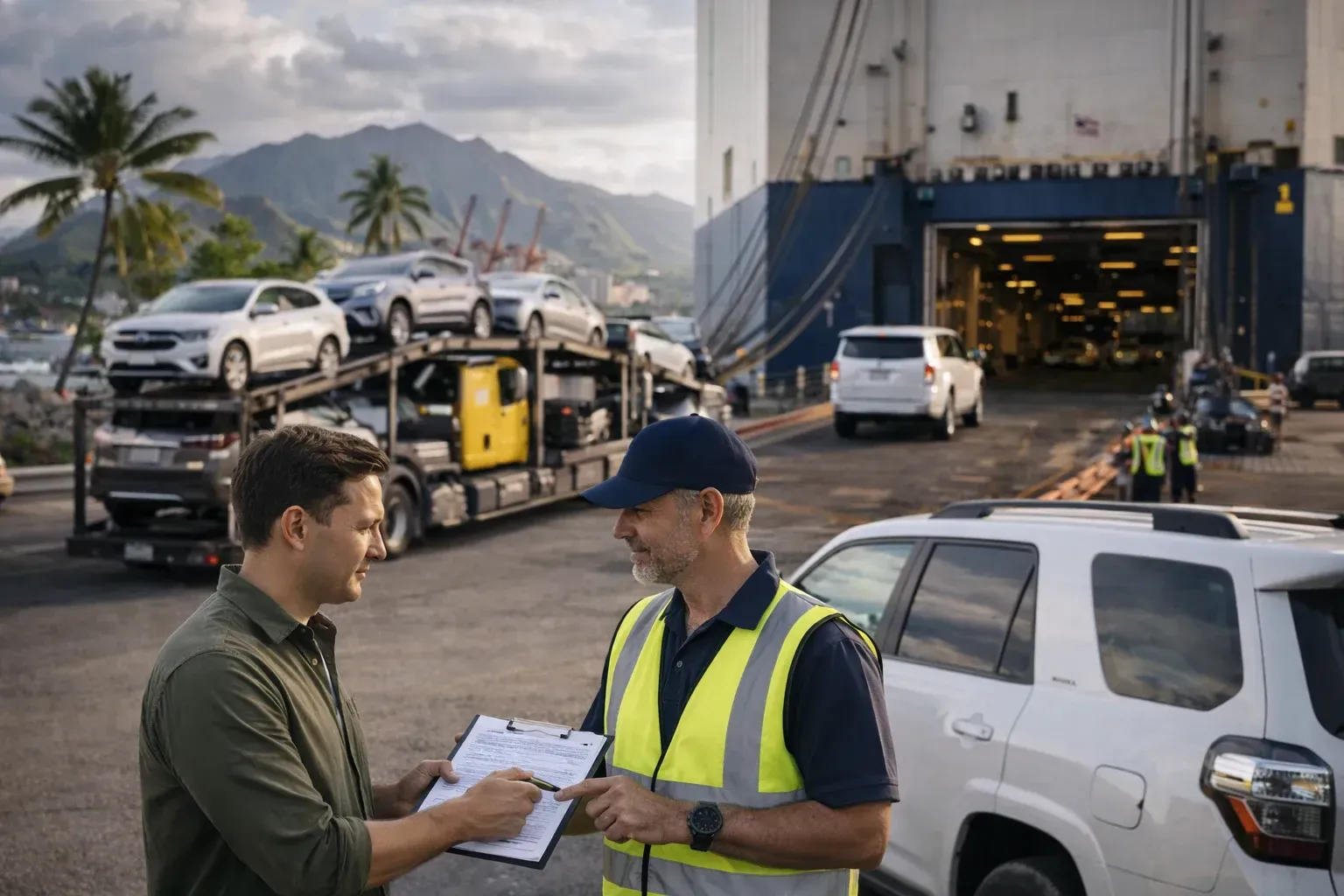
Deliver the vehicle to the Matson terminal at the Honolulu port by the cutoff date established for the target sailing. The terminal will conduct its condition inspection, complete the bill of lading documentation with the shipper’s signature, and confirm that all required documents are in order before accepting the vehicle for loading. The shipper receives their copy of the bill of lading at this step, which is the document required to claim the vehicle at the mainland port.
Step 5 — Track the Shipment and Receive the Vehicle at the Mainland Port
After the vessel departs Honolulu, the shipment can be tracked through Matson’s vessel tracking system, which shows the current position of the vessel and its estimated arrival date at the destination port. After the vessel docks at the mainland port, the vehicle goes through arrival processing before it is released for pickup. The shipper or their authorized representative must present the original bill of lading and valid photo identification to claim the vehicle at the terminal.
Shipping Routes From Hawaii to Mainland Ports
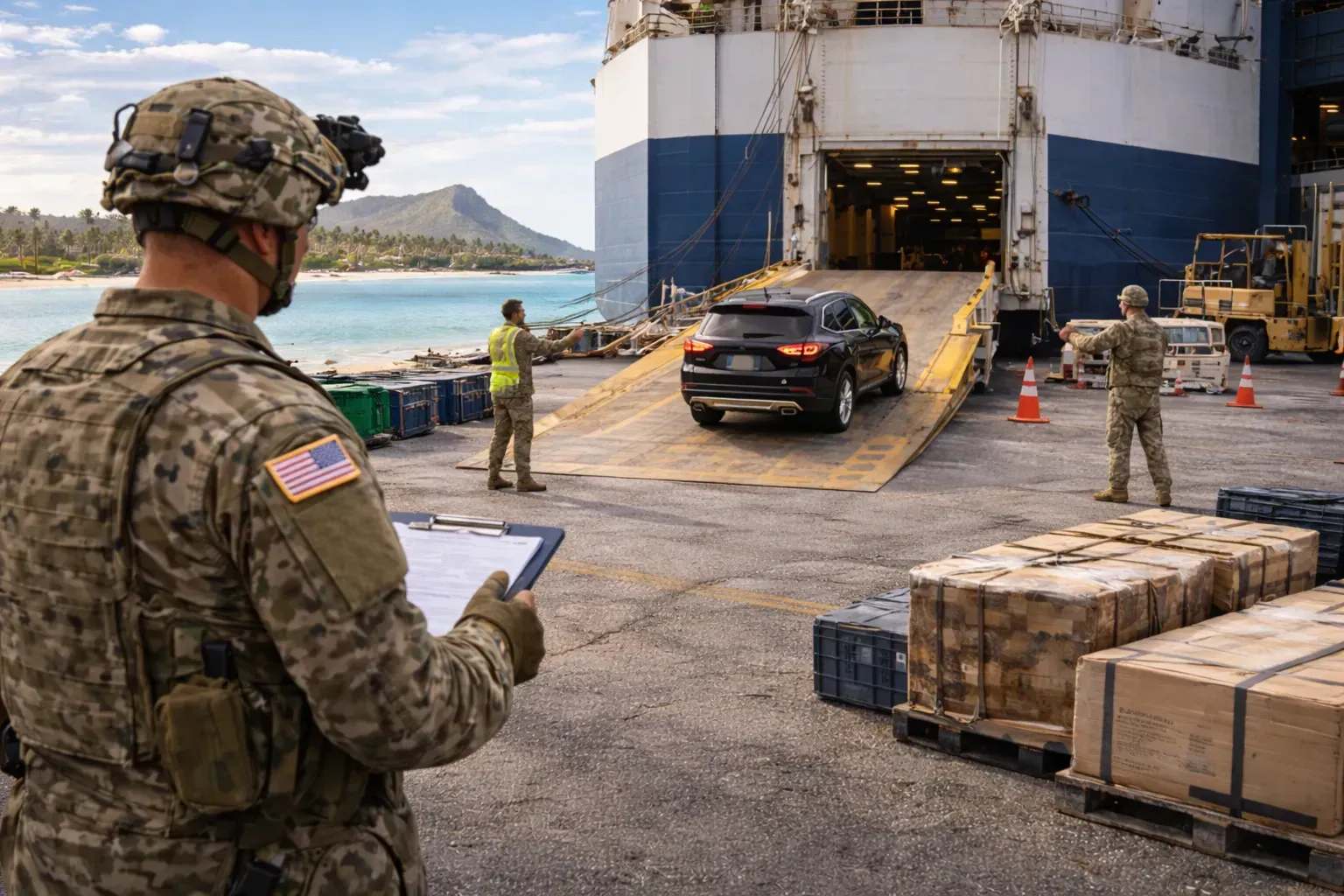
The primary shipping routes for Hawaii to mainland car shipping connect the Honolulu port to Matson terminals on the West Coast. Car shipping Hawaii to California uses the Long Beach terminal in Los Angeles County and the Oakland terminal in the San Francisco Bay Area as the two highest-frequency destinations, with multiple sailings scheduled to each terminal per month. Long Beach is the more commonly used destination for vehicles heading to Southern California, Arizona, Nevada, and other southwestern states, while Oakland serves customers heading to Northern California, Oregon, and the broader Pacific Northwest.
The Tacoma terminal in Washington state is the primary destination for vehicles heading to the Pacific Northwest, including customers relocating to Joint Base Lewis-McChord and the broader Seattle-Tacoma metropolitan area. Transit time from Honolulu to Tacoma is slightly longer than to the California terminals given the additional distance, running approximately seven to nine days depending on the specific sailing. Portland, Oregon is also served by some Matson sailings, though with lower frequency than the California and Tacoma terminals.
Transit time for ship car from Honolulu to mainland is typically five to seven days to California terminals and seven to nine days to Pacific Northwest terminals. These figures represent ocean transit only and do not include the time required for port processing at the mainland terminal before the vehicle is released for pickup, which adds one to two business days in most cases. Shippers who need the vehicle available by a specific date should build this processing buffer into their planning timeline.
Cost to Ship a Car From Hawaii to Mainland
The cost to ship a car from Hawaii to mainland depends on several variables that combine to produce the final quote. Vehicle size is the primary driver of cost within the ocean freight pricing structure, as larger vehicles occupy more space on the vessel’s vehicle deck and are therefore charged at a higher rate than compact passenger cars. A standard sedan will cost less than a full-size pickup truck or an SUV with a large footprint, and oversized or modified vehicles may require special pricing based on their specific dimensions.
The destination port also affects the cost to ship car from Hawaii to mainland. Long Beach and Oakland typically offer the most competitive pricing given the volume of traffic on those routes, while Tacoma and Portland may carry a modest premium reflecting the longer transit distance and lower sailing frequency. The difference between ports is not dramatic for standard vehicles but can be worth factoring into the comparison if the mainland destination is equally served by multiple arrival ports.
For general reference, the cost to ship a car from Hawaii to mainland for a standard passenger vehicle typically ranges from approximately $1,000 to $1,500 for open transport to a California terminal, with larger vehicles and Pacific Northwest destinations adding to that base figure. These ranges are subject to variation based on fuel surcharges that ocean carriers adjust periodically, seasonal demand fluctuations, and any special handling requirements specific to the vehicle. Requesting quotes from established carriers and comparing the full itemized cost rather than the base freight rate alone is the best approach to accurate budgeting.
- Vehicle size: compact sedans and small crossovers occupy the lowest price tier; full-size trucks, large SUVs, and vans fall in higher tiers based on footprint and weight.
- Destination port: California terminals (Long Beach, Oakland) generally offer the most competitive pricing; Pacific Northwest terminals (Tacoma, Portland) may carry a modest premium.
- Fuel surcharges: ocean carriers apply fuel surcharges that fluctuate with market conditions and are added to the base freight rate at the time of sailing.
- Port fees: Honolulu port handling fees are charged at the departure terminal and are typically included in the carrier’s quoted price; confirm this before booking.
- Vehicle transport insurance: cargo insurance for the ocean crossing is either included in the carrier’s service or available as an add-on; confirm coverage terms and insured value before sailing.
Common Mistakes to Avoid When Shipping a Car From Hawaii
Not preparing required documents in advance: the most common cause of preventable delay is arriving at the Honolulu port terminal with incomplete documentation. Assemble the full document package at least a week before the port cutoff date to allow time to resolve any issues with the title, registration, or lender authorization.- Leaving personal belongings inside the vehicle: personal items are prohibited by carriers and are not covered by vehicle transport insurance. Discovering personal items at port check-in requires the shipper to remove them before the vehicle is accepted, which can create last-minute complications on a tight port deadline.
- Missing the sailing cutoff: Matson’s sailing schedule operates on fixed weekly departures, and a vehicle that misses the cutoff must wait for the following week’s sailing. For shippers on a fixed relocation timeline, a one-week delay at departure can cascade into significant complications at the mainland end.
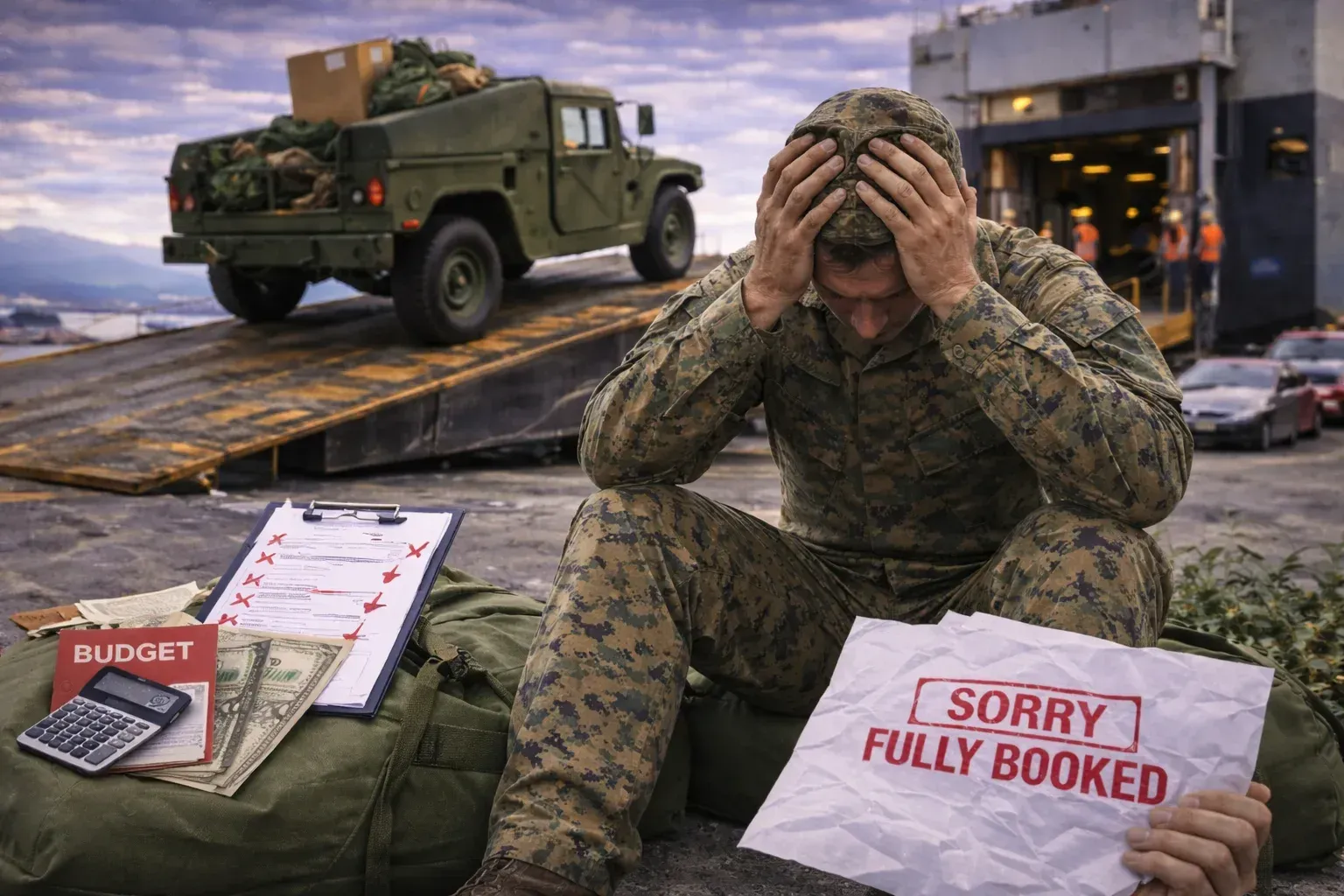
- Booking too late during peak seasons: summer months and the periods around military rotation cycles at Hawaii’s installations generate higher demand for Hawaii to mainland car shipping, which can reduce availability on preferred sailing dates. Booking four to six weeks in advance of the intended departure date provides more scheduling flexibility than last-minute bookings.
- Not verifying vehicle transport insurance terms: assuming that the carrier’s standard service includes full replacement value coverage is a common mistake. Confirm the insured value, the deductible, and the claims process before the vehicle is loaded so that there are no surprises if damage is discovered at delivery.
How Car Shipping Hawaii Helps With Mainland Vehicle Transport
Car Shipping Hawaii is a veteran-owned vehicle shipping company based in Honolulu that coordinates vehicle transport in both directions between Hawaii and the mainland United States. Our team handles the logistics of shipping a car from Hawaii to mainland with the same attention to documentation, preparation, and customer communication that we bring to mainland-to-Hawaii shipments, because we understand that the outbound journey is just as important to our customers as the inbound one.
We coordinate directly with Matson on weekly sailings from the Honolulu port to Long Beach, Oakland, and Tacoma, and our transport coordinators guide customers through every document requirement before the port cutoff date. Every vehicle receives a thorough photographic condition inspection at port check-in, creating a pre-shipment record that protects our customers throughout the ocean transit and the mainland port release process. We provide proactive milestone updates at port check-in, vessel departure, and mainland port arrival notification so customers always know where their vehicle is in the process.
For military families completing PCS transfers from Hawaii’s installations to mainland duty stations, our military vehicle shipping service is built around the timeline requirements and documentation standards specific to orders-based relocation. We are available Monday through Friday during business hours to answer questions about the ship car Hawaii to mainland process, discuss specific vehicle requirements, and help customers plan a shipping timeline that aligns with their relocation schedule.
Read Also:
Vehicle Shipping to Hawaii: A Complete Guide for First-Time Shippers
Final Thoughts on Shipping a Car From Hawaii to Mainland
Hawaii to mainland car shipping operates entirely via ocean freight from the Honolulu port to West Coast mainland terminals, with Matson providing weekly sailings to Long Beach, Oakland, and Tacoma on a fixed schedule that rewards advance planning.- US regulations for shipping a car from Hawaii include AES export filing for vehicles valued above $2,500 and title clearance requirements that must be resolved before the vehicle is accepted at the port terminal.
- The documents needed to ship a car from Hawaii include the original vehicle title, current registration, government-issued photo ID, the carrier’s bill of lading, and a lender authorization letter for any vehicle with an outstanding loan.
- The cost to ship a car from Hawaii to mainland for a standard passenger vehicle to a California terminal typically ranges from $1,000 to $1,500, with larger vehicles, Pacific Northwest destinations, and seasonal demand factors adding to the base figure.
- Car Shipping Hawaii coordinates the full ship car Hawaii to mainland process from documentation guidance and port check-in through vessel tracking and mainland port arrival notification, with dedicated support for military families on PCS orders and proactive communication at every milestone.
Moving your vehicle from Hawaii to the mainland? Car Shipping Hawaii provides reliable vehicle transport services that make shipping your car simple and stress free.
Camilo Jaime
Camilo Jaime is an experienced Hawaii auto transport specialist with deep knowledge in car shipping logistics, Matson vessel coordination, port protocols, military PCS relocations, and a wide range of ocean freight services. He understands the challenges that come with shipping vehicles to and from the Hawaiian islands for families, service members, and businesses alike.
Through his blogs at Car Shipping Hawaii, Camilo shares practical shipping tips, cost-saving advice, and insights drawn from real coordination experience. His goal is to help readers make confident decisions about Hawaii vehicle transport and learn straightforward ways to navigate port requirements, sailing schedules, and service options. With a clear and honest writing style, Camilo focuses on real solutions that make the car shipping process simple, stress-free, and affordable for every customer.
You Might Also Like