Rules For Shipping A Car To Hawaii
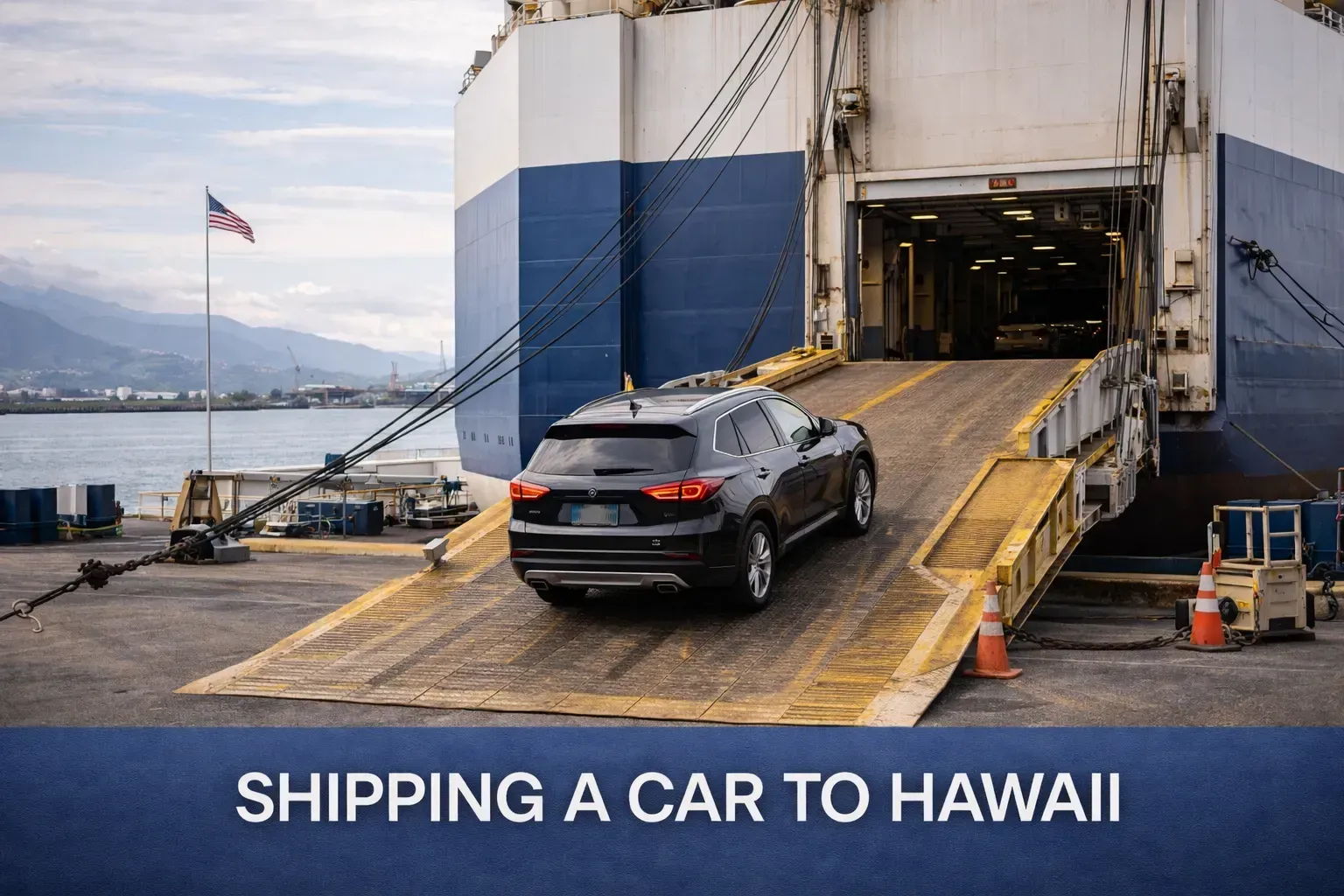
Shipping a car to Hawaii involves more than simply booking transport. There are several rules and preparation steps that vehicle owners must follow before their car can be transported across the ocean, and understanding those requirements before you book is the most effective way to avoid delays, unexpected costs, and complications at the port. Hawaii is accessible only by air and ocean, which means that every vehicle that arrives on the islands has traveled via ocean freight on a scheduled sailing, and every carrier and port terminal that handles those sailings has specific compliance requirements that apply to every vehicle in every shipment.
Many individuals relocating to Hawaii choose to ship their existing vehicle rather than purchasing a new one on the islands, where vehicle prices are consistently higher than on the mainland due to shipping costs absorbed into dealer inventory. Military families completing PCS orders to installations on Oahu, remote workers relocating from the mainland, retirees making the move permanent, and vehicle collectors shipping specialty cars to Hawaii all go through the same fundamental process governed by the same underlying rules. The specifics of documentation, preparation, port procedures, and post-arrival registration apply regardless of who is shipping or why.
This guide explains the rules for shipping a car to Hawaii from the mainland US, the documents required for shipping a car to Hawaii, how to prepare your vehicle for transport, what to expect at departure and arrival ports, and how to choose among Hawaii car shipping companies. For those ready to begin the process, Car Shipping Hawaii provides dependable auto transport to Hawaii with dedicated support from booking through port arrival.
Understanding the Rules for Shipping a Car to Hawaii
The rules for shipping a car to Hawaii are shaped by the requirements of the ocean freight carriers that operate the Hawaii shipping corridor, the federal regulations that govern vehicle transport at US domestic ports, and the Hawaii state requirements that apply to vehicles once they arrive and are registered for operation on the islands. These three layers of regulation work sequentially: the carrier and federal port rules govern the mainland-to-Hawaii transport leg, and the Hawaii state rules govern what happens after the vehicle arrives and is claimed by its owner.
At the federal and carrier level, the core rules center on documentation, vehicle condition, and port handling procedures. Every vehicle shipped to Hawaii must have a valid title and matching identification for the owner, must be in operable condition for drive-on loading unless special arrangements have been made for inoperable vehicles, must have the fuel tank reduced to the level specified by the carrier, must be free of personal belongings stored inside, and must pass a pre-shipment inspection that documents the vehicle’s condition before it is loaded. These requirements are not optional and cannot be waived. Vehicles that arrive at the port without the required documentation or in a condition that does not meet the carrier’s requirements will be refused for loading and will miss the scheduled sailing.
At the Hawaii state level, the rules that apply after a vehicle arrives involve safety inspection, registration, and emissions compliance. Hawaii requires all vehicles to pass a state safety inspection before they can be registered, and that inspection covers brakes, lights, tires, steering, seat belts, and other safety systems. Vehicles that have been modified in ways that affect safety system performance, that have equipment not meeting Hawaii’s lighting and safety standards, or that have damage sustained during transport that affects safety-relevant components will need repairs before they can pass inspection. Understanding these post-arrival requirements before shipping helps owners prepare their vehicle appropriately and avoid registration delays after arrival.
Read Also: Hawaii Vehicle Registration and Safety Inspection: What You Need to Know
Documents Required for Shipping a Car to Hawaii
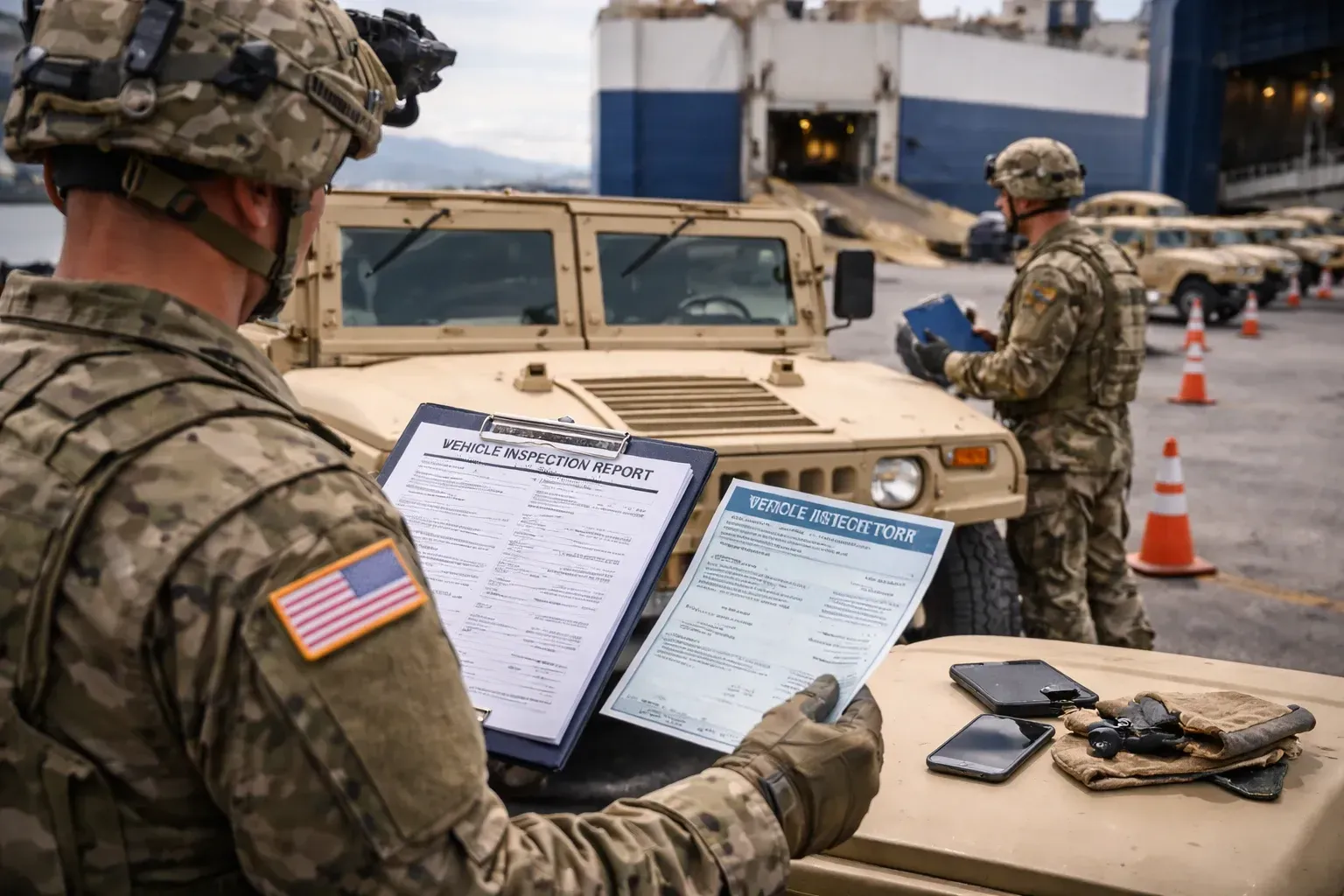
The documents required for shipping a car to Hawaii are straightforward but must be gathered and confirmed before the vehicle is delivered to the departure port. Missing or incorrect documentation at the time of port check-in is one of the most common reasons vehicles miss their scheduled sailing, and the consequences of missing a sailing can include a week or more of additional wait time before the next available vessel departure.
- Vehicle title: the original vehicle title or a certified copy is required to confirm legal ownership of the vehicle. The name on the title must match the name on the shipping authorization and the government-issued identification presented at port check-in. Vehicles with liens must have a letter from the lienholder authorizing the shipment, since the lender technically holds title until the loan is paid in full.
- Government-issued photo identification: the vehicle owner or their authorized representative must present a valid government-issued photo ID at port check-in. A driver’s license, passport, or military ID are all acceptable. The name on the ID must match the name on the vehicle title and the shipping authorization documentation.
- Vehicle registration: current vehicle registration is required to confirm that the vehicle is legally registered in the state from which it is being shipped. Hawaii car shipping companies use the registration to cross-reference the vehicle’s VIN, make, model, and year against the title information.
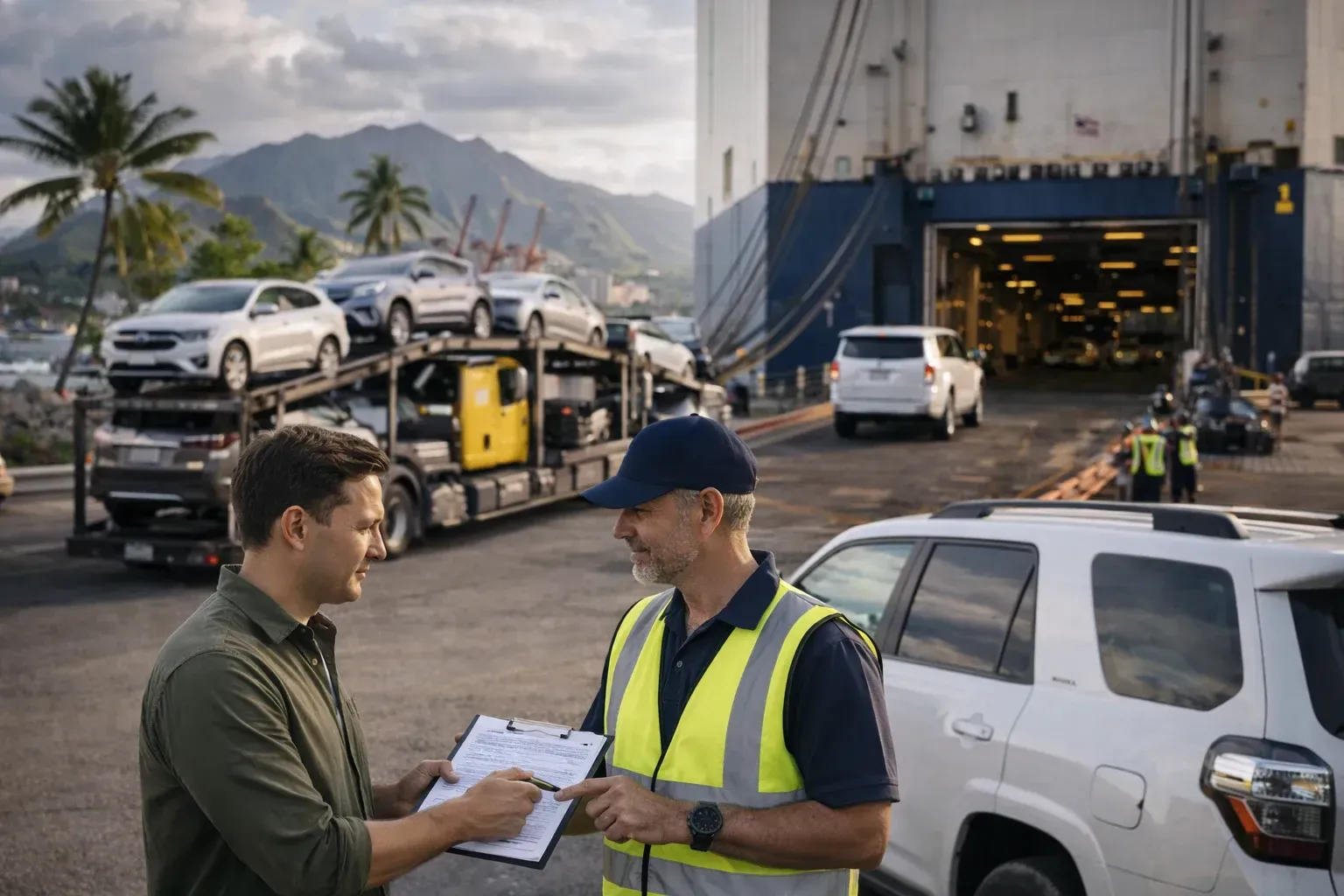
- Bill of lading: the bill of lading is the contract between the vehicle owner and the shipping carrier that documents the vehicle’s condition at the time of delivery to the port, the terms of the transport agreement, and the carrier’s liability for damage. The bill of lading is generated at port check-in during the vehicle inspection process. Owners should review the condition documentation on the bill of lading carefully before signing, as signing constitutes agreement that the documented condition is accurate and complete.
- Shipping authorization or power of attorney: if the vehicle is being delivered to the port by someone other than the registered owner, a written authorization or notarized power of attorney from the owner is required. Military families frequently use this provision when a service member is already at the receiving installation and the vehicle is being dropped off by a family member or friend.
Read Also:
What to Prepare Before Shipping Your Vehicle: A Complete Checklist
Preparing Your Vehicle for Transport
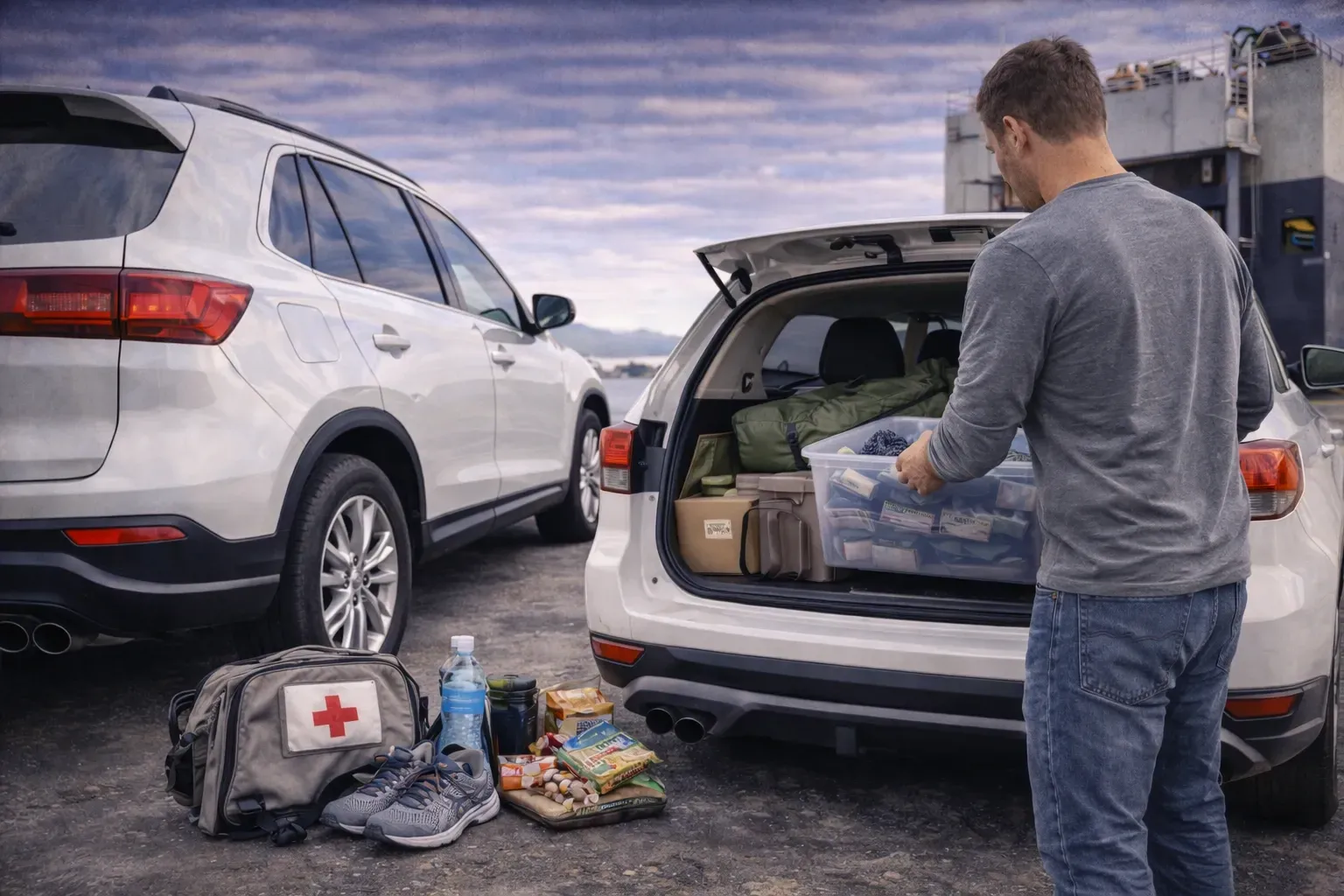
Proper vehicle preparation before shipping a car to Hawaii protects the vehicle during ocean transit, ensures it clears port check-in without delays, and helps the owner document its condition accurately for insurance and damage claim purposes. The preparation steps are consistent across all Hawaii car shipping companies and apply regardless of the shipping method or service tier selected.
- Clean the exterior and interior thoroughly: a clean vehicle allows the port inspector to accurately document the vehicle’s condition at check-in, including any pre-existing scratches, dents, chips, or paint damage. Documenting existing damage before shipment is the owner’s primary protection if damage occurs during transport. Mud, road grime, or debris that obscures existing damage can result in disputes over when damage occurred. Owners should also wash the undercarriage, since some departure ports inspect for soil contamination that could violate agricultural quarantine rules at the receiving port.
- Remove all personal belongings: personal items inside a vehicle during ocean transport are not covered by the carrier’s cargo insurance and may create customs or agricultural inspection complications at the Hawaii port. Clothing, electronics, tools, sporting equipment, and any other personal property must be removed before the vehicle is delivered for shipping. The carrier’s inspection at port check-in will confirm the vehicle is empty, and vehicles found to contain prohibited items may be refused for loading.
- Reduce the fuel tank to one quarter or less: ocean freight carriers require that vehicle fuel tanks be at one quarter capacity or less at the time of port delivery. This is a fire safety requirement that applies to all vehicles on ocean vessels. Vehicles delivered with fuel levels above the carrier’s threshold will be required to have fuel removed at the port, which adds cost and time to the check-in process.
- Check and document the vehicle’s mechanical condition: the vehicle must be in operable condition for standard drive-on loading at the departure port and drive-off unloading at the Honolulu port. Vehicles that will not start, have significant fluid leaks, or cannot be safely driven onto and off the vessel require special handling arrangements that must be made with the carrier before the vehicle arrives at the port. Owners should ensure battery charge is adequate, tires are properly inflated, and no active mechanical issues will prevent normal drive-on procedures.
- Take detailed photographs before delivery: independent photographic documentation of the vehicle’s condition from all angles, including close-up shots of any existing damage, supplements the carrier’s bill of lading inspection record and provides the owner with an independent evidence base for any damage claims that may arise after delivery. Photograph the odometer as well to document the mileage at the time of shipment.
Shipping Methods for Transporting a Car to Hawaii
Auto transport to Hawaii uses ocean freight shipping exclusively, and the two primary methods available are roll-on/roll-off shipping and container shipping. Each method has different characteristics in terms of exposure, cost, and the types of vehicles best suited to each option.
Roll-On / Roll-Off Shipping
Roll-on/roll-off, commonly referred to as RoRo, is the standard method for shipping a car to Hawaii and is the method used by the majority of vehicles transported on the Hawaii corridor. In RoRo shipping, the vehicle is driven onto the vessel’s vehicle deck under its own power at the departure port and driven off the vessel at the arrival port.
The vehicle is secured on the vessel deck during ocean transit using straps and wheel chocks. RoRo is the most cost-effective auto transport method for standard passenger vehicles, and the Matson Navigation Company vessels that serve the Hawaii route are purpose-built for RoRo vehicle transport with multi-level enclosed vehicle decks that protect vehicles from direct weather exposure during the crossing.
Container Shipping
Container shipping places the vehicle inside a standard 20-foot or 40-foot steel shipping container for ocean transit. This method provides maximum protection from weather, salt air, and the minor contact risks present in any shared vehicle deck environment, making it the preferred option for classic cars, high-value collector vehicles, and modified or custom builds that require extra protection.
Container shipping costs more than RoRo and requires additional loading and unloading steps at both ends of the journey, but for owners whose vehicles represent significant financial or sentimental value, the additional protection justifies the additional cost.
Car Shipping Hawaii offers both standard Port-to-Port and Door-to-Port RoRo service options, as well as enclosed transport for high-value and specialty vehicles that require premium protection during ocean transit.
Port Requirements for Shipping a Car to Hawaii
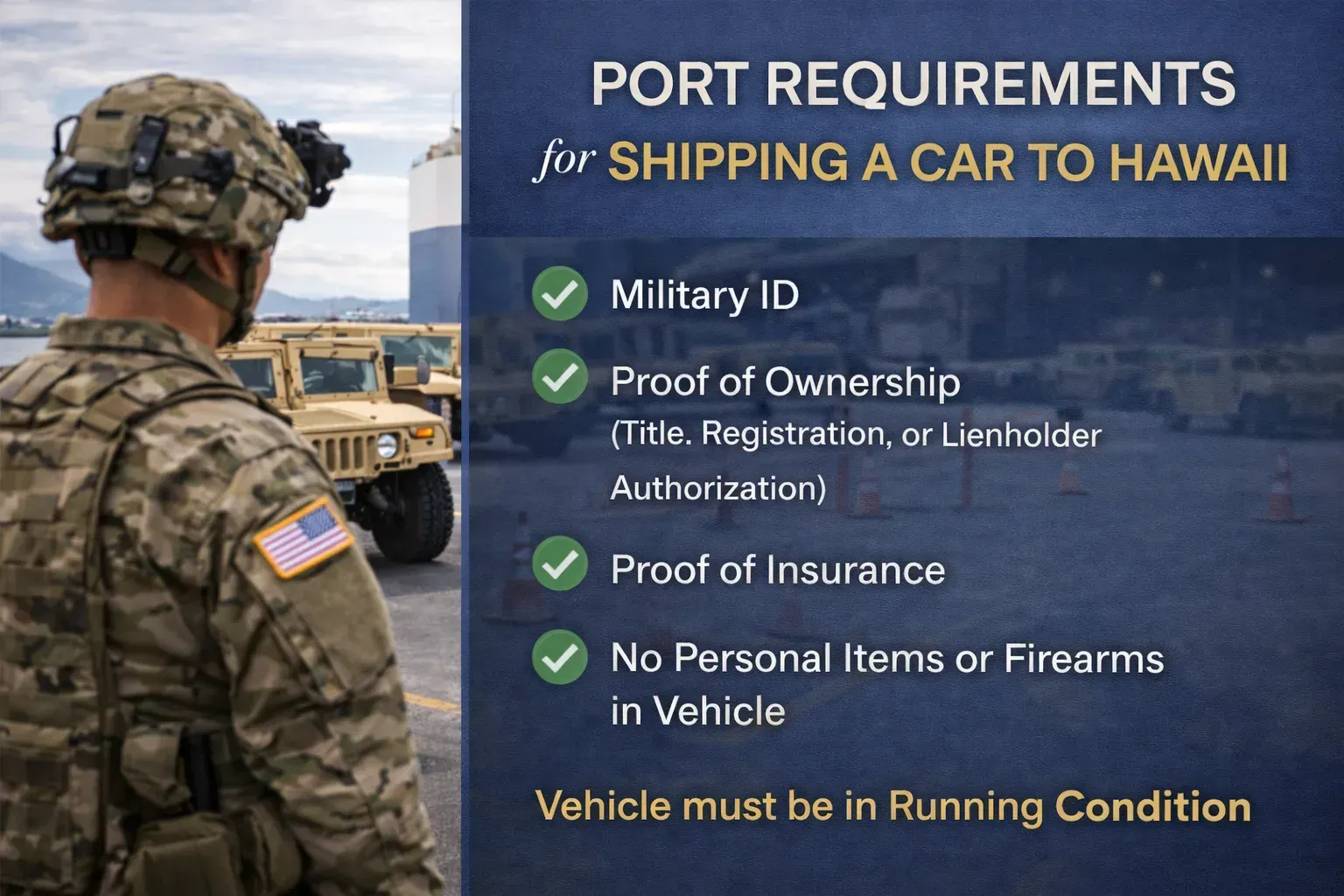
Port requirements for auto transport to Hawaii apply at both the departure port on the mainland and the arrival port in Honolulu. Understanding what to expect at each end of the journey helps owners prepare accurately and avoid the delays that result from arriving at the port without required documentation or with a vehicle that has not been properly prepared.
At the departure port, vehicle owners or their authorized representatives must check in during the port’s designated acceptance window for the scheduled sailing. The acceptance window typically closes one to two business days before the vessel’s departure date, and vehicles that arrive after the cutoff will miss the sailing and will need to be rescheduled for the next available vessel. At check-in, the port inspector conducts a walk-around condition inspection of the vehicle, documents existing damage on the bill of lading, verifies that the fuel level meets the carrier’s requirement, confirms the vehicle is empty of personal belongings, and verifies that the owner’s documentation is complete. The owner or representative reviews and signs the bill of lading to confirm the documented condition is accurate before the vehicle is moved to the staging area for loading.
At the Honolulu port, the vehicle is available for owner pickup after the vessel completes its unloading sequence and the vehicle has cleared the port’s processing procedures. Owners must present the original bill of lading and valid photo identification to claim their vehicle. Hawaii’s agricultural quarantine requirements mean that vehicles may be subject to an agricultural inspection before release, particularly if the undercarriage shows evidence of soil contamination that could introduce invasive species. Vehicles that do not pass agricultural inspection will need to be cleaned to the inspection standard before they can be released from the port.
Hawaii Vehicle Transport Logistics
The vehicle transport logistics for shipping a car to Hawaii are primarily organized around the sailing schedule of the ocean freight carrier serving the route. Matson Navigation Company is the primary carrier for vehicle transport on the Hawaii corridor, operating weekly sailings from multiple West Coast departure ports to Honolulu. The regularity of the sailing schedule means that vehicle transport timelines from mainland US to Hawaii are predictable, with the ocean transit component taking approximately five to seven days from West Coast departure to Honolulu arrival.
Total vehicle transport logistics timelines from the owner’s location to Honolulu port pickup include the time required to deliver the vehicle to the departure port, the acceptance window timing relative to the vessel’s scheduled departure, the ocean transit, and the port processing time after arrival. For owners using Door-to-Port service, where a carrier driver picks up the vehicle from the owner’s location and delivers it to the departure port, the land transport leg typically adds three to seven business days to the total timeline depending on the distance between the pickup location and the departure port. Total door-to-port-arrival timelines for most mainland locations typically range from fourteen to twenty-one days when booked with adequate lead time.
Booking with sufficient advance notice is one of the most important vehicle transport logistics decisions an owner can make. Hawaii car shipping companies recommend booking at least two to three weeks before the desired departure date to secure space on the preferred sailing, ensure that all documentation can be gathered and verified before port check-in, and allow adequate time for the land transport leg if Door-to-Port service is selected. Bookings made too close to the desired sailing date may result in placement on a later vessel if space on the target sailing has already been allocated.
Read Also:
Moving to Hawaii? Here Is What to Know Before You Ship Your Car
Choosing Reliable Hawaii Car Shipping Companies
Selecting among Hawaii car shipping companies requires evaluating factors that go beyond price comparison. The reliability of a vehicle shipping company is determined by its licensing status, its carrier relationships and sailing access, the quality of its customer communication throughout the transport process, and its track record for handling vehicles professionally and resolving issues when they arise.
- FMCSA registration and licensing: all legitimate auto transport companies operating in the United States must be registered with the Federal Motor Carrier Safety Administration and hold a valid USDOT number. Carriers and brokers have different registration requirements, and vehicle owners should confirm the company they are working with holds the correct operating authority for the services being provided. The FMCSA’s SAFER database provides public access to carrier registration and safety record information.
- Matson carrier relationship: because Matson Navigation Company operates the primary vessel service on the Hawaii corridor, Hawaii car shipping companies that work directly with Matson have more reliable access to sailing schedules and space allocation than brokers who work through intermediaries. Confirming that the company you are working with has a direct relationship with the ocean carrier is an important step in evaluating vehicle transport logistics reliability.
- Insurance coverage: reputable Hawaii car shipping companies carry cargo liability insurance that covers vehicles in their care during transport. Owners should request confirmation of the carrier’s insurance coverage and understand what it covers before signing a shipping agreement. The carrier’s insurance typically covers damage caused by the carrier’s handling of the vehicle, not pre-existing damage or damage caused by mechanical failure.
- Customer reviews and reputation: reviews from previous customers on independent platforms provide insight into a company’s communication quality, handling of vehicles, accuracy of timeline estimates, and responsiveness when issues arise. A consistent pattern of positive reviews across multiple platforms is a more reliable indicator than a small number of perfect reviews on a single site.
- Transparent pricing: reputable Hawaii car shipping companies provide clear, itemized pricing that reflects the actual cost of the service including carrier fees, port handling charges, and any applicable fuel surcharges. Price quotes that seem significantly lower than the market range for similar services may indicate hidden fees, service limitations, or a brokerage arrangement that adds an intermediary layer between the owner and the actual carrier.
Common Mistakes to Avoid When Shipping a Car to Hawaii
Leaving personal belongings in the vehicle: this is the most consistently cited reason for port refusals and departure delays. Every personal item must be removed before the vehicle is delivered to the port, without exception. Owners who pack items in the trunk or under seats on the assumption they will not be found during inspection create risk for themselves and delay the check-in process for other customers.
- Delivering the vehicle with incorrect fuel levels: arriving at the port with a full or near-full fuel tank requires on-site fuel removal, which adds time and cost to the check-in process and may cause the vehicle to miss its loading window. Reducing the fuel level to one quarter or less before driving to the port eliminates this issue entirely.
- Missing documentation: arriving at port check-in without the vehicle title, a matching photo ID, or a lien authorization letter if applicable will result in the vehicle being refused for shipping until the documentation is provided. Gathering all required documents at least forty-eight hours before port check-in allows time to resolve any issues without missing the vessel.
- Booking too late: waiting until the week before a desired move date to book vehicle transport often results in the target sailing being full, requiring a later vessel and pushing back the vehicle’s arrival date. Booking two to three weeks in advance is the standard recommendation from experienced Hawaii car shipping companies.
- Choosing a carrier based on price alone: the lowest-quoted price for auto transport to Hawaii does not always represent the best value. Carriers that undercut market pricing significantly may be cutting corners on insurance coverage, customer service infrastructure, or their actual access to vessel space, all of which affect the reliability of the service the owner receives.
How Car Shipping Hawaii Simplifies Vehicle Transport
Car Shipping Hawaii is a veteran-owned vehicle shipping company based in Honolulu that specializes in auto transport to Hawaii from the continental United States. We are a Matson-certified shipping specialist with direct carrier access to weekly sailings from Long Beach, Oakland, and Tacoma, which means our customers’ vehicles move on a reliable, predictable schedule without the additional layers and delays of a brokered arrangement.
Every vehicle we ship receives a thorough photographic condition inspection at pickup that documents the vehicle’s state before it leaves the owner’s hands. Our transport coordinators guide each customer through the documentation requirements, preparation steps, and port check-in procedures before their vehicle is ever delivered to the departure port, which is why our customers consistently arrive at port check-in prepared and avoid the delays that come from missing documents or improperly prepared vehicles.
We offer Port-to-Port service for customers who can deliver their vehicle to the departure port themselves, and Door-to-Port service for customers who need carrier pickup from their location anywhere in the continental US. For military families completing PCS moves to Hawaii, our dedicated military shipping service provides the specialized support that PCS relocations require. Our team is available Monday through Friday, 8AM to 6PM HST, to answer questions about the rules for shipping a car to Hawaii and guide you through every step of the process.
Final Thoughts on the Rules for Shipping a Car to Hawaii
- Shipping a car to Hawaii requires following a consistent set of rules governing documentation, vehicle preparation, fuel levels, port check-in procedures, and post-arrival registration that apply regardless of which carrier or service tier is selected.
- The documents required for shipping a car to Hawaii include the vehicle title, matching government-issued photo ID, current vehicle registration, and a lien authorization letter if the vehicle is financed, all of which must be gathered and confirmed before the port check-in window opens.
- Preparing your vehicle properly by cleaning it thoroughly, removing all personal belongings, reducing fuel to one quarter or less, confirming operable condition, and taking independent photographs protects the vehicle, prevents port refusals, and establishes the documentation foundation needed for any damage claims.
- Choosing among Hawaii car shipping companies requires evaluating FMCSA licensing, direct Matson carrier relationships, cargo insurance coverage, customer review history, and pricing transparency rather than selecting based on the lowest quoted rate alone.
- Booking auto transport to Hawaii two to three weeks in advance, gathering all documents early, and working with an experienced carrier that provides clear pre-shipment guidance are the three most effective actions vehicle owners can take to ensure a smooth shipping experience from mainland delivery through Honolulu port pickup.
Planning to ship your car to Hawaii? Car Shipping Hawaii helps transport your vehicle safely so you can focus on settling into island life.
Camilo Jaime
Camilo Jaime is an experienced Hawaii auto transport specialist with deep knowledge in car shipping logistics, Matson vessel coordination, port protocols, military PCS relocations, and a wide range of ocean freight services. He understands the challenges that come with shipping vehicles to and from the Hawaiian islands for families, service members, and businesses alike.
Through his blogs at Car Shipping Hawaii, Camilo shares practical shipping tips, cost-saving advice, and insights drawn from real coordination experience. His goal is to help readers make confident decisions about Hawaii vehicle transport and learn straightforward ways to navigate port requirements, sailing schedules, and service options. With a clear and honest writing style, Camilo focuses on real solutions that make the car shipping process simple, stress-free, and affordable for every customer.
You Might Also Like