Military PCS Car Shipping Guide
A Permanent Change of Station move often requires careful planning, especially when transporting personal vehicles to a new duty station. PCS relocations can span thousands of miles across the continental United States, or take a service member and their family across the ocean to Hawaii, Alaska, or an overseas assignment. Driving a personal vehicle that distance is not always practical, and for Hawaii it is simply not possible. Military car shipping services exist to solve exactly that problem, giving service members a reliable way to get their vehicles to the new duty station without adding a cross-country drive to an already demanding relocation.
PCS car shipping has become a standard part of military relocation logistics for hundreds of thousands of service members each year. Whether the move involves a single vehicle from a nearby state or two family vehicles shipping to Hawaii while the service member reports early, military vehicle shipping services handle the transport professionally and free up time and energy for everything else on the military moving checklist. Understanding how the process works, what to expect at each stage, and what distinguishes the best military car shipping companies from less reliable options makes a meaningful difference in how smoothly the vehicle transport portion of a PCS move goes.
This guide walks through the full PCS car shipping process, covers what service members need to know about preparation, documentation, and timelines, and explains how Car Shipping Hawaii supports military families relocating to Hawaii’s installations.
What Is Military PCS Car Shipping?
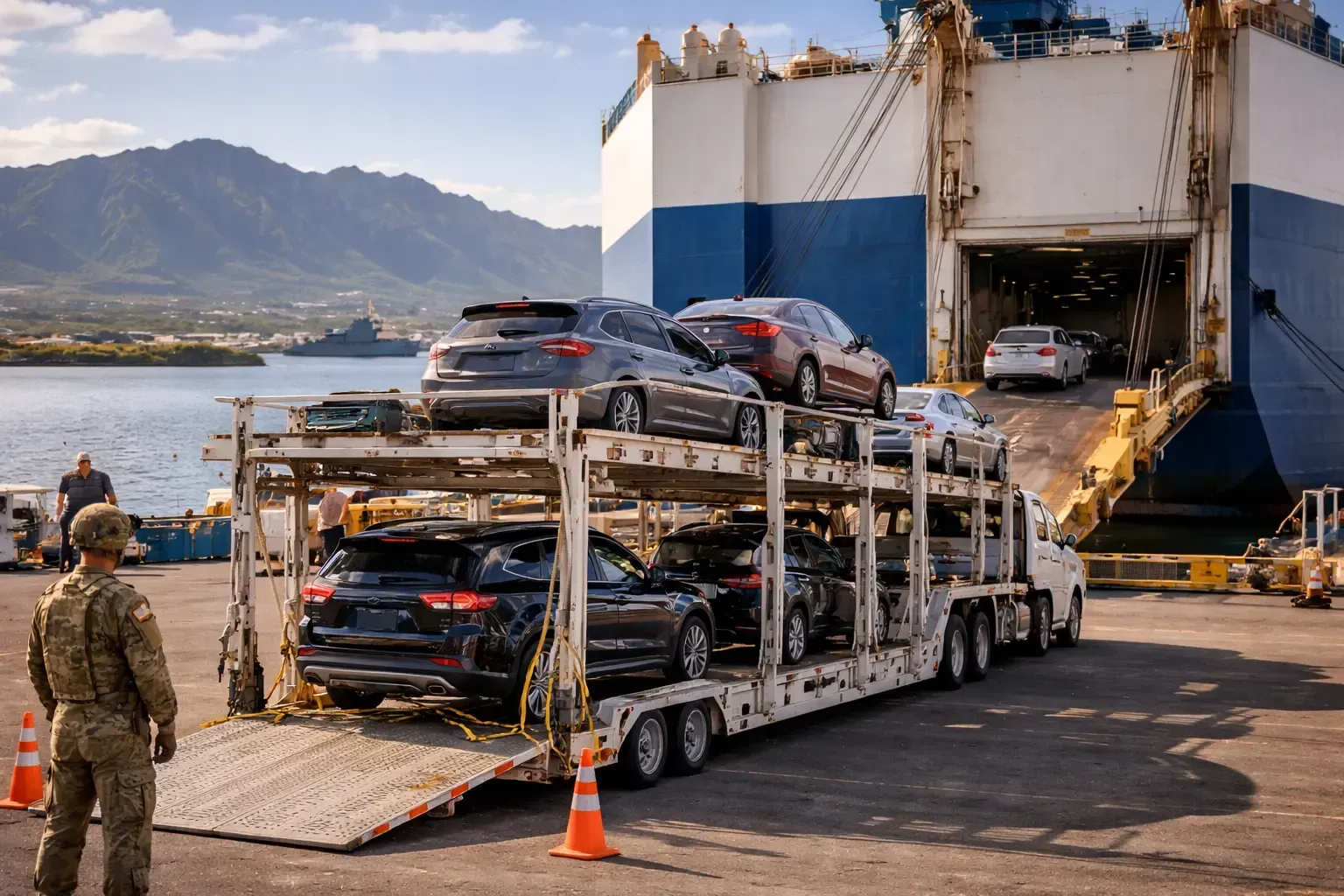
Military PCS car shipping refers to the professional transport of a service member’s personal vehicle from their current duty station to their next assignment location as part of a Permanent Change of Station relocation. A PCS move is an official reassignment to a different military installation, typically ordered with 30 to 90 days of advance notice depending on the urgency of the assignment and the branch of service. Unlike a temporary duty assignment, a PCS involves a full relocation of the service member and in most cases their family and household goods.
The vehicle transport component of a PCS move is handled separately from the household goods shipment managed through the Defense Personal Property Program, commonly referred to as the DPS system. While household goods are moved under government contract through DPS, personal vehicle shipping during a PCS is typically the financial responsibility of the service member, though travel allowances and reimbursement programs may offset some of the cost depending on the specific orders and circumstances.
Military auto transport for PCS relocations is provided by civilian vehicle transport companies that specialize in or regularly serve the military market. These companies understand the timeline pressures that come with orders-based relocation, the documentation requirements specific to military shipping, and the need for consistent communication with customers whose schedules are controlled by factors outside their personal control. Choosing a company with genuine experience in PCS vehicle shipping rather than a generalist carrier that occasionally handles military customers produces meaningfully better results during a high-pressure relocation.
When Military Vehicle Shipping Is Needed
The most common situation requiring military vehicle shipping is a cross-country PCS relocation where driving the vehicle would require multiple days away from family, create unnecessary wear on a vehicle needed at the new duty station immediately, or add logistical complexity to a move already involving household goods, temporary lodging, school enrollment, and report date coordination. For a service member moving from Camp Lejeune in North Carolina to Fort Lewis in Washington state, shipping the vehicle while flying to the destination with the family is the practical choice for most households.
PCS moves to Hawaii and Alaska are the clearest cases where military car shipping is not optional.
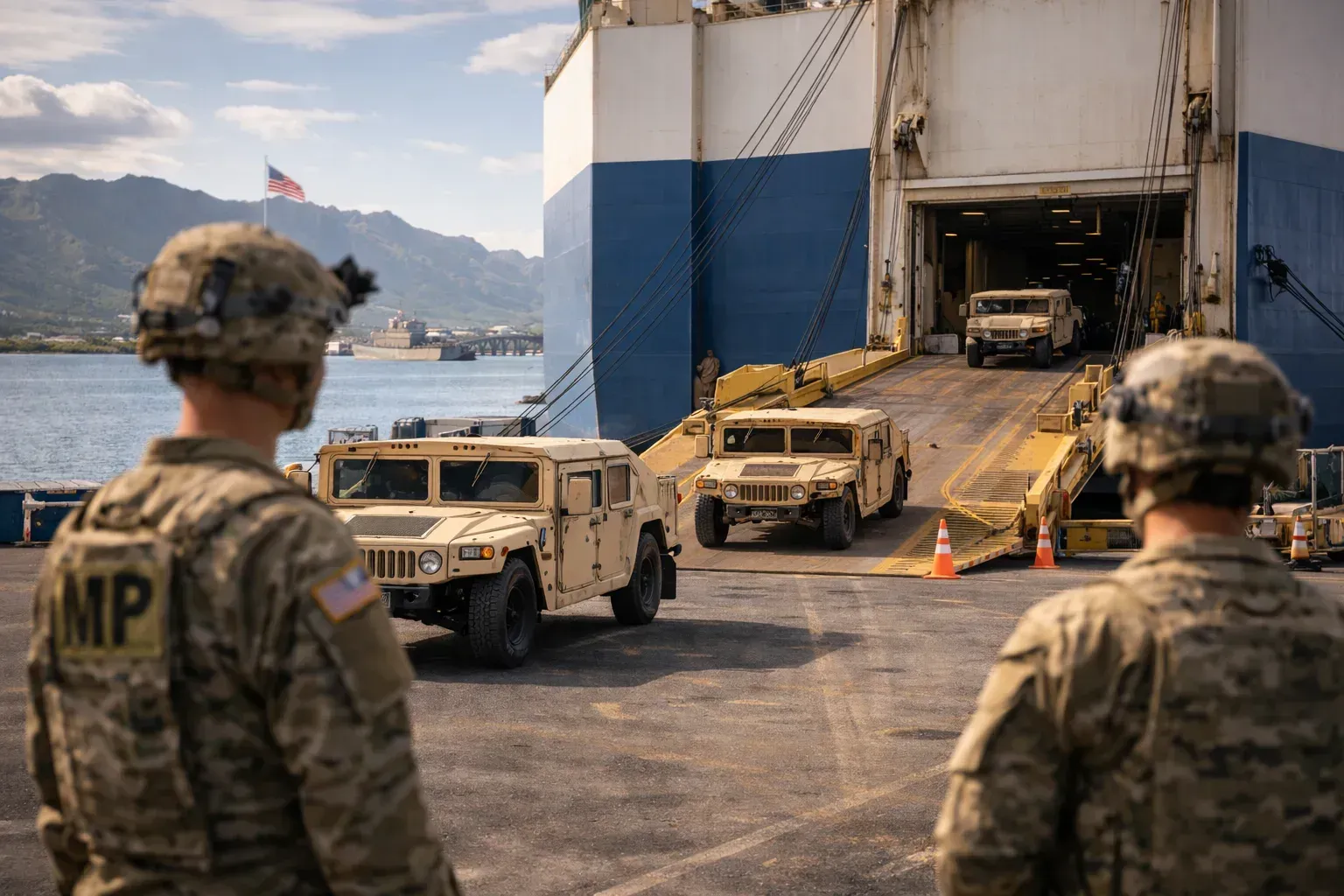
Hawaii is accessible only by ocean vessel, meaning any vehicle brought to the islands must be loaded onto a ship regardless of how the service member personally travels to the assignment. Alaska presents similar requirements for service members moving to installations like Fort Wainwright or Eielson Air Force Base who want a personal vehicle. For these assignments, military vehicle shipping is a required part of the relocation rather than a convenience decision.
Overseas PCS assignments involving vehicle transport add complexity related to customs clearance, import regulations at the destination country, and the logistics of international ocean freight. Many overseas assignments do not authorize government-funded vehicle shipment, and service members choosing to bring a vehicle bear the full cost of international transport and destination country import procedures. For assignments within the continental United States and to Hawaii specifically, the PCS vehicle shipping process is considerably more straightforward and well-established.
Read Also: Moving to Hawaii? Here Is What to Know Before You Ship Your Car
Understanding the Military Moving Process
A military relocation guide for PCS moves typically organizes the process into a sequence of tasks beginning when orders are received and running through final arrival and in-processing at the new duty station. The vehicle transport component fits into this timeline as one of several parallel logistics streams that must be coordinated without blocking each other. Service members who address military vehicle shipping early in the PCS planning process avoid the scheduling conflicts and rushed arrangements that come from treating it as an afterthought.
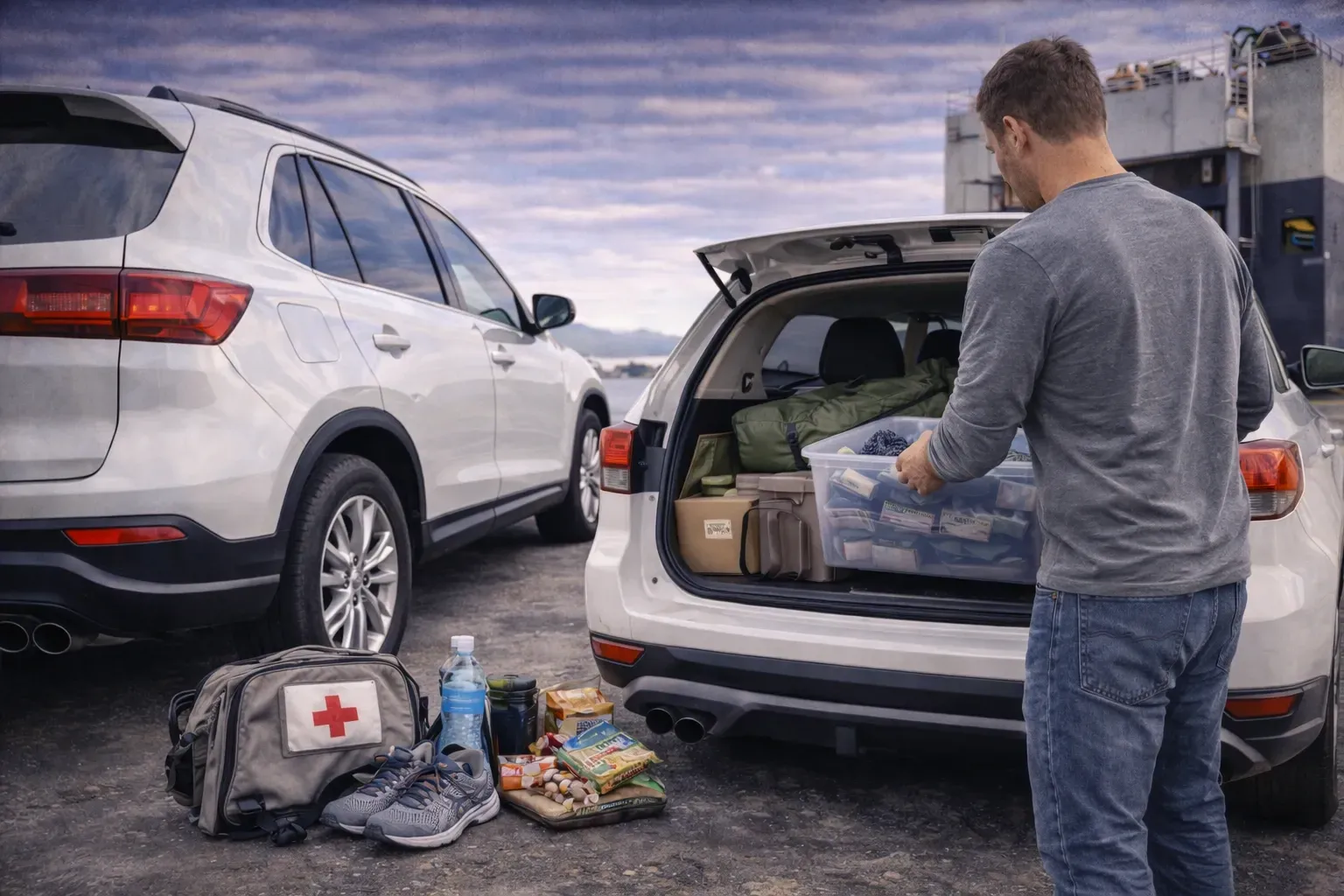
The military moving checklist for a PCS with vehicle transport should include several vehicle-specific steps alongside the standard household goods and travel logistics: confirming the vehicle title is clear and accessible, verifying registration is current for the duration of the transit period, checking that the vehicle is mechanically fit for shipping, removing all personal items from the interior, and reducing the fuel level to a quarter tank or less before presenting the vehicle to the carrier.
Coordinating Vehicle Shipping With PCS Report Dates
One of the most important planning decisions for PCS car shipping is timing the shipment to align with the service member’s report date and travel plans. For Hawaii-bound service members flying to Honolulu while their vehicle ships via ocean freight, the vehicle typically arrives at the Honolulu Matson terminal approximately two to three weeks after it is loaded at the West Coast departure port. Coordinating the mainland pickup date, West Coast port arrival, and vessel sailing schedule so the vehicle arrives shortly after the service member reports to their new duty station requires advance planning that should begin as soon as orders are received.
How PCS Vehicle Shipping Works
Step 1: Contact a Military Auto Transport Company Early
The PCS car shipping process begins with selecting a transport company and scheduling the shipment as soon as orders are received. For Hawaii-bound shipments operating on a weekly sailing schedule, booking early secures availability on the desired sailing date and allows time to coordinate the mainland ground transport leg if the service member cannot personally deliver the vehicle to a West Coast port. Most reputable military car shipping companies offer free quotes and can outline the full timeline from pickup to port delivery in a single conversation.
Step 2: Prepare the Vehicle and Documentation
Vehicle preparation for PCS car shipping follows the same steps required for any auto transport shipment, with additional attention to documentation requirements relevant to military relocation. The vehicle should be cleaned inside and out before the pre-shipment inspection so the condition report on the bill of lading accurately reflects its state. All personal items, aftermarket electronics, and loose accessories must be removed. The fuel level should be reduced to one quarter tank or less. A copy of the PCS orders may be requested by some carriers for their records.
Step 3: Vehicle Pickup and Condition Inspection
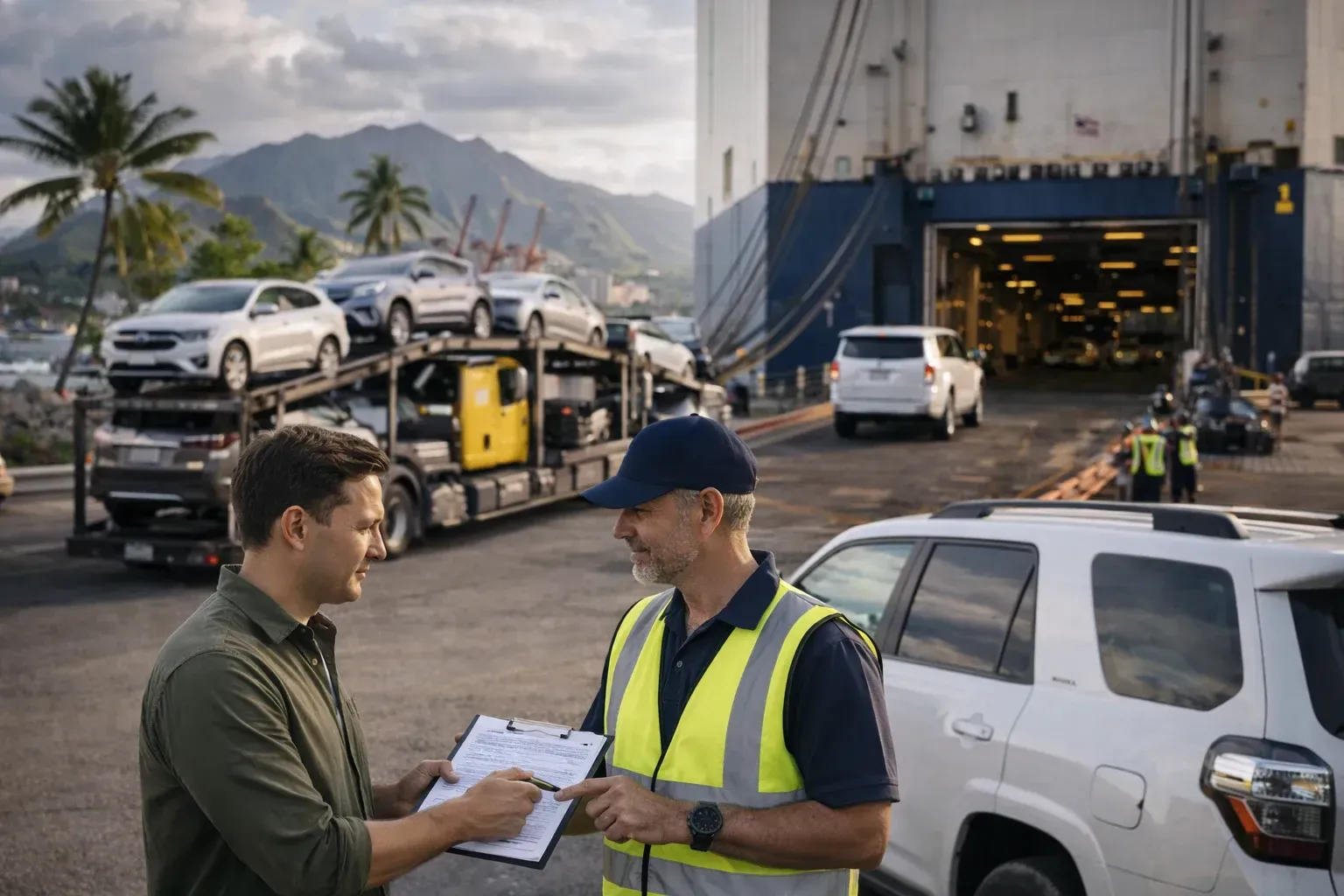
At pickup, the carrier driver performs a pre-shipment condition inspection and records all existing scratches, dents, chips, and damage on the bill of lading. Both the driver and the service member sign the document confirming the recorded condition is accurate. The service member should retain their copy of the bill of lading throughout the transit period. For Hawaii shipments, a second condition inspection is conducted at the West Coast port terminal before the vehicle is loaded onto the ocean vessel.
Step 4: Ocean Transport and Port Arrival
For Hawaii-bound PCS vehicle shipping, the vehicle is loaded onto a Matson vessel at the West Coast departure port and transported across the Pacific to the Honolulu port terminal. The ocean crossing takes approximately five to seven days from Long Beach or Oakland. After vessel arrival, the port conducts an inspection and releases the vehicle for owner pickup. The service member or their authorized representative must present the original bill of lading and valid identification to claim the vehicle at the Matson terminal.
Step 5: Hawaii Vehicle Registration
After collecting the vehicle at the Honolulu Matson terminal, service members who plan to drive on public roads in Hawaii must complete the Hawaii vehicle registration and safety inspection process. Active duty service members stationed in Hawaii are generally exempt from the standard 30-day residency-based registration requirement but may choose to register locally for convenience during their assignment. Completing a safety inspection at a certified station is required for Hawaii registration regardless of home state plates.
Choosing the Best Military Car Shipping Companies
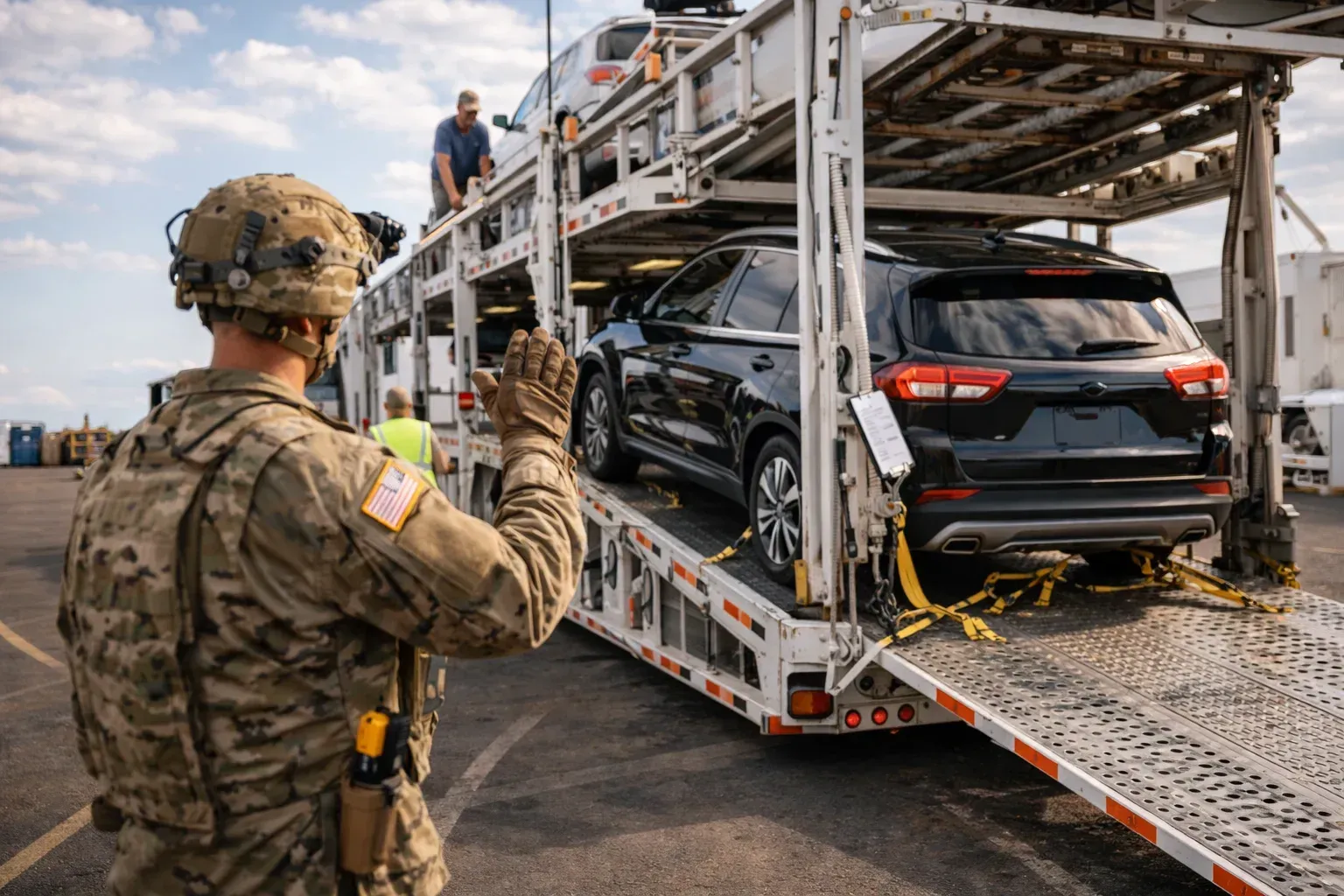
Selecting the right carrier is the most consequential decision in the PCS car shipping process. The best military car shipping companies share several characteristics that distinguish them from generalist carriers who occasionally handle military moves without genuine specialization.
- Experience with PCS relocations: a company that regularly handles military moves understands orders-based timeline constraints, military documentation requirements, and the communication needs of families managing multiple logistics streams simultaneously. Ask specifically how many military PCS shipments they handle annually and to which duty station locations.
- Transparent pricing with no hidden fees: reputable military auto transport companies provide written quotes itemizing all costs including port handling fees, fuel surcharges, and insurance. Carriers that provide vague verbal estimates or add fees at delivery are a red flag regardless of how competitive their initial quote appears.
- Proven carrier relationships at West Coast ports: for Hawaii-bound military vehicle shipping, the carrier must have established working relationships with West Coast port terminal operations and a clear process for coordinating the handoff from land transport to ocean freight. A carrier without this experience creates avoidable delays at a critical transfer point.
- Active customer support during transit: military families relocating to Hawaii are often managing housing, school enrollment, and other logistics simultaneously. A carrier that provides proactive milestone updates, responds to status inquiries promptly, and assigns a dedicated point of contact is significantly less stressful to work with than one that goes silent between pickup and delivery.
- Verifiable credentials: confirm the carrier holds a valid USDOT number and motor carrier authority, carries adequate cargo insurance, and has a clearly explained claims process. The FMCSA’s SAFER database allows anyone to verify a carrier’s registration and safety record by USDOT number.
Preparing Your Vehicle for PCS Car Shipping
Proper preparation before military car shipping creates an accurate condition record at pickup and satisfies the requirements that carriers and port terminals have for safely loading and transporting vehicles. A vehicle that arrives at pickup in the required condition avoids delays and disputes that add stress to an already demanding relocation.
- Clean the vehicle inside and out before the pickup inspection. A clean exterior ensures all pre-existing scratches, chips, and damage are visible and recorded on the bill of lading. A clean interior confirms no personal items remain that would need removal at pickup.
- Remove all personal belongings, aftermarket accessories, and any items not permanently attached to the vehicle. Most carriers prohibit personal items in shipped vehicles, and anything that remains in the vehicle during transport is not covered by the carrier’s cargo insurance.
- Confirm all mechanical systems are operational. Vehicles that cannot be driven onto and off of the carrier or that have fluid leaks, dead batteries, or other mechanical issues may be refused at pickup. Address known mechanical issues before scheduling the shipment.
- Reduce fuel to one quarter tank or less. Port terminals and ocean carriers maintain fuel level restrictions for safety reasons, and a vehicle arriving with a full or near-full tank may be refused at the terminal.
- Document the vehicle’s condition independently with photographs covering all panels, wheels, glass, and interior before the carrier arrives. This documentation supplements the bill of lading and is the strongest evidence in the event of a damage dispute after delivery.
Read Also:
What to Prepare Before Shipping Your Vehicle: A Complete Checklist
Understanding Military Moving Benefits
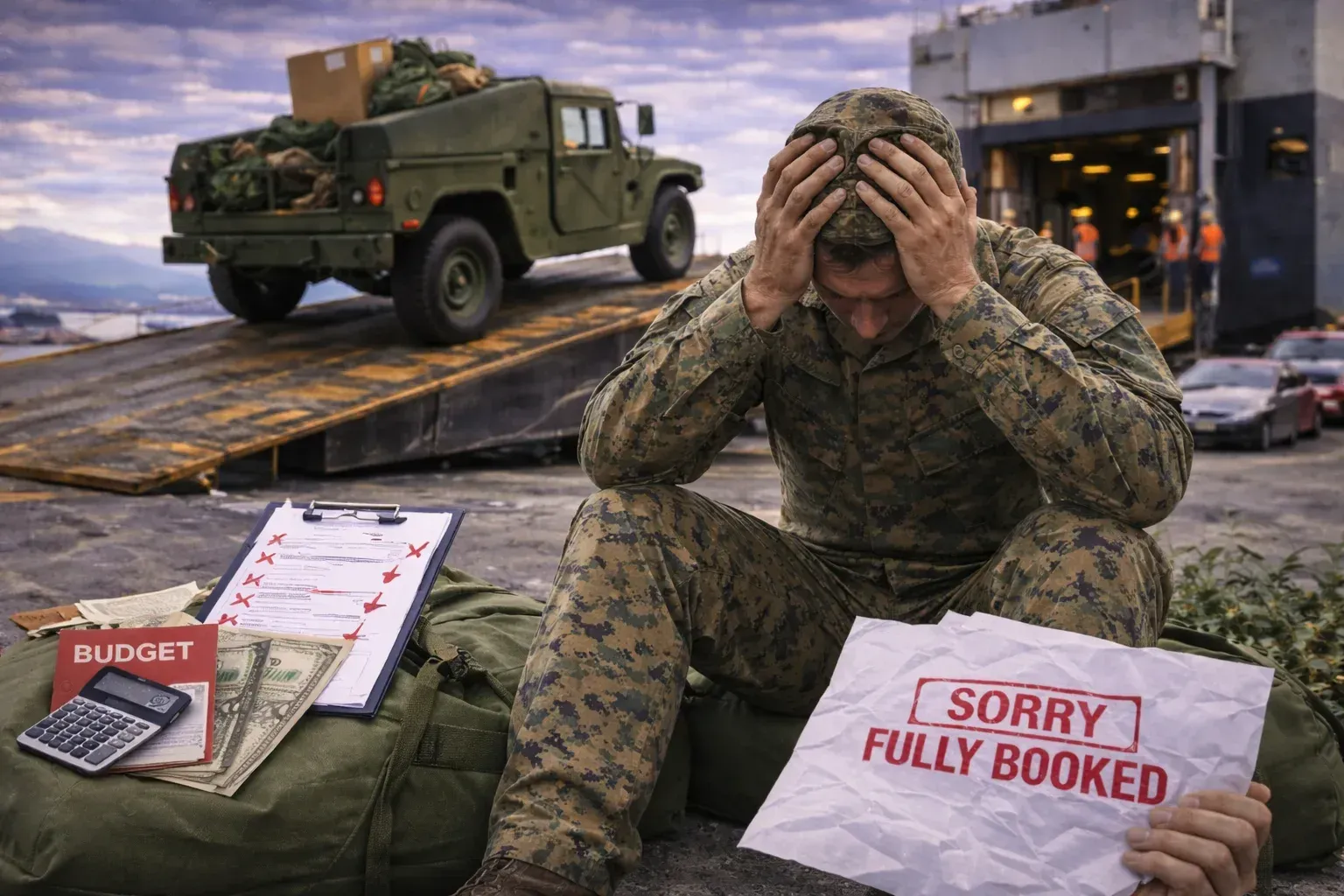
Military moving benefits for PCS relocations are administered through the Defense Personal Property Program and cover the transportation of household goods up to the service member’s authorized weight allowance. Vehicle shipping costs are generally not covered under the government-funded household goods entitlement, meaning PCS vehicle shipping is typically a personal expense. However, several military moving benefits may offset a portion of this cost depending on the service member’s circumstances and the nature of the orders.
The Dislocation Allowance, known as DLA, is a one-time payment designed to help offset PCS move costs not covered by other allowances. While DLA is not specifically earmarked for vehicle shipping, it is intended to cover miscellaneous relocation expenses, and service members who factor vehicle shipping costs into their DLA budget can use it to offset those costs. The DLA amount varies by pay grade and dependency status.
Per diem travel allowances for PCS moves cover the cost of travel from the old duty station to the new one based on the authorized route and number of travel days. For service members who choose to fly to the new station and ship their vehicle separately, the per diem analysis should account for the travel allowance that will not be used for a cross-country drive and how that compares to the vehicle shipping cost. For many Hawaii PCS moves, the combination of DLA and unused per diem substantially offsets the vehicle shipping expense.
Military Auto Transport for Hawaii Relocation
PCS moves to Hawaii generate a significant portion of the total vehicle shipping demand to the islands each year. Joint Base Pearl Harbor Hickam, Schofield Barracks and Wheeler Army Airfield in the central plateau, Marine Corps Base Hawaii at Kaneohe Bay on the windward coast, and the Coast Guard and Air Force facilities across the island collectively assign thousands of service members annually. The overwhelming majority arrive without their vehicle and must either ship it from the mainland or do without personal transportation during their assignment.
Hawaii’s transportation infrastructure makes personal vehicle ownership more important for daily life than at many continental duty stations. Base housing at Schofield Barracks and MCBH Kaneohe Bay is located in areas where access to grocery stores, medical facilities, schools, and recreational options without a personal vehicle requires significant planning. For military families with children or spouses who need independent transportation while the service member is at work or on assignment, shipping both family vehicles to Hawaii is often a practical necessity rather than a luxury.
The vehicle shipping timeline for Hawaii-bound PCS moves should be built around the weekly Matson sailing schedule from West Coast departure ports. Service members who coordinate their mainland vehicle delivery to arrive at the terminal before the weekly cutoff avoid a seven-day wait for the following sailing. Given that most PCS moves to Hawaii involve a firm report date on the other end, building buffer into the shipping timeline pays dividends when the inevitable small delays occur.
How Car Shipping Hawaii Can Help
Car Shipping Hawaii is a veteran-owned vehicle shipping company based in Honolulu that has provided dedicated military car shipping services to service members relocating to Hawaii’s installations. As a veteran-owned business, we understand the specific challenges and timeline pressures of PCS relocation in a way that civilian carriers without military backgrounds frequently do not, and we have built our service around the requirements of military customers from the ground up.
We coordinate weekly sailings with Matson from Long Beach, Oakland, and Tacoma, and offer both Port-to-Port and Door-to-Port service options to accommodate service members at every departure point across the continental United States. Port-to-Port is the most cost-effective choice for service members who can deliver their vehicle to a West Coast terminal directly. Door-to-Port arranges ground transport pickup from anywhere on the mainland for service members who cannot personally deliver to a port, which is particularly relevant for those whose PCS travel takes them directly to Hawaii ahead of their vehicle.
Every vehicle we ship receives a thorough photographic condition inspection at pickup, creating a pre-shipment record that protects service members throughout transit and port clearance. We assign a dedicated transport coordinator to each military shipment who provides proactive milestone updates at vehicle pickup, West Coast port check-in, vessel departure, and Honolulu port arrival. Our team is available Monday through Friday during business hours to answer questions about timelines, documentation, and post-arrival logistics.
Read Also: Vehicle Shipping to Hawaii: A Complete Guide for First-Time Shippers
Final Thoughts on Military PCS Car Shipping
- PCS car shipping is a standard part of military relocation logistics that allows service members to transport personal vehicles to their new duty station without driving cross-country or making the physically impossible crossing to Hawaii by road.
- The best military car shipping companies are distinguished by genuine PCS experience, transparent pricing, established West Coast port relationships for Hawaii-bound shipments, and proactive communication during transit.
- Vehicle preparation following the military moving checklist protects the service member’s interests throughout the transport by creating an accurate condition record at pickup and ensuring the vehicle is accepted without delay at the carrier and port terminal.
- Military moving benefits including Dislocation Allowance and unused per diem may offset a significant portion of PCS vehicle shipping costs, and service members should calculate the full cost comparison between driving and shipping when planning their relocation budget.
- Car Shipping Hawaii provides dedicated military auto transport services built around the PCS timeline requirements of service members relocating to Joint Base Pearl Harbor Hickam, Schofield Barracks, Marine Corps Base Hawaii, and other Hawaii installations, with weekly Matson sailings, photographic condition documentation, and proactive milestone updates throughout the shipment.
Relocating to Hawaii for your next duty station? Car Shipping Hawaii offers reliable military car shipping services to help service members move their vehicles safely and efficiently.
Camilo Jaime
Camilo Jaime is an experienced Hawaii auto transport specialist with deep knowledge in car shipping logistics, Matson vessel coordination, port protocols, military PCS relocations, and a wide range of ocean freight services. He understands the challenges that come with shipping vehicles to and from the Hawaiian islands for families, service members, and businesses alike.
Through his blogs at Car Shipping Hawaii, Camilo shares practical shipping tips, cost-saving advice, and insights drawn from real coordination experience. His goal is to help readers make confident decisions about Hawaii vehicle transport and learn straightforward ways to navigate port requirements, sailing schedules, and service options. With a clear and honest writing style, Camilo focuses on real solutions that make the car shipping process simple, stress-free, and affordable for every customer.
You Might Also Like