How to Track a Vehicle in Transit During Car Shipping
When you ship a vehicle across long distances, one of the most common questions customers ask is how they can track their car while it is in transit. Handing over the keys to a carrier and waiting for a phone call is an experience that few vehicle owners find comfortable, especially when the vehicle being shipped is a daily driver, a recently purchased car, or a vehicle with significant financial or sentimental value. The good news is that modern vehicle transport tracking has improved considerably, and customers shipping vehicles today have more visibility into their car delivery status than at any previous point in the industry.
Auto transport companies now use a combination of GPS vehicle tracking, direct carrier communication, dispatch systems, and standardized shipping documentation to keep customers informed throughout the transport process. Understanding how each of these tools works, what updates to expect at each stage, and how to interpret the information you receive helps you stay informed without anxiety and allows you to plan for delivery with a realistic understanding of what the timeline looks like.
This guide explains how car shipping tracking works from the moment your vehicle is picked up through final delivery, covers the documents and communication systems involved, and explains how Car Shipping Hawaii keeps customers informed about their vehicle throughout the ocean shipping process to Hawaii.
Understanding the Vehicle Shipping Process
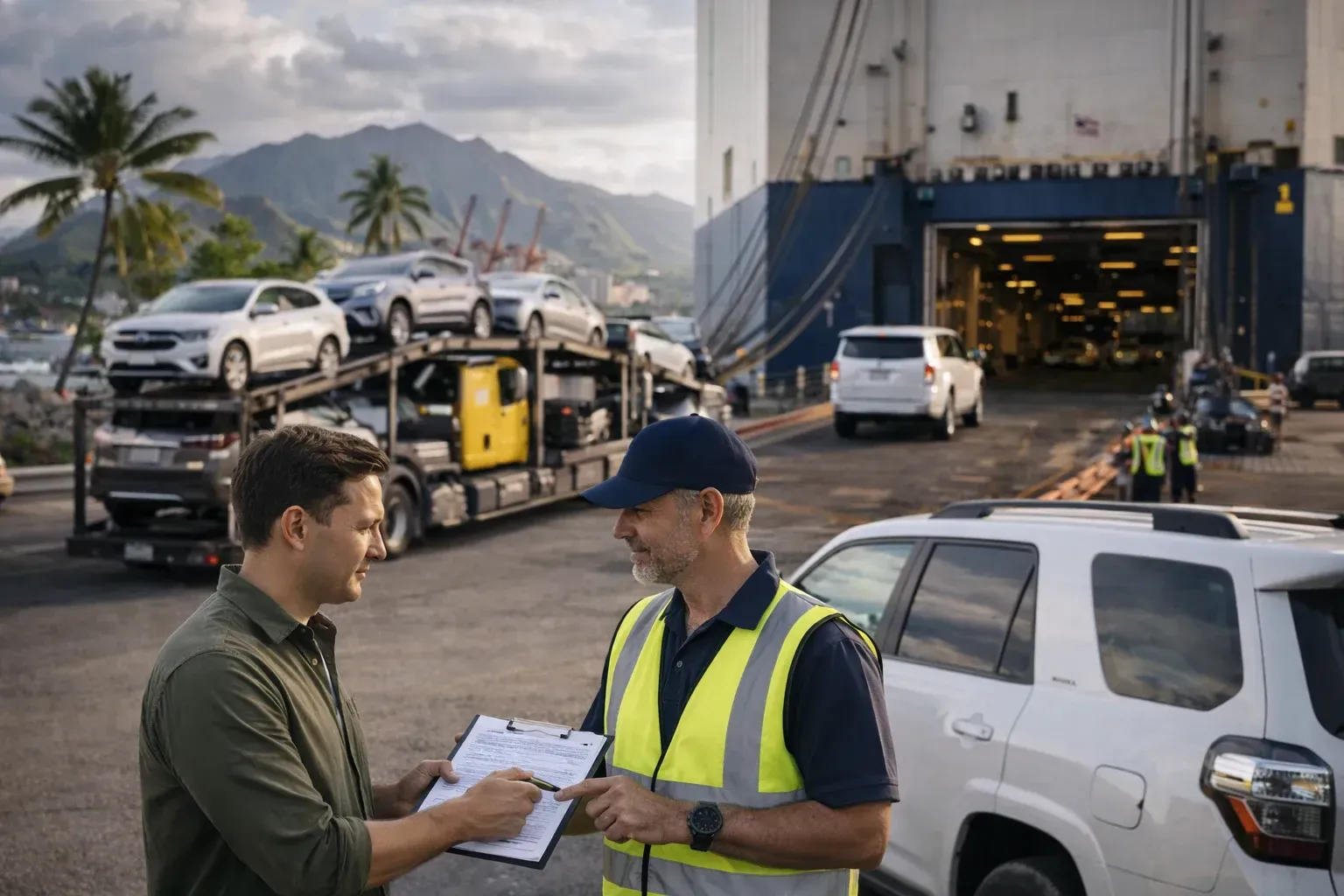
Before exploring how to track a car shipment, it helps to understand the sequence of events that makes up a typical vehicle transport from the customer's perspective. The process begins with vehicle pickup scheduling, where the carrier or transport coordinator arranges a date and location to collect the vehicle. At pickup, the driver performs a pre-transport inspection and records the vehicle's condition on the bill of lading, which serves as the official document for the shipment from that point forward.
After pickup, the vehicle moves through the carrier's route to the delivery destination or, in the case of Hawaii shipments, to the designated port of departure. For Hawaii-bound vehicles, the vehicle is then loaded onto an ocean vessel for the crossing to Honolulu. Once the vessel arrives, the vehicle clears port inspection and is made available for owner pickup at the Matson terminal. The full process from mainland pickup to Honolulu port arrival typically spans 14 to 21 days depending on origin location, port scheduling, and sailing timing.
Each stage of this process represents a point at which shipment status updates become relevant and available. Customers who understand what happens at each stage are better equipped to ask the right questions, interpret the updates they receive, and recognize when a timeline is running as expected versus when a delay may require follow-up with the transport coordinator.
Read Also: Vehicle Shipping to Hawaii: A Complete Guide for First-Time Shippers
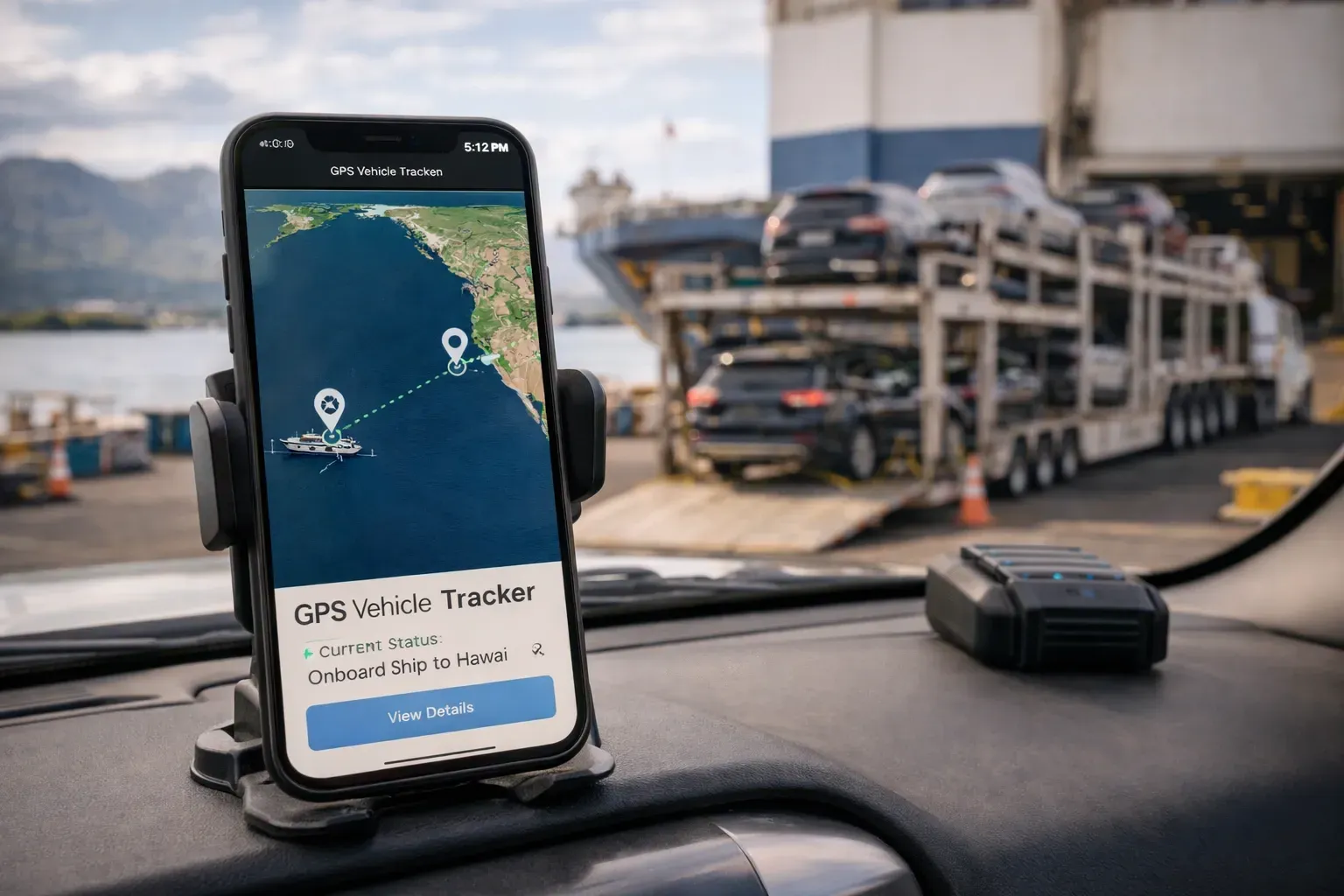
GPS vehicle tracking is the most direct method of monitoring a vehicle's location during auto transport, and it is the tool that customers most commonly ask about when inquiring how to track a car being shipped. In practice, GPS tracking in auto transport works at the carrier vehicle level rather than the individual customer vehicle level. The trucks, transport trailers, and vessels that carry customer vehicles are equipped with GPS transponders that allow the transport company's dispatch team to monitor their location, route progress, and estimated arrival times in real time.
Some auto transport companies have developed customer-facing tracking portals that connect to their dispatch GPS systems and allow customers to see the approximate location of their vehicle's carrier on a map. These systems vary in their precision and update frequency. Most provide regional location data rather than real-time street-level position, which is consistent with how GPS tracking functions for large commercial carriers operating on multi-stop routes across wide geographic areas.
For ocean shipments to Hawaii, GPS vehicle tracking transitions from land carrier monitoring to vessel tracking. Major ocean carriers including Matson publish vessel position data that is publicly accessible and shows the current location of each vessel in their fleet. Customers who know their vessel's name and sailing date can monitor the crossing progress through publicly available maritime tracking resources, giving them a real-time view of where in the Pacific their vehicle currently is.
Car Carrier Tracking and Driver Communication
Car carrier tracking for land transport relies on a combination of GPS location monitoring and direct communication between the transport company's dispatch team and the carrier driver. Professional auto transport drivers operate on schedules that include planned stops, mandatory rest periods under federal hours-of-service regulations, and route adjustments for weather or traffic conditions. Dispatch teams monitor driver location and progress throughout each run and relay relevant updates to the transport coordinators managing customer accounts.
For customers who want to know how to track a car being shipped during the land portion of its journey, the most reliable method is direct communication with the transport coordinator assigned to their shipment. Transport coordinators serve as the primary point of contact between the customer and the carrier, translating dispatch updates into meaningful information about expected arrival times, current location, and any delays or adjustments to the original timeline. A professional auto transport company will proactively provide these updates at key milestones rather than requiring the customer to initiate every check-in.
Driver check-in points during long-distance transport provide natural opportunities for shipment status updates. When a carrier crosses into a new region, completes a delivery stop, or arrives at a terminal for overnight staging, the dispatch system records that event and the information becomes available for coordinator review. Customers should expect to receive updates at pickup confirmation, any notable transit milestones, and delivery or port arrival confirmation rather than hour-by-hour position reports.
Read Also: What to Prepare Before Shipping Your Vehicle: A Complete Checklist
Understanding Bill of Lading Tracking
The bill of lading is the most important document in the vehicle transport process and the primary instrument through which bill of lading tracking functions. It is the official shipping contract between the vehicle owner and the carrier, and it serves three distinct functions: it confirms that the carrier has taken possession of the vehicle, it records the vehicle's condition at the time of pickup, and it establishes the terms under which the vehicle will be delivered. Customers should request and retain their copy of the bill of lading immediately upon vehicle pickup.
At the pickup inspection, the driver records every existing scratch, dent, paint chip, or other condition note directly on the bill of lading form. Both the driver and the customer sign the document to confirm that the recorded condition is accurate and agreed upon. This pre-transport condition record is what distinguishes a legitimate damage claim from a dispute without evidence. If damage is discovered at delivery that was not present at pickup, the bill of lading documentation provides the evidentiary basis for processing an insurance claim.
At delivery or port pickup, the customer receives a copy of the delivery bill of lading and is expected to inspect the vehicle before signing. If any new damage is present that was not recorded on the original bill of lading, it must be noted on the delivery document before the customer signs. Signing the delivery bill of lading without noting damage is typically treated as acceptance of the vehicle in its delivered condition, which eliminates the basis for a subsequent damage claim. Understanding this process before your vehicle is picked up is one of the most important steps in protecting your interests throughout the vehicle transport tracking cycle.
How Customers Receive Shipment Status Updates
Shipment status updates during car shipping are delivered through a combination of proactive outreach from the transport coordinator and customer-initiated inquiries. Professional auto transport companies establish communication cadences at the time of booking that define when and how customers will receive updates. These typically include a pickup confirmation when the driver takes possession of the vehicle, a port arrival confirmation when the vehicle is checked in at the departure terminal, a vessel departure notification when the ship sails, and a port arrival notification when the vessel docks in Honolulu.
Email and phone are the two primary channels through which auto transport tracking updates are delivered to customers. Most transport coordinators maintain dedicated customer service hours during which status updates can be requested directly and questions about the vehicle delivery status can be answered in real time. Some companies have moved toward text message updates for milestone notifications, which customers often find more convenient for quick status checks without requiring a phone call.
Estimated delivery timelines provided at booking are ranges rather than guarantees, and customers should treat them as planning guides rather than fixed commitments. Vehicle transport logistics involve variables including carrier scheduling, weather, port congestion, and vessel sailing schedules that can shift the actual delivery date within the stated range. A reliable auto transport company will communicate proactively when a delay is anticipated rather than waiting for the customer to contact them, and that proactive communication is one of the most meaningful differentiators between professional and unprofessional carriers.

What Affects Car Delivery Status During Shipping
Several factors can influence the car delivery status and timeline during vehicle transport, and understanding them helps customers maintain realistic expectations rather than interpreting normal variation as a problem. Weather is the most common cause of short-term delays during land transport, particularly during winter months when carriers serving northern and mountain routes encounter road closures, chain requirements, and slowed driving conditions that extend transit time by one to three days on affected segments.
Port scheduling and vessel sailing times are the most significant variables for Hawaii-bound shipments. Matson operates a fixed weekly sailing schedule from each West Coast departure port, and a vehicle that arrives at the terminal after the cutoff for a given week's sailing will wait for the following week's departure. This potential one-week delay is why customers shipping to Hawaii should plan their vehicle delivery to the port with enough lead time to comfortably meet the scheduled cutoff, and it is why understanding the sailing schedule at the time of booking is important for coordinating the overall relocation timeline.
- Weather and road conditions: snow, ice, and severe weather can add one to three days to mainland transport legs on affected routes.
- Port cutoff timing: missing the weekly Matson sailing cutoff means waiting for the following week, adding approximately seven days to the overall delivery timeline.
- Vessel transit time: ocean crossing from Long Beach or Oakland to Honolulu takes approximately five to seven days depending on the specific sailing schedule and weather at sea.
- Customs and port processing: vehicles are inspected and cleared at the Honolulu port before release, which typically adds one to two business days after vessel arrival before the vehicle is available for pickup.
Tips for Staying Informed During Vehicle Shipping
- Save your transport coordinator's direct contact information at the time of booking and use it proactively at key milestones. A quick call or text when you expect a status update is more effective than waiting and worrying.
- Keep copies of all shipping documentation, including your bill of lading, booking confirmation, and any written communication about the estimated delivery timeline. These documents are your reference point for any status question or dispute that arises during transit.
- Take your own photographs of the vehicle immediately before pickup, covering all panels, glass, wheels, and any existing condition notes, from multiple angles in good lighting. This documentation supplements the bill of lading record and is your strongest evidence if a damage dispute arises.
- Understand the sailing schedule before booking for Hawaii shipments so you can plan your delivery to the port with enough buffer to make the intended sailing. Ask your transport coordinator for the specific cutoff date for your target sailing at the time of booking.
- Set realistic expectations about estimated delivery windows. Auto transport tracking provides visibility into progress, but delivery dates are estimates based on carrier schedules and external conditions that the shipping company does not fully control. A range of one to three days in either direction from the estimated delivery date is normal and not indicative of a problem.
Why Transparency Matters in Auto Transport
Transparency in vehicle transport tracking is not just a customer service feature. It is a fundamental indicator of how a transport company operates and how it will treat customers when problems arise. Companies that provide consistent, proactive shipment status updates demonstrate that they have the logistics infrastructure, the communication systems, and the customer service culture to manage the shipping process responsibly. Companies that are difficult to reach, vague about vehicle location, or unresponsive to status inquiries during normal transit are unlikely to be reliable partners when a delay or damage situation requires urgent attention.
The value of reliable auto transport tracking extends beyond the individual shipment. For customers relocating to Hawaii who are coordinating multiple logistics streams simultaneously, including household goods, housing arrangements, and employment start dates, knowing with confidence where their vehicle is and when it will arrive allows them to plan connecting transportation, schedule their port pickup, and sequence their other arrival tasks without building unnecessary buffer into every commitment. That planning confidence has genuine practical value that goes beyond simple peace of mind.
Read Also: Moving to Hawaii? Here Is What to Know Before You Ship Your Car
Shipping Your Vehicle to Hawaii with Confidence
Shipping a vehicle to Hawaii involves two distinct transport legs, each with its own tracking and communication requirements. The first is the mainland ground transport leg from the vehicle's origin to the West Coast departure port. The second is the ocean crossing from the port to Honolulu. Each leg has different tracking tools, different estimated timeframes, and different points at which status updates become available and meaningful.
For the mainland leg, customers with Door-to-Port service will receive carrier dispatch information once a driver is assigned, allowing them to communicate directly about pickup timing and any adjustments to the schedule. Port-to-Port customers who deliver their vehicle directly to the terminal receive a receipt and port entry confirmation that begins the documentation chain. In both cases, the port check-in confirmation is the most important status update before the vehicle is loaded onto the vessel.
Once the vehicle is loaded onto the Matson vessel, customers can track the sailing progress through Matson's online vessel tracking tool, which displays current vessel position, estimated arrival date at the destination port, and any schedule adjustments. After the vessel docks in Honolulu, the port processes vehicles and notifies customers or their representatives when the vehicle is available for pickup at the Matson terminal. See our guide to how to register a car in Hawaii for the steps required to complete registration and safety inspection after collecting your vehicle at the port.
How Car Shipping Hawaii Can Help
Car Shipping Hawaii is a veteran-owned vehicle shipping company based in Honolulu that coordinates vehicle transport from the continental United States to Hawaii with a focus on communication, documentation, and customer transparency at every stage of the process. We work with Matson on weekly sailings from Long Beach, Oakland, and Tacoma, offering both Port-to-Port and Door-to-Port service options.
Our transport coordinators provide proactive shipment status updates at each major milestone: vehicle pickup confirmation, port check-in, vessel departure, and Honolulu port arrival notification. Every vehicle receives a thorough photographic condition inspection at pickup that documents its pre-shipment state and forms the baseline for the bill of lading record. We are available Monday through Friday during business hours to answer tracking questions, provide current status information, and help customers plan their port pickup and post-arrival logistics.
For military families relocating to Hawaii under PCS orders, our military vehicle shipping service is built around the specific timeline requirements of military relocation, including coordination with hard report dates and the documentation requirements specific to military auto transport. We understand that vehicle transport is one component of a demanding relocation process, and our goal is to make it the part you have to think about least.
Final Thoughts on Tracking a Vehicle During Car Shipping
- GPS vehicle tracking operates at the carrier level, allowing dispatch teams to monitor truck and vessel locations in real time and translate that data into meaningful shipment status updates for customers at key milestones.
- The bill of lading is the most important document in any vehicle transport, recording the vehicle’s condition at pickup and delivery and serving as the primary basis for any damage claim that arises during transit.
- Proactive communication from the transport coordinator is the most reliable indicator of a professional auto transport company, and customers should expect milestone updates at pickup, port check-in, vessel departure, and Honolulu port arrival without needing to initiate every contact.
- Port scheduling and vessel sailing timelines are the most significant variables for Hawaii-bound shipments, and understanding the weekly Matson sailing schedule at the time of booking is essential for coordinating the full relocation timeline accurately.
- Car Shipping Hawaii provides vehicle transport tracking through direct coordinator communication, photographic documentation at pickup, and proactive milestone notifications from mainland origin through Honolulu port delivery.
Shipping your vehicle to Hawaii? Car Shipping Hawaii provides reliable transport and keeps you informed with shipment status updates so you always know the progress of your vehicle delivery.
Camilo Jaime
Camilo Jaime is an experienced Hawaii auto transport specialist with deep knowledge in car shipping logistics, Matson vessel coordination, port protocols, military PCS relocations, and a wide range of ocean freight services. He understands the challenges that come with shipping vehicles to and from the Hawaiian islands for families, service members, and businesses alike.
Through his blogs at Car Shipping Hawaii, Camilo shares practical shipping tips, cost-saving advice, and insights drawn from real coordination experience. His goal is to help readers make confident decisions about Hawaii vehicle transport and learn straightforward ways to navigate port requirements, sailing schedules, and service options. With a clear and honest writing style, Camilo focuses on real solutions that make the car shipping process simple, stress-free, and affordable for every customer.
You Might Also Like