How To Ship A Car From Denver To Honolulu Hawaii
Relocating from Denver to Honolulu comes with many logistics challenges, and transporting your vehicle is often one of the biggest. Unlike moving between mainland cities, where a single auto transport carrier can deliver your car door to door, shipping a car from Denver to Honolulu Hawaii involves two distinct transportation legs that must be coordinated in sequence: an interstate auto transport leg from Colorado to a West Coast port, and an ocean freight leg from that port across the Pacific to the Port of Honolulu. Each leg has its own timeline, documentation requirements, and logistics considerations, and understanding how the two connect is the starting point for planning the entire move.
Denver is approximately 1,100 miles from Long Beach, California, 1,250 miles from Oakland, and 1,350 miles from Tacoma, Washington, which are the three primary West Coast departure ports for Hawaii vehicle shipments. The inland distance from Colorado to any of those ports means that the land transport leg is not trivial and needs to be factored into both the total timeline and the total Hawaii car shipping cost when comparing options and building a relocation schedule. Vehicles shipped from Colorado are almost always transported via Door-to-Port service, where a carrier driver picks up the vehicle from the owner’s location in Denver and delivers it to the departure port, since the distance makes self-delivery to the port impractical for most owners.
This guide walks through the complete process for how to ship a car from Denver to Honolulu Hawaii, from booking and preparation through port delivery and Honolulu pickup. For those ready to get a quote or begin the booking process, Car Shipping Hawaii provides dependable auto transport logistics for customers relocating from Colorado and all points inland.
Understanding How Car Shipping from Denver to Honolulu Works
Shipping a car from Denver to Honolulu works as a two-leg journey that is coordinated through a single shipping provider who manages both the inland auto transport logistics and the ocean freight component. The first leg is an interstate auto transport move from Denver to a West Coast port, typically Long Beach or Oakland for Colorado-origin shipments, which are the closest departure ports to Denver in terms of driving distance and therefore the most cost-effective for the inland segment. The second leg is the ocean freight crossing from the departure port to the Port of Honolulu, which is operated by Matson Navigation Company on a weekly sailing schedule.
The two legs are connected at the departure port, where the carrier driver delivering the vehicle from Denver turns it over to the port terminal, and port staff load it onto the vessel for the ocean crossing. The vehicle owner does not need to be present at the port for this handoff if they are using Door-to-Port service with a reputable carrier who handles the port check-in and documentation on the owner’s behalf. The owner’s next direct involvement with the vehicle comes when they pick it up at the Port of Honolulu after the vessel arrives and completes unloading.
Working with a carrier who has direct access to the ocean freight sailing schedule is important for Denver-origin shipments because the inland transit time from Colorado to the West Coast must be coordinated with the port’s vehicle acceptance window, which typically closes one to two business days before the vessel’s scheduled departure. A carrier without direct carrier relationships or sailing access may book the inland leg without confirming that the delivery timing aligns with the next available sailing, which can result in the vehicle arriving at the port after the acceptance window closes and sitting in port storage for up to a week waiting for the next vessel.
Read Also:
Rules For Shipping A Car To Hawaii: A Complete Guide
Step by Step Process to Ship a Car from Denver to Honolulu
Step 1 — Choose a Professional Vehicle Transport Company
Select a carrier that provides both the inland auto transport leg from Denver to the West Coast and the ocean freight coordination for the Hawaii crossing as a single, managed service. Carriers who specialize in Hawaii shipping understand how to align the inland delivery timeline with the Matson sailing schedule, which is the most important coordination challenge in the Denver to Honolulu route. Confirm that the carrier is FMCSA-registered, holds valid cargo insurance, and has a direct working relationship with the ocean freight carrier rather than operating as a broker for both legs of the journey.
Step 2 — Get a Quote and Book Your Shipment
Request a quote that itemizes the inland auto transport cost from Denver to the departure port, the ocean freight cost from the port to Honolulu, any applicable port handling fees, and the total all-in price for the complete Denver to Honolulu shipment. Book the shipment at least two to three weeks before your target vehicle delivery date to ensure space on the desired sailing and allow adequate time for the inland transport leg from Colorado. Carriers who are experienced with Denver to Hawaii car shipping can advise on the optimal departure port and sailing date based on your relocation timeline.
Step 3 — Prepare Your Vehicle and Documentation
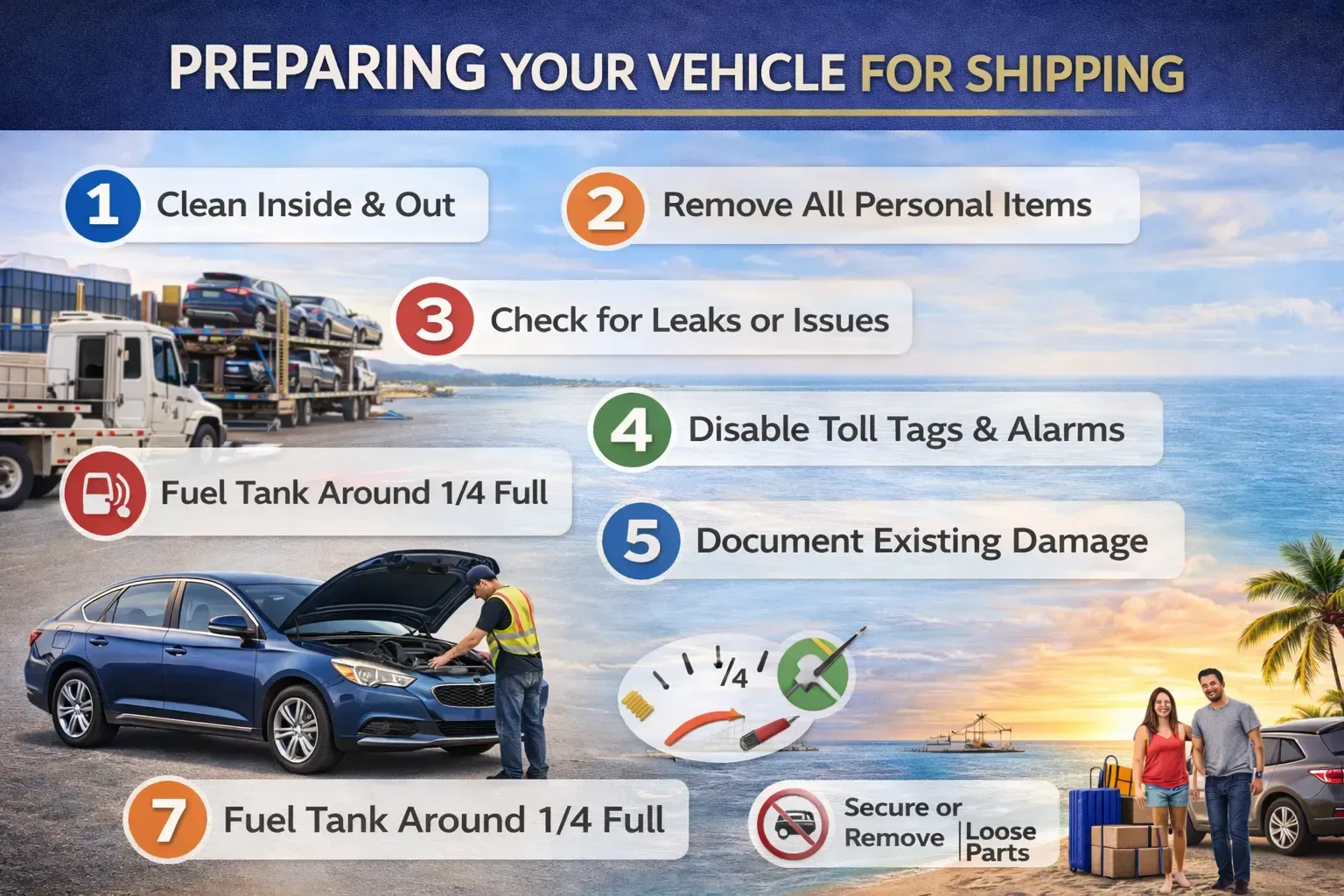
Gather all required documents, including the vehicle title, government-issued photo ID matching the title, current vehicle registration, and a lien authorization letter if the vehicle is financed. Prepare the vehicle by cleaning it thoroughly, removing all personal belongings, reducing the fuel level to one quarter or less, and taking detailed photographs of all exterior surfaces and the odometer. Confirm the vehicle is in operable condition for drive-on loading at the port.
Step 4 — Vehicle Pickup in Denver
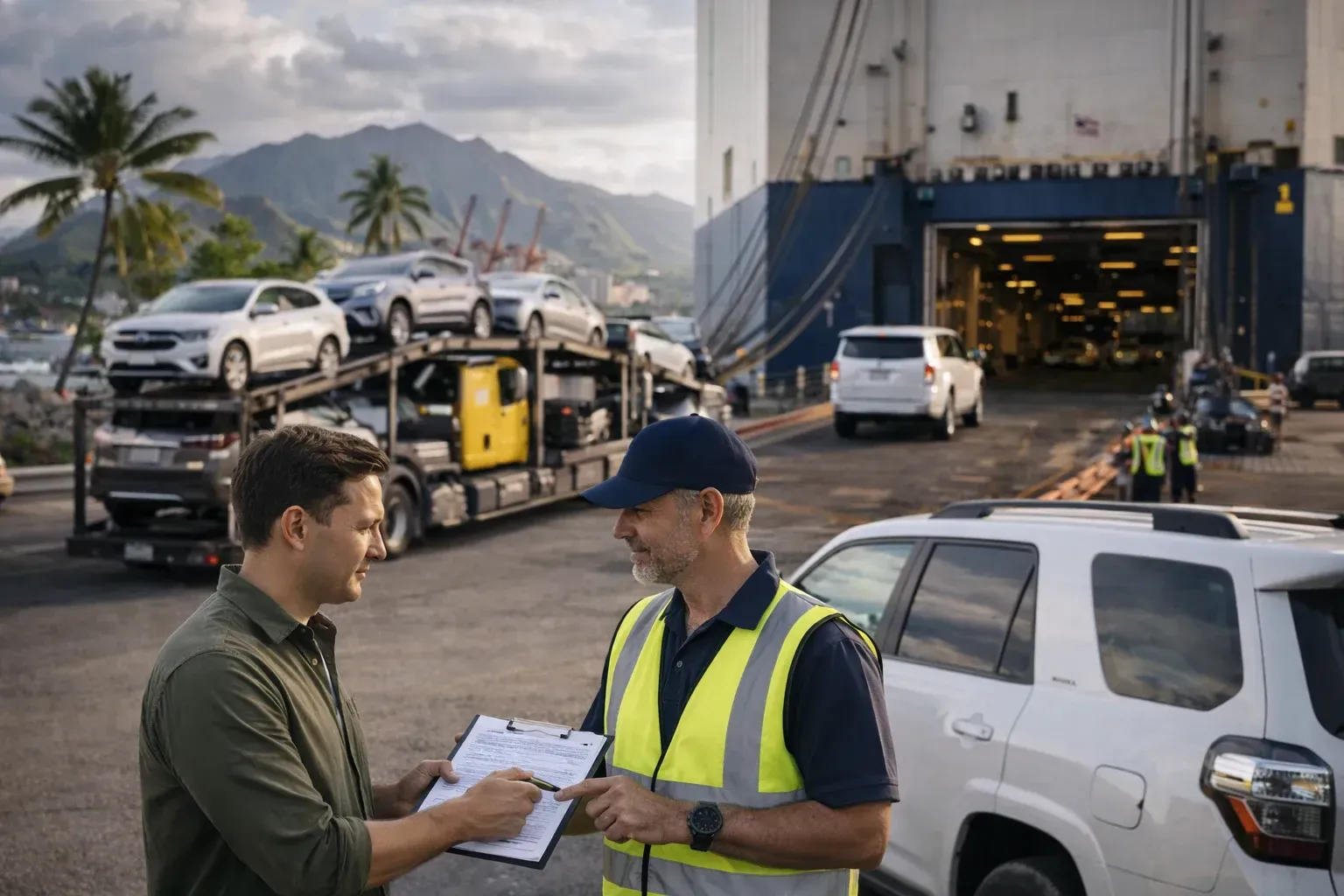
For Door-to-Port service, a carrier driver will pick up the vehicle from your Denver location on the scheduled pickup date and transport it via interstate auto transport to the designated departure port. The carrier will conduct a condition inspection at pickup and generate a bill of lading documenting the vehicle’s condition before it leaves your possession. Review the bill of lading carefully and confirm that all pre-existing damage is accurately documented before signing.
Step 5 — Ocean Freight Crossing to Honolulu
Once the vehicle is delivered to the departure port and loaded onto the vessel, the ocean freight leg of the journey begins. The crossing from West Coast ports to Honolulu takes approximately five to seven days. Your shipping coordinator will provide milestone updates including vessel departure confirmation and estimated arrival date at the Port of Honolulu. You can also track the vessel’s progress using Matson’s publicly available vessel tracking tool.
Step 6 — Pick Up Your Vehicle at the Port of Honolulu
After the vessel arrives and your vehicle is processed through the port’s unloading and inspection sequence, you will receive notification that the vehicle is available for pickup. Bring the original bill of lading and valid government-issued photo ID to the port to claim your vehicle. Inspect the vehicle thoroughly before leaving the port and note any damage on the delivery documentation if applicable. Your vehicle is now on Oahu and ready for the Hawaii registration and safety inspection process.
Preparing Your Vehicle for Shipping
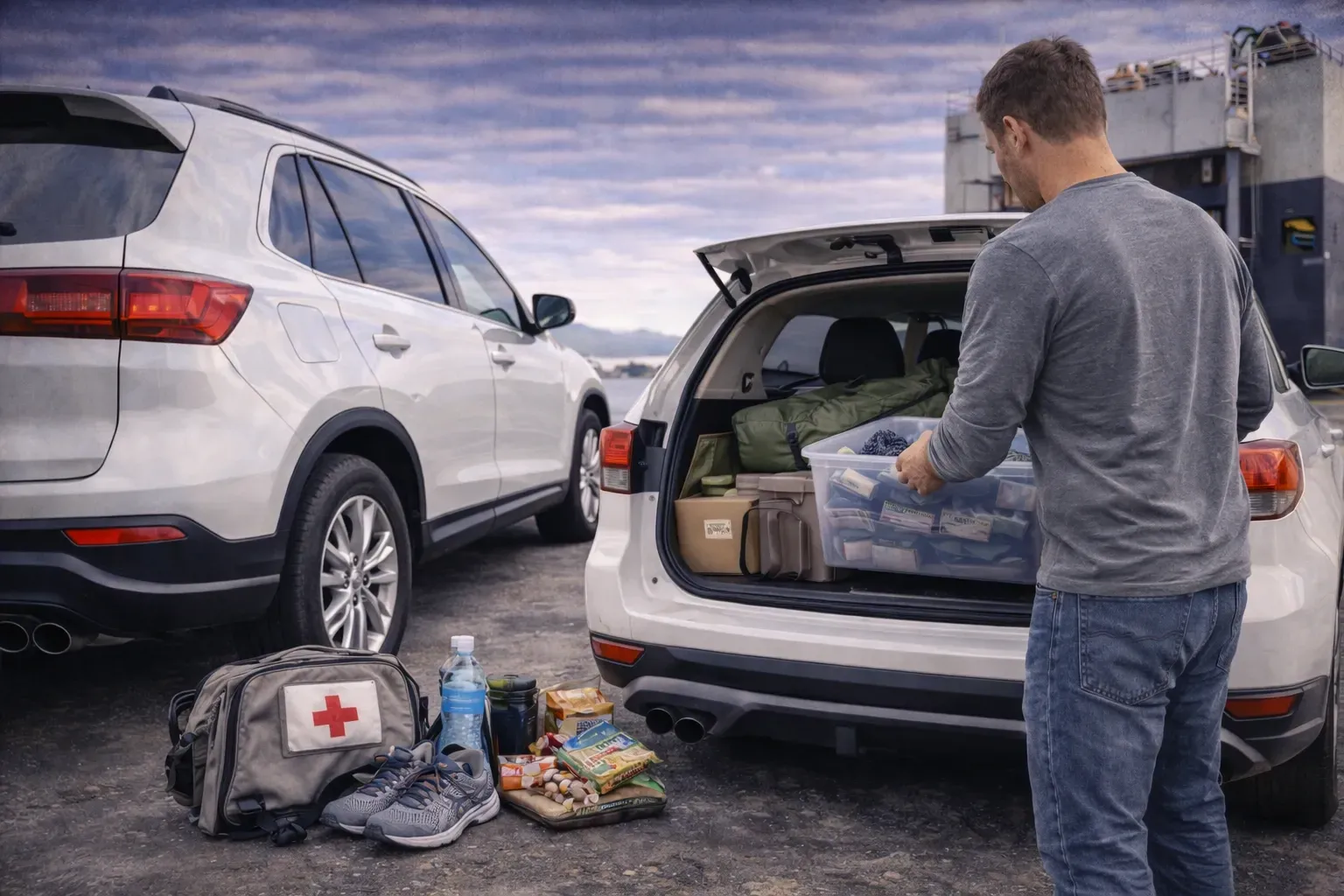
Proper preparation before handing your vehicle over to the carrier in Denver protects the vehicle during its two-leg journey, ensures it clears port acceptance without delays, and establishes the documentation baseline you need for any damage claims. The preparation requirements are consistent whether you are shipping from Denver or any other mainland location.
- Wash the exterior thoroughly: a clean vehicle allows both the carrier at pickup in Denver and the port inspector at the departure terminal to accurately document pre-existing scratches, dents, chips, and paint damage. Existing damage that is obscured by dirt or road grime can create disputes about when damage occurred if a claim arises after delivery. For Denver-origin vehicles, pay particular attention to cleaning road salt residue from winter driving and mud from unpaved surfaces.
- Remove every personal item from the interior and trunk: carriers’ cargo insurance does not cover personal belongings left inside vehicles during transport, and items found in the vehicle at port check-in can result in refusal for loading. Clothing, electronics, sporting goods, tools, car seats, and any other personal property must be removed before pickup.
- Reduce fuel to one quarter tank or less: ocean freight carriers require that vehicles have no more than one quarter of a tank of fuel at the time of port delivery, for fire safety reasons. The carrier driver picking up in Denver can confirm the fuel level at pickup, but arriving at pickup with the tank already at the required level avoids any last-minute adjustment.
- Confirm operable condition: the vehicle must start reliably and drive normally for drive-on port loading. Check battery charge, tire pressure, and fluid levels before pickup. If any mechanical issues affect the vehicle’s ability to be driven onto the vessel under its own power, notify the carrier before pickup so that special handling can be arranged.
- Photograph the entire vehicle independently: take photos of all four sides, the front and rear, the roof, the interior, and the odometer before the carrier arrives for pickup. These photos supplement the carrier’s bill of lading inspection record and provide independent documentation of the vehicle’s condition at the moment it left your possession.
Read Also:
What to Prepare Before Shipping Your Vehicle: A Complete Checklist
Documentation Required for Shipping a Car to Hawaii
The documentation requirements for shipping a car from Denver to Honolulu are the same as for any mainland-to-Hawaii vehicle shipment and apply regardless of the vehicle’s origin state. All documents should be gathered and confirmed before the carrier arrives for pickup in Denver, since missing documentation cannot be resolved quickly once the vehicle is in transit toward the departure port.
- Vehicle title: the original title or a certified copy confirming legal ownership, with the owner’s name matching the identification and shipping authorization. Financed vehicles require a lien authorization letter from the lender authorizing the shipment.
- Government-issued photo ID: a valid driver’s license, passport, or military ID with the name exactly matching the vehicle title and shipping authorization.
- Current vehicle registration: confirms the vehicle is legally registered and allows the carrier to cross-reference the VIN, make, model, and year against the title.
- Bill of lading: generated by the carrier at the time of pickup inspection in Denver. The bill of lading documents the vehicle’s condition at the moment of handover and is required for claiming the vehicle at the Port of Honolulu.
- Lien authorization letter: required if the vehicle is financed and the lender holds the title. Contact the lender at least a week before the scheduled pickup date to allow time for the letter to be issued and delivered.
Hawaii Car Shipping Cost from Denver
The Hawaii car shipping cost from Denver reflects the two-leg structure of the journey and is typically higher than the cost from West Coast cities because the inland auto transport distance from Colorado to the departure port adds meaningful cost to the total. Understanding what drives the total price helps owners compare quotes accurately and identify which components are negotiable versus fixed.
- Inland auto transport distance: the land leg from Denver to Long Beach is approximately 1,100 miles, which at standard auto transport rates adds a significant component to the total cost compared to a vehicle originating in Los Angeles or the Bay Area. Door-to-Port service from Denver is typically the only practical option given the distance, and this service tier costs more than Port-to-Port service where the owner self-delivers.
- Vehicle size and type: standard passenger sedans and compact SUVs ship at the base rate. Full-size trucks, large SUVs, and vehicles with modified dimensions including lifted suspensions, wide body kits, or oversized tires may incur surcharges that reflect the additional space they occupy on the vehicle deck or transport trailer.
- Ocean freight rate: the West Coast to Honolulu ocean freight component is a set cost that reflects the carrier’s operating expenses for the crossing and is consistent regardless of the vehicle’s origin state. The ocean freight rate is the same for a Denver-origin vehicle and a Los Angeles-origin vehicle once both reach the departure port.
- Shipping method: Port-to-Port RoRo shipping is the most cost-effective ocean freight option. Enclosed container transport for high-value or modified vehicles costs more but provides maximum protection. Owners should select the option that matches both their budget and the specific protection needs of their vehicle.
- Seasonal demand: Hawaii shipping volumes fluctuate with military PCS cycles, which peak in the summer months between May and August. Booking during peak season may require more lead time to secure space on the desired sailing, and some carriers adjust pricing during high-demand periods.
How Long Does It Take to Ship a Car from Denver to Honolulu
The total timeline for how long it takes to ship a car from Denver to Honolulu reflects all three phases of the journey: the carrier pickup and scheduling phase, the inland auto transport from Denver to the departure port, and the ocean crossing to Honolulu.
From the time the shipment is booked, carriers typically schedule the Denver pickup within three to seven business days depending on carrier availability and the customer’s preferred date. The inland auto transport from Denver to the West Coast departure port typically takes three to five business days for a standard open transport carrier. The carrier delivers the vehicle to the departure port terminal within the acceptance window for the target sailing, and the vessel departs on its scheduled weekly sailing date.
The ocean crossing from West Coast ports to Honolulu takes five to seven days under normal conditions. After vessel arrival, the Port of Honolulu processes the unloading sequence and releases vehicles for owner pickup, which typically takes one to two business days after vessel arrival. The total door-to-port-arrival timeline from Denver is therefore typically eighteen to twenty-five days from booking to Honolulu pickup when the shipment is booked with adequate lead time and the sailing schedule aligns with the inland delivery timeline.
Factors that can extend the timeline include weather delays on the inland transport leg, vessel schedule adjustments, port congestion at the departure port, and Hawaii agricultural quarantine inspections that require vehicle cleaning before release. Military families working with PCS order dates should plan for the longer end of the timeline range and book as early as their orders permit to maximize scheduling flexibility.
Read Also:
Moving to Hawaii? Here Is What to Know Before You Ship Your Car
Choosing the Right Auto Transport Company|
The quality of the auto transport company you choose has a direct effect on whether your vehicle arrives on schedule, in the condition it was loaded, and with the communication and documentation support you need throughout the process. For a Denver to Honolulu shipment, the specific capabilities that matter most are somewhat different from a domestic auto transport move.
- Direct Matson carrier relationship: carriers with a direct working relationship with Matson have reliable, confirmed access to weekly sailing schedules and vehicle deck space. This access is what allows them to coordinate the inland delivery timeline with the port acceptance window accurately. Brokers who are arranging both legs through separate subcontractors have less visibility and control over this coordination.
- Experience with inland-to-Hawaii routes: carriers who regularly handle shipments from inland states like Colorado understand the timing requirements for the inland leg, the documentation handoff procedures at the departure port, and the specific preparation requirements that apply to vehicles coming from non-coastal origins.
- FMCSA registration and valid authority: confirm the carrier’s USDOT number and operating authority through the FMCSA SAFER database before booking. Legitimate carriers and brokers operating in the US are required to maintain valid FMCSA registration and can provide their USDOT number on request.
- Transparent all-in pricing: the quote for a Denver to Honolulu shipment should clearly identify the inland transport cost, the ocean freight cost, port handling fees, and any fuel surcharges that apply. A quote that bundles all costs without itemization makes it difficult to compare accurately against other providers.
- Customer communication standards: the carrier should provide milestone updates at each stage of the journey, including pickup confirmation, port delivery confirmation, vessel departure confirmation, and arrival notification. For a journey of this length and complexity, proactive communication is not optional.
Common Mistakes to Avoid When Shipping a Car to Hawaii
- Leaving personal items in the vehicle: the most common reason for port refusals, and a mistake that delays the vehicle’s loading and may cause it to miss the sailing. Every item must be removed before the carrier arrives for pickup in Denver.
- Missing or incomplete documentation: arriving at the port with the carrier without a lien authorization letter, a mismatched ID, or an expired registration creates a documentation hold that prevents the vehicle from being accepted for loading. Gather all documents at least a week before the scheduled pickup date.
- Booking too close to the desired relocation date: the eighteen to twenty-five day typical timeline for a Denver to Honolulu shipment means that customers who book the week before they want the vehicle to arrive in Hawaii will find the timing impossible to meet. Book at least three to four weeks in advance for Denver-origin shipments to account for the additional inland transit time.
- Choosing a carrier without direct ocean freight access: a broker who subcontracts both the inland leg and the ocean freight leg to separate carriers has limited ability to guarantee the timing coordination that prevents the vehicle from missing its sailing. The additional intermediary layer also increases the risk of communication failures between legs.
- Not inspecting the vehicle at Honolulu pickup: accepting the vehicle at the Port of Honolulu without inspecting it thoroughly and noting any damage on the delivery documentation before leaving the port forfeits the ability to file a damage claim for transport-related damage. Always inspect before signing the delivery receipt.
How Car Shipping Hawaii Simplifies Vehicle Transport
Car Shipping Hawaii is a veteran-owned vehicle shipping company based in Honolulu that specializes in auto transport to Hawaii from the continental United States, including inland-origin shipments from Colorado and other non-coastal states. We are a Matson-certified shipping specialist with direct carrier access to weekly sailings from Long Beach, Oakland, and Tacoma, and we manage the inland auto transport logistics and ocean freight coordination as a single, integrated service so our customers do not have to manage two separate carriers or two separate timelines.
For Denver-origin shipments, we coordinate the carrier pickup from your Colorado location, manage the inland transit to the departure port, confirm the port acceptance timing against the Matson sailing schedule, and provide milestone updates from Denver pickup through Honolulu port arrival. Every vehicle receives a thorough photographic condition inspection at pickup in Denver, and our transport coordinators walk customers through every documentation requirement before the carrier arrives so that nothing is missing at port check-in.
We offer Door-to-Port service for customers shipping from Denver and other inland locations, as well as enclosed transport for high-value, classic, or modified vehicles that require premium protection. Military families completing PCS moves from Colorado to Oahu installations can access our dedicated military shipping service, which is designed around the documentation and timeline requirements of PCS orders. Our team is available Monday through Friday, 8AM to 6PM HST, to answer questions and guide you through the complete Denver to Honolulu shipping process.
Final Thoughts on Shipping a Car from Denver to Honolulu
- Shipping a car from Denver to Honolulu Hawaii involves a coordinated two-leg journey combining interstate auto transport from Colorado to a West Coast departure port and ocean freight shipping from that port to the Port of Honolulu, with Matson’s weekly sailing schedule connecting the two legs.
- Auto transport logistics from Denver require booking three to four weeks in advance to account for the inland transit time from Colorado to the West Coast, the port acceptance window timing, and the ocean crossing, with a total door-to-Honolulu-pickup timeline typically ranging from eighteen to twenty-five days.
- Hawaii car shipping cost from Denver reflects both the inland auto transport distance from Colorado to the departure port and the fixed ocean freight rate, with total costs varying based on vehicle size, shipping method, and seasonal demand during peak PCS relocation periods.
- Preparing the vehicle properly by cleaning it, removing all personal belongings, reducing fuel to one quarter or less, confirming operable condition, and documenting the condition with independent photographs before the carrier arrives in Denver eliminates the most common causes of port delays and documentation disputes.
- Working with a Matson-certified carrier who manages both the inland and ocean legs as a single coordinated service, provides direct access to the sailing schedule, and maintains proactive communication throughout the journey is the most effective way to ensure a smooth and on-schedule vehicle arrival in Honolulu.
Moving your vehicle from Denver to Honolulu? Car Shipping Hawaii provides reliable vehicle transport services so your car arrives safely while you focus on your relocation.
Camilo Jaime
Camilo Jaime is an experienced Hawaii auto transport specialist with deep knowledge in car shipping logistics, Matson vessel coordination, port protocols, military PCS relocations, and a wide range of ocean freight services. He understands the challenges that come with shipping vehicles to and from the Hawaiian islands for families, service members, and businesses alike.
Through his blogs at Car Shipping Hawaii, Camilo shares practical shipping tips, cost-saving advice, and insights drawn from real coordination experience. His goal is to help readers make confident decisions about Hawaii vehicle transport and learn straightforward ways to navigate port requirements, sailing schedules, and service options. With a clear and honest writing style, Camilo focuses on real solutions that make the car shipping process simple, stress-free, and affordable for every customer.
You Might Also Like