How To Avoid Delays When Shipping A Car To Hawaii
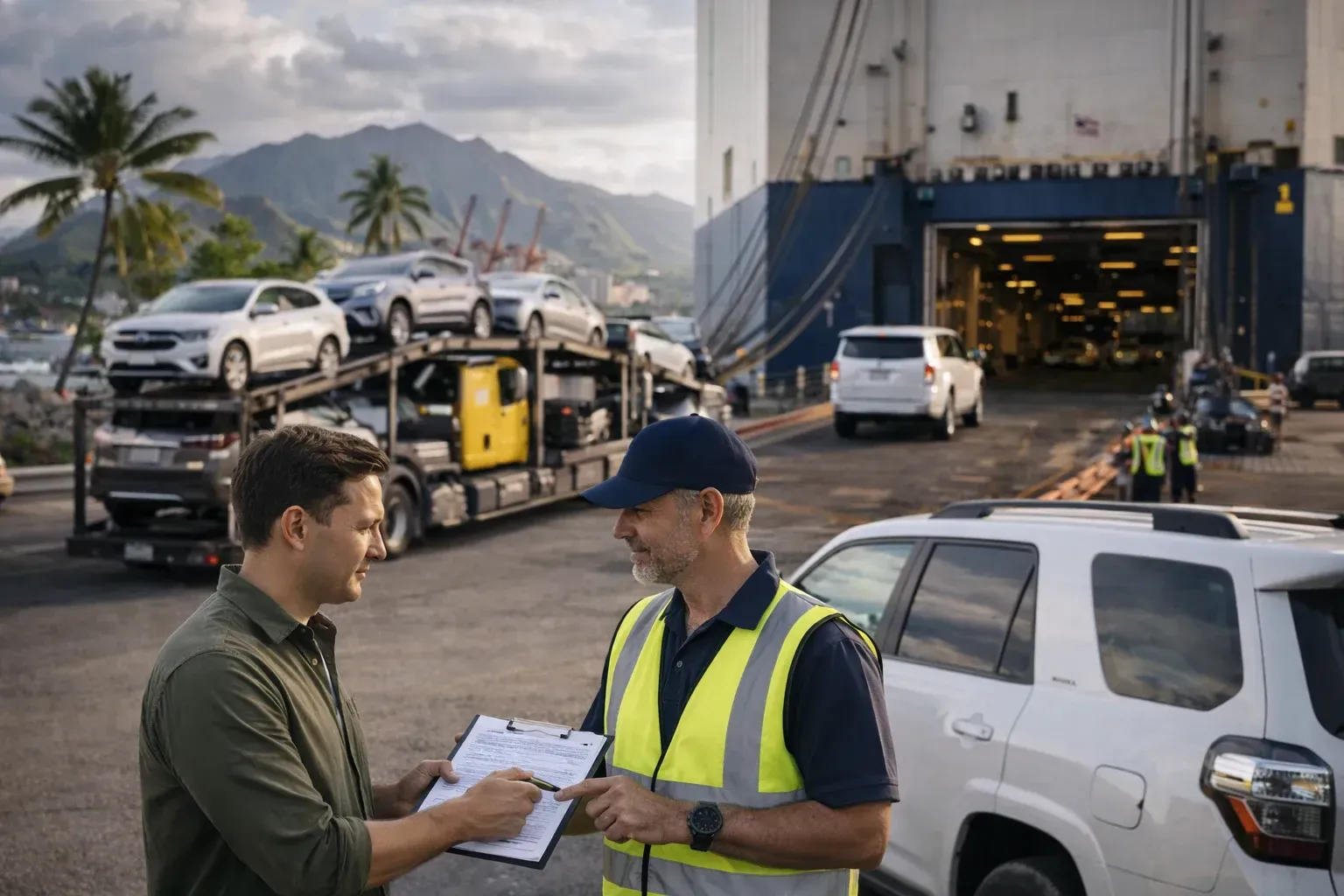
Shipping a car to Hawaii can be a smooth process, but delays can occur if the vehicle or paperwork is not properly prepared. The Hawaii car shipping process involves more coordination than domestic mainland transport because it requires synchronizing ground pickup, port delivery, ocean vessel scheduling, and destination port clearance into a single unbroken chain. When any link in that chain breaks, whether because of missing shipping documentation, a missed port cutoff, or a vehicle that is not ready for inspection at the terminal, the delay that follows is typically measured in weeks rather than days because the next available Matson sailing does not depart until the following week.
Understanding how car shipping to Hawaii works and where the most common problems arise gives vehicle owners the ability to anticipate and prevent those problems before they happen. The majority of delays in Hawaii car shipping are not caused by carrier error or unpredictable events. They are caused by preventable preparation failures: documentation that was not assembled in advance, vehicles delivered to the port terminal without meeting the required preparation standards, or shipments booked too close to a report date or move-in deadline to absorb a one-week sailing delay.
This guide identifies the most common reasons auto transport to Hawaii shipments are delayed, explains the documents needed to ship a car to Hawaii, walks through vehicle preparation requirements, and provides practical tips for faster car shipping to Hawaii. Car Shipping Hawaii is a veteran-owned vehicle transport company based in Honolulu that helps customers navigate this process efficiently from mainland pickup through Honolulu port delivery.
Understanding the Hawaii Car Shipping Process
Hawaii car shipping operates on a fundamentally different logistics model than shipping a vehicle between two mainland states. Because Hawaii is an island chain with no overland connection to the continental United States, every vehicle traveling to the islands must complete an ocean crossing on a freight vessel. Matson Navigation Company operates the primary vehicle transport route between the West Coast and Hawaii, running weekly sailings from three departure ports: Long Beach in Southern California, Oakland in Northern California, and Tacoma in Washington state.
The Hawaii vehicle shipping process unfolds in two distinct legs. The first is the ground transport segment from the vehicle’s origin to the departure port terminal. Depending on where the vehicle is located, this can mean a direct owner delivery to the port, or a Door-to-Port ground carrier pickup that collects the vehicle from anywhere on the mainland and transports it to the designated West Coast terminal. The second leg is the ocean crossing itself, which takes approximately five to seven days from Long Beach or Oakland to the Matson terminal in Honolulu, where the vehicle is inspected and released to the owner or their representative.
How long does it take to ship a car to Hawaii from booking to port pickup in Honolulu? The total Hawaii car shipping timeline from booking to Honolulu port delivery typically ranges from 14 to 21 days for vehicles departing from California ports, with the ground transport leg accounting for one to five days depending on origin location and the ocean crossing adding five to seven days after vessel departure. Customers who book early, prepare their documentation in advance, and deliver their vehicle to the port terminal before the weekly sailing cutoff consistently experience the shortest total timelines within that range.
Read Also:
Vehicle Shipping to Hawaii: A Complete Guide
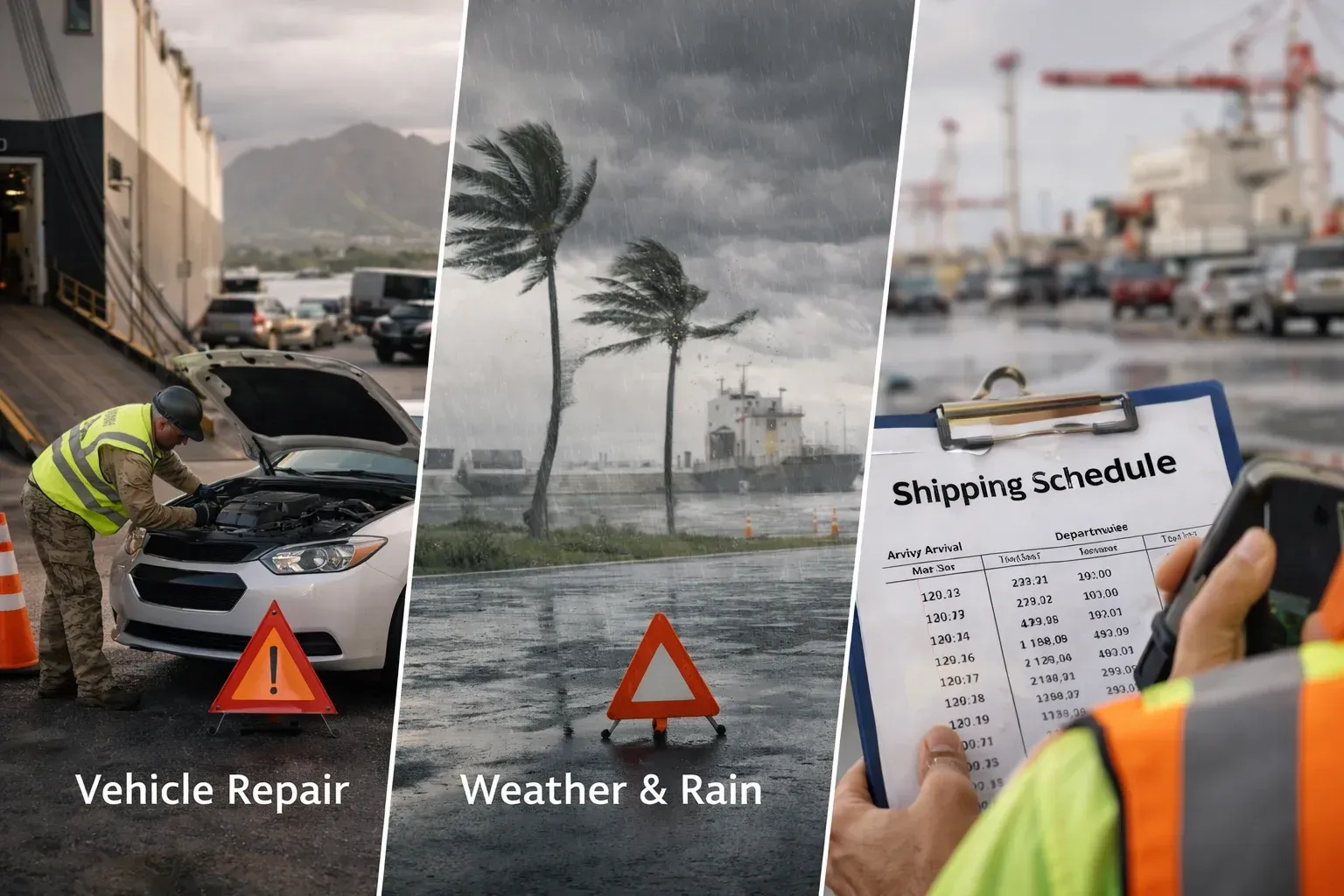
Common Reasons Car Shipping Delays Happen
Most delays in auto transport to Hawaii share a common characteristic: they were preventable with earlier action or more careful preparation. Understanding the specific failure modes that cause delays allows customers to address each one before it becomes a problem.
- Missing or incomplete shipping documentation: the most common single cause of port delays. A vehicle that arrives at the terminal without the original title, valid identification, or required carrier paperwork cannot be accepted for loading. If the documentation problem is discovered at the port, the customer must obtain the missing item and return before the terminal cutoff, which in many cases means missing the current week’s sailing entirely.
- Late vehicle delivery to the port: Matson terminal cutoffs for each sailing are published in advance and are firm. A vehicle delivered to the terminal after the cutoff for a given week’s sailing waits for the following week’s departure, adding approximately seven days to the total Hawaii car shipping timeline. Customers who underestimate the time required for ground transport pickup and port delivery are among the most common recipients of this delay.
- Vehicle preparation failures at the terminal: vehicles that arrive at the port with personal items inside, a fuel level above the permitted maximum, mechanical issues that prevent the vehicle from being driven onto the vessel, or visible fluid leaks may be refused for loading until the issues are corrected. Some of these corrections can be made on-site, but others require the vehicle to leave the terminal for repair, which almost certainly means missing the current sailing.
- Port congestion and scheduling conflicts: periodic congestion at West Coast departure ports, particularly at Long Beach during peak import shipping seasons, can create terminal access delays that push vehicle delivery past the intended cutoff. Booking with enough lead time to absorb a one-to-two day terminal access delay is the practical mitigation for this risk.
- Weather affecting ocean transit: severe Pacific weather events can affect vessel departure schedules or require speed reductions that extend crossing time. These delays are rare but not predictable, and customers with firm arrival deadlines should account for them by targeting a sailing at least one week earlier than the minimum timeline their situation requires.
Required Documents for Shipping a Car to Hawaii
Assembling the documents needed to ship a car to Hawaii before arriving at the port terminal is the single most effective step a customer can take to prevent a documentation-caused delay. Every document on this list should be confirmed and in hand before the vehicle is delivered to the terminal or picked up by a ground carrier.
Vehicle Title or Proof of Ownership
The original vehicle title is required to prove ownership and authorize the export of the vehicle. The title must be clear of liens, meaning any active financing on the vehicle must either be paid off before shipping or accompanied by written authorization from the lienholder permitting the vehicle to be transported. Some lenders provide a lienholder release letter for this purpose, while others require the title to be reissued in the owner’s name before the vehicle can be shipped. Contacting the lender early in the planning process is essential because title reissuance can take two to four weeks in some cases.
Valid Government-Issued Identification
A valid driver’s license, passport, or other government-issued photo identification is required for all shipping transactions. Military customers completing a PCS move to Hawaii should also have their PCS orders available, as carriers may request them for records purposes and port terminal staff may ask for them as supporting documentation.
Shipping Agreement and Carrier Paperwork
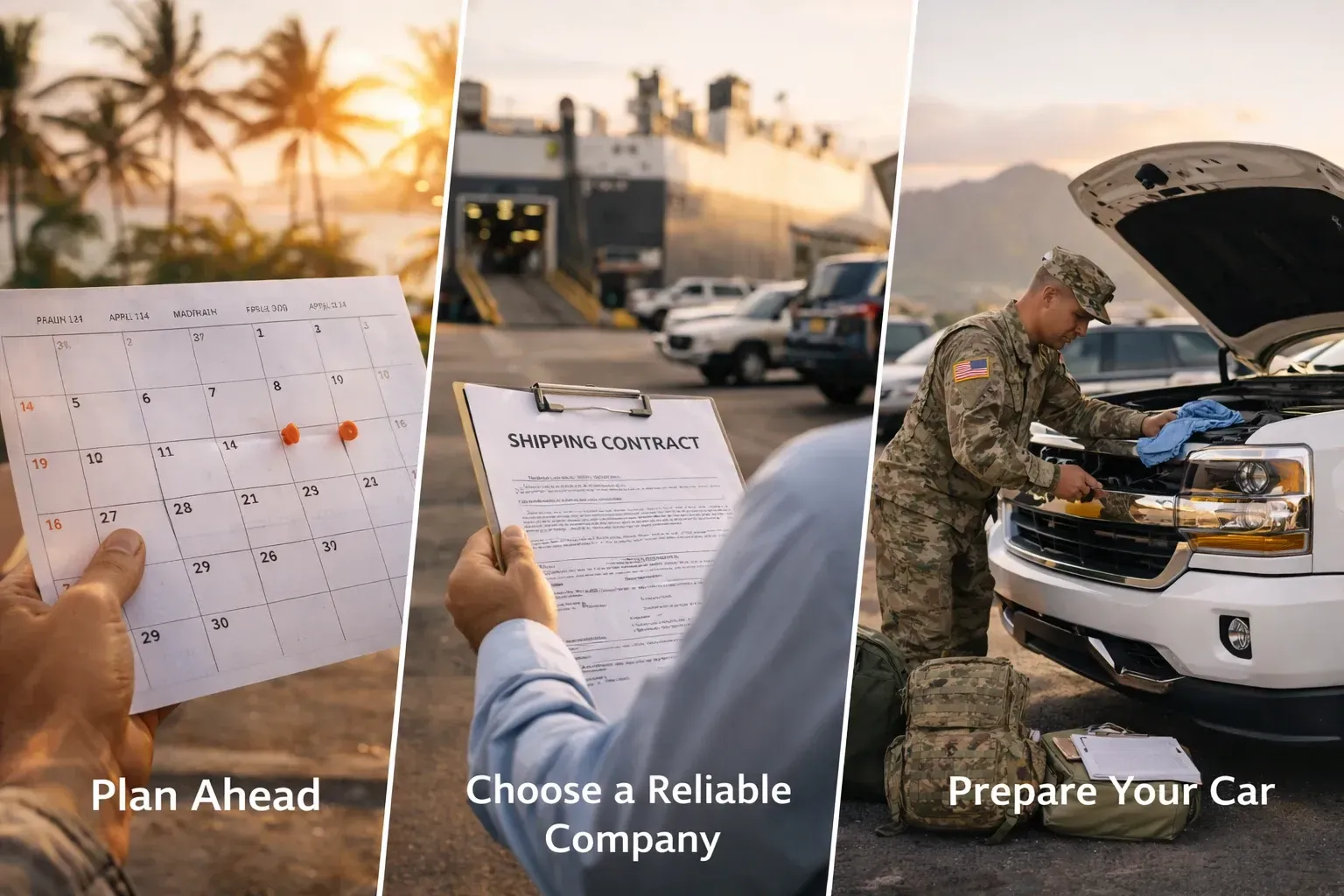
The bill of lading and booking confirmation from the shipping company constitute the formal shipping agreement that authorizes the carrier to accept and transport the vehicle. These documents should be provided by the car shipping company at the time of booking and should be reviewed carefully to confirm that the vehicle description, departure port, destination, and any special handling requirements are correctly documented before the vehicle is presented for pickup or port delivery.
Lienholder Authorization If Vehicle Is Financed
Vehicles with active financing require written authorization from the lienholder before they can be shipped. The form this authorization takes varies by lender. Some provide a release letter that travels with the vehicle, some require notification by certified mail or fax, and some require the loan to be paid off before authorizing interstate or overseas transport. Contact the lender as soon as the shipping date is confirmed and request their specific requirements in writing to ensure full compliance before the vehicle reaches the port.
Read Also:
What to Prepare Before Shipping Your Vehicle: A Complete Checklist
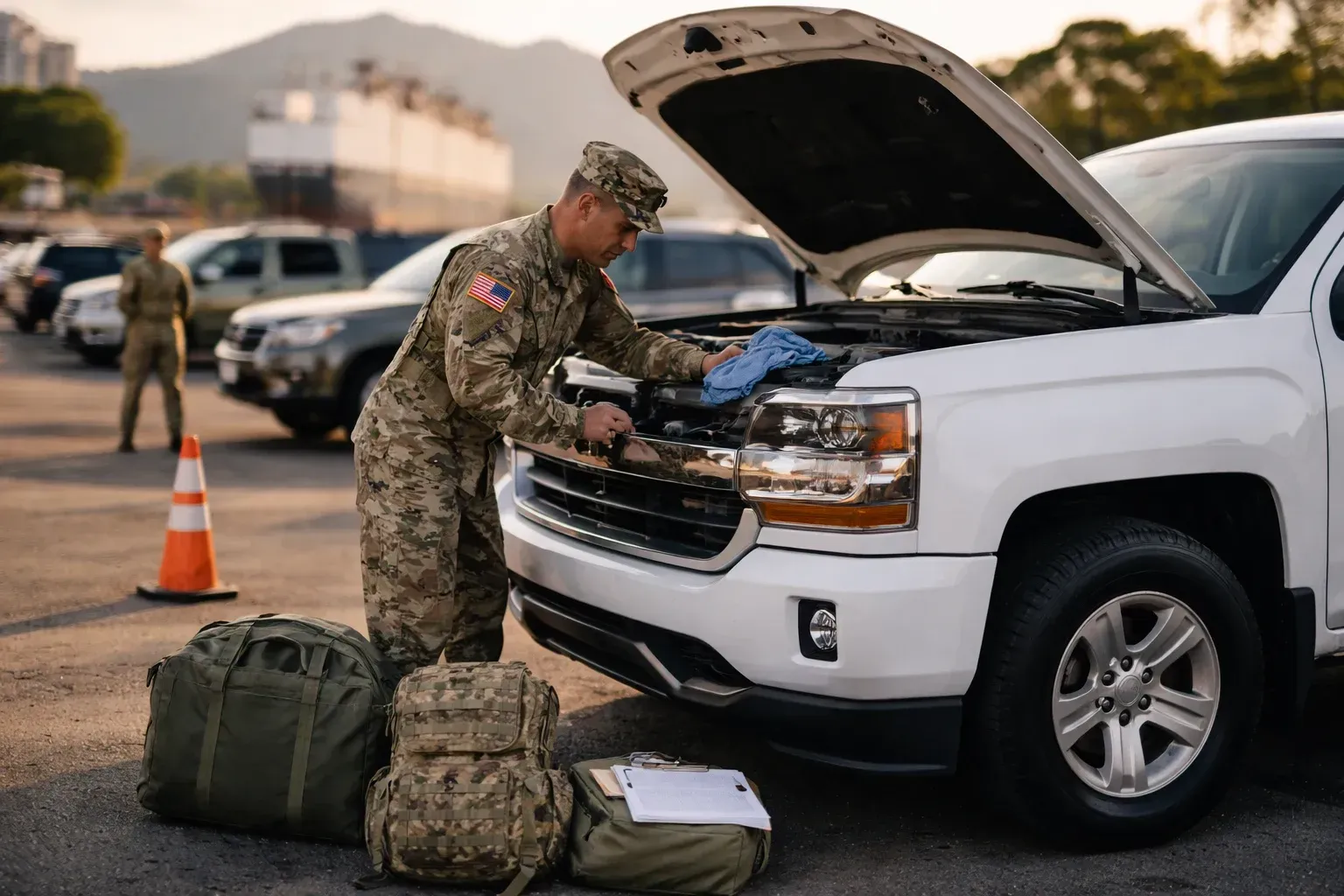
Prepare Your Vehicle Before Shipping
Vehicle preparation is the second most important delay-prevention measure after documentation assembly. A vehicle that arrives at the port terminal in proper condition for shipping moves through the inspection and loading process without complication. A vehicle that requires corrections at the terminal creates delays that the customer bears in both time and potential additional cost.
- Clean the vehicle inside and out before the pre-shipment condition inspection. A clean exterior ensures that all pre-existing scratches, dents, and paint damage are visible and accurately recorded on the bill of lading. A clean interior confirms that no personal items remain that would need to be removed at the terminal.
- Remove all personal belongings from the vehicle. Carriers are prohibited from transporting personal items inside shipped vehicles, and items found inside at the terminal must be removed before loading. Items left in a vehicle during ocean transport are not covered by cargo insurance and may shift during the crossing in ways that damage the vehicle interior.
- Check for mechanical issues before delivery. Vehicles that cannot be driven under their own power onto the vessel’s vehicle deck create loading complications that may result in the vehicle being refused until the issue is resolved. Verify that the battery holds a charge, that all four tires are properly inflated, that there are no active fluid leaks, and that the vehicle starts and drives reliably before scheduling delivery to the port.
- Reduce fuel to one quarter tank or less. Matson terminal requirements limit fuel levels for safety reasons, and a vehicle arriving with more than one quarter tank of fuel may be required to have fuel removed before loading, which creates terminal processing delays. Check with your carrier for the specific fuel level requirement at the time of booking.
- Document the vehicle’s condition with your own photographs covering all panels, wheels, glass, and any existing damage from multiple angles in good lighting before the vehicle is picked up or delivered to the port. This documentation supplements the bill of lading inspection record and is the strongest evidence available if a condition dispute arises after delivery.
Schedule Your Shipment Early
Booking auto transport to Hawaii as early as possible after a move date is confirmed is one of the most effective tips for faster car shipping to Hawaii. The Hawaii car shipping market experiences seasonal demand variations that affect both carrier availability and pricing. The summer months from May through August correspond with military PCS season, which drives a significant surge in vehicle shipping demand to Hawaii that can fill carrier capacity weeks ahead of departure dates. Customers who wait until two or three weeks before their intended sailing to book frequently find limited availability or higher pricing than early bookers encounter.
The practical minimum booking lead time for Hawaii car shipping is two weeks before the intended sailing, which provides enough time to confirm documentation, arrange ground transport pickup if needed, and deliver the vehicle to the port terminal before the cutoff. For customers with firm deadlines, such as military families with hard report dates or buyers with real estate closing commitments, a minimum of three to four weeks of lead time is more appropriate because it provides a buffer to absorb a one-week sailing delay without catastrophic consequences for the broader relocation timeline.
Choosing the right departure port is also part of scheduling correctly. Long Beach and Oakland are the most commonly used departure ports for California-based customers, with Long Beach offering the most frequent sailing schedule from Southern California and Oakland serving the Bay Area and Northern California. Tacoma serves the Pacific Northwest and can be a viable option for customers in Oregon or Washington state whose vehicles are already in that region. Discuss departure port options with your carrier at the time of booking to identify which port minimizes the total ground transport time and cost for your specific origin location.
Deliver the Vehicle to the Port on Time
Meeting the
port terminal cutofffor the intended sailing is the single most time-sensitive step in the entire Hawaii car shipping process. Missing the cutoff by even a few hours means the vehicle waits for the following week’s sailing, adding approximately seven days to the total timeline. Customers who understand the cutoff schedule and plan their delivery accordingly avoid this delay entirely.
The cutoff date for each Matson sailing is typically three to five business days before the vessel’s departure date. The exact cutoff for a specific sailing should be confirmed with your carrier at the time of booking rather than estimated, as cutoffs can vary slightly based on the vessel schedule and terminal operational requirements. Customers using Door-to-Port service should communicate their intended sailing to the ground carrier and confirm that the ground transport pickup and transit timeline is compatible with the port cutoff before the booking is finalized.
At the terminal, the vehicle goes through a condition inspection conducted by port staff who record its exterior condition on the terminal copy of the bill of lading. Having the vehicle clean and the required documents ready at check-in makes this process fast. Customers who arrive at the terminal without their title, without identification, or with a vehicle that has not been prepared according to the terminal’s requirements will experience delays that in many cases cannot be resolved quickly enough to make the current sailing.
Understanding Shipping Timelines to Hawaii
How long does it take to ship a car to Hawaii from each West Coast departure port? The ocean crossing from Long Beach or Oakland to Honolulu takes approximately five to six days under normal sailing conditions. From Tacoma, the crossing is slightly longer at six to seven days. These crossing times are the ocean-only portion of the timeline and do not include ground transport to the departure port or port processing time at the Honolulu terminal after vessel arrival.
Port processing at the Honolulu Matson terminal after vessel arrival typically adds one to two business days before the vehicle is available for owner pickup. The terminal conducts an arrival inspection, processes import documentation, and releases vehicles in the order they are cleared rather than in the order they were loaded on the vessel. Customers who have all required documentation ready for port pickup, including their original bill of lading and valid identification, experience the fastest release process.
The total Hawaii car shipping timeline from the date a vehicle is accepted at the departure port terminal to the date it is available for pickup in Honolulu is typically seven to ten days for vessels sailing from California ports. Adding the ground transport segment from the vehicle’s origin to the departure port, total door-to-door timelines for most customers range from 14 to 21 days. Customers who book early, prepare correctly, and meet the port cutoff comfortably consistently land at the shorter end of that range.
Shipping Car to Hawaii Cost Considerations
The shipping car to Hawaii cost is determined by a combination of factors that vary by shipment. Vehicle size is the primary cost driver at the vessel level, as larger vehicles occupy more space on the vehicle deck and are priced accordingly. A standard passenger sedan ships for less than a full-size pickup truck or SUV, and oversized vehicles that exceed the standard height or width specifications may require special handling at a premium rate.
The shipping method also affects the total cost meaningfully. Open transport, in which the vehicle is loaded onto the vessel’s standard vehicle deck alongside other vehicles, is the most common and most cost-effective option. Enclosed transport, which places the vehicle inside a sealed container for maximum protection during the ocean crossing, adds a significant premium but is appropriate for high-value, classic, or modified vehicles where paint and bodywork condition must be preserved throughout transit.
- Vehicle size and type: standard passenger cars ship at the lowest base rates; trucks, SUVs, and vans at higher rates; oversized vehicles at premium rates.
- Departure port: Long Beach and Oakland are typically the most cost-effective departure points for California-based customers. Tacoma may involve higher ground transport costs for vehicles originating south of the Pacific Northwest.
- Shipping method: open transport is the most affordable; enclosed container shipping adds cost but provides superior protection for valuable vehicles.
- Seasonal demand: peak military PCS season from May through August can increase pricing and reduce carrier availability. Booking early in peak season secures both availability and competitive pricing.
- Additional services: Door-to-Port ground transport, marine insurance upgrades, and expedited processing options each add to the base shipping rate. Confirm what is included in any quoted price before committing to a carrier.
Tips for Faster Car Shipping to Hawaii
- Confirm all shipping documentation is complete before delivering the vehicle. Gather the original title, lienholder authorization if applicable, valid government ID, and carrier booking paperwork as a set well in advance of the port delivery date. Treat any missing item as an urgent priority the moment it is identified.
- Prepare the vehicle according to carrier guidelines before the pickup or port delivery date. A vehicle that passes the terminal inspection without requiring corrections moves through port processing faster and eliminates the risk of a loading refusal that would cause a sailing miss.
- Book your Hawaii car shipping with at least three to four weeks of lead time when a firm arrival deadline exists. Early booking secures space on the intended sailing, provides time to resolve documentation issues before they become emergencies, and allows the ground transport segment to be coordinated without rushing.
- Choose experienced Hawaii auto transport companies that have established relationships with Matson and the West Coast port terminals. A carrier that processes hundreds of Hawaii shipments per year knows the cutoff schedules, the terminal requirements, and the common pitfalls that cause delays, and they can help customers avoid those pitfalls proactively rather than reactively.
- Stay in communication with your shipping provider throughout the process. Confirm pickup dates, port cutoff dates, vessel departure dates, and expected Honolulu arrival dates in writing at the time of booking. Follow up as the sailing date approaches to confirm nothing has changed and to address any questions about terminal procedures or post-arrival logistics.
How Car Shipping Hawaii Helps Avoid Shipping Delays
Car Shipping Hawaii is a veteran-owned vehicle shipping company based in Honolulu that coordinates vehicle transport from the continental United States to Hawaii with a consistent focus on the preparation, documentation, and scheduling practices that prevent delays before they happen. We work with Matson on weekly sailings from Long Beach, Oakland, and Tacoma, and we manage the full coordination chain from ground pickup through Honolulu port delivery for customers who need that level of support.
Our Door-to-Port service arranges ground transport pickup from anywhere on the mainland and delivers the vehicle to the designated West Coast terminal on a schedule coordinated with the intended sailing cutoff. Port-to-Port service is available for customers who can deliver their vehicle directly to a departure terminal. For high-value vehicles, classic cars, and custom builds, our enclosed transport option provides container-level protection throughout the ocean crossing.
Every vehicle we ship receives a thorough photographic condition inspection at pickup that creates a documented baseline for the full transit period. Our transport coordinators provide proactive milestone updates at vehicle pickup, port check-in, vessel departure, and Honolulu port arrival, keeping customers informed throughout the process without requiring them to chase updates. We are available Monday through Friday during business hours to answer questions about documentation requirements, vehicle preparation standards, sailing schedules, and post-arrival registration procedures.
Military families completing PCS moves to Hawaii receive dedicated service through our military car shipping program, which is built around the specific timeline requirements and documentation standards of military relocation. We understand that vehicle transport is one component of a demanding relocation process, and our goal is to make it the part that gives you the least to worry about.
Read Also: Moving to Hawaii? Here Is What to Know Before You Ship Your Car
Final Thoughts on Avoiding Car Shipping Delays to Hawaii
- The most common delays in Hawaii car shipping are preventable: documentation gaps, missed port cutoffs, and vehicle preparation failures each have straightforward solutions that customers who plan ahead can implement well before the shipping date arrives.
- Documents needed to ship a car to Hawaii include the original vehicle title, valid government ID, carrier booking paperwork, and lienholder authorization if the vehicle is financed. Assembling all of these before the vehicle is delivered to the port or picked up by a ground carrier eliminates the most frequent cause of terminal delays.
- Vehicle preparation for auto transport to Hawaii requires removing personal items, reducing fuel to the permitted level, confirming the vehicle is mechanically sound, and documenting its condition with independent photographs before the pre-shipment inspection takes place.
- The Hawaii car shipping timeline from departure port acceptance to Honolulu port availability typically spans seven to ten days for California-departing vessels, with total door-to-door timelines of 14 to 21 days for most customers who book early and meet the port cutoff comfortably.
- Working with an experienced Hawaii car shipping company that actively manages documentation, coordinates with port terminals, and communicates proactively at each milestone is the most reliable way to ensure your shipment arrives on schedule without unnecessary complications.
Shipping a car to Hawaii soon? Car Shipping Hawaii helps transport your vehicle safely and efficiently so you can focus on your move without unnecessary delays.
Camilo Jaime
Camilo Jaime is an experienced Hawaii auto transport specialist with deep knowledge in car shipping logistics, Matson vessel coordination, port protocols, military PCS relocations, and a wide range of ocean freight services. He understands the challenges that come with shipping vehicles to and from the Hawaiian islands for families, service members, and businesses alike.
Through his blogs at Car Shipping Hawaii, Camilo shares practical shipping tips, cost-saving advice, and insights drawn from real coordination experience. His goal is to help readers make confident decisions about Hawaii vehicle transport and learn straightforward ways to navigate port requirements, sailing schedules, and service options. With a clear and honest writing style, Camilo focuses on real solutions that make the car shipping process simple, stress-free, and affordable for every customer.
You Might Also Like