Cost to Ship a Car From Hawaii to Mainland US
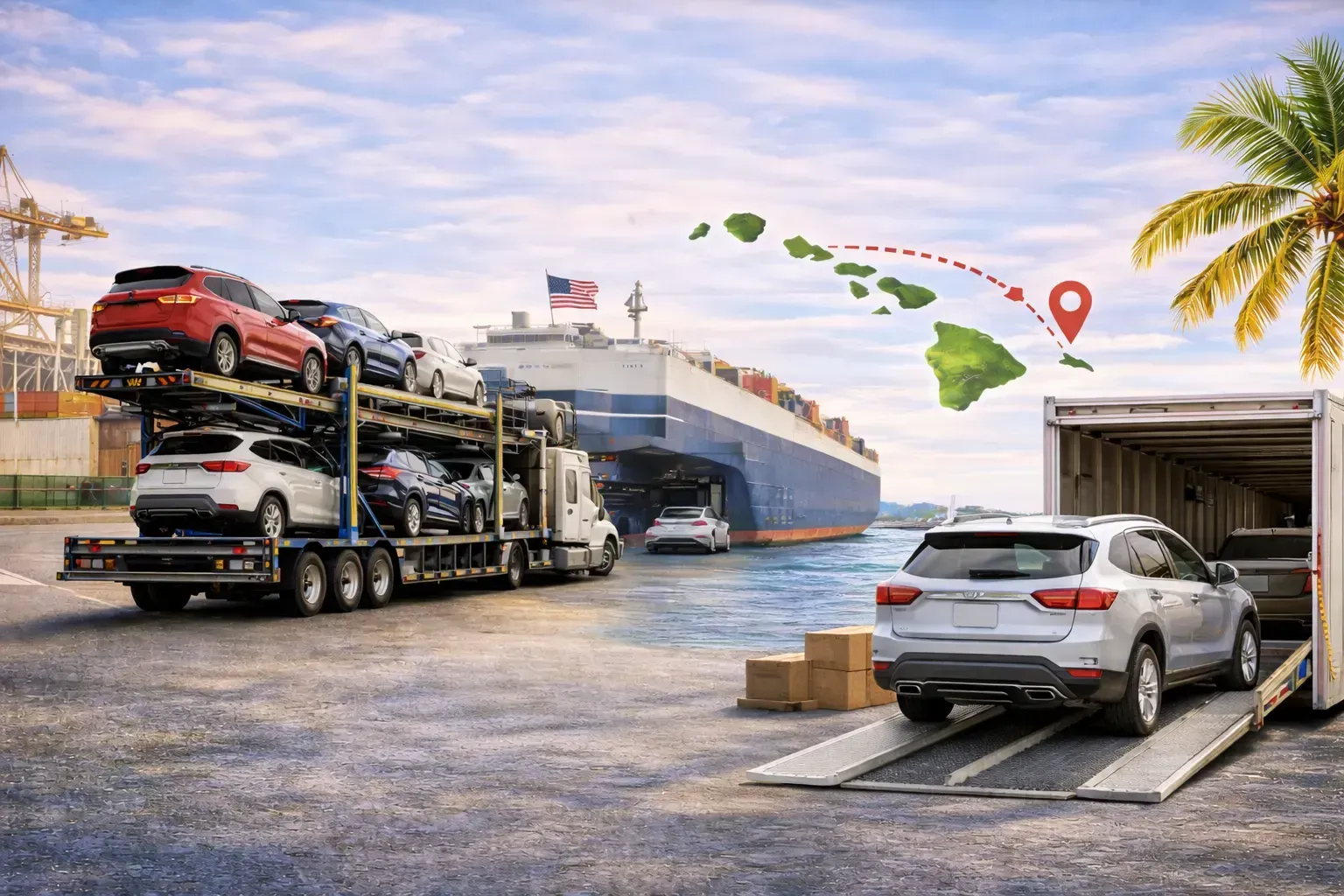
Shipping a vehicle from Hawaii to the mainland United States is a common step for people relocating, completing a PCS military move, selling a vehicle to an out-of-state buyer, or bringing a car back after an extended island stay. Unlike moving between mainland states where a carrier can drive a vehicle across state lines, there is no road connection between Hawaii and the continental United States. Every vehicle that travels between Hawaii and the mainland must cross the Pacific Ocean by ship, which means ocean freight is the only available transport method and understanding the cost to ship car from Hawaii is an essential part of planning the move.
The Hawaii car shipping cost for a standard passenger vehicle on the reverse route, from the Port of Honolulu to a West Coast mainland arrival port, typically ranges from approximately one thousand to fifteen hundred dollars for Port-to-Port RoRo service. The specific cost to ship car from Hawaii for any individual shipment depends on the destination port, vehicle size, shipping method, and the time of year relative to seasonal demand peaks. Shipping car from Hawaii to California is the most common route because California’s major ports, Long Beach and Oakland, receive the highest frequency of Matson sailings from Honolulu and offer the most flexible scheduling options of any mainland destination.
This guide covers the average cost to ship a car from Hawaii to mainland US by route, the factors that affect Hawaii car shipping cost, how the auto transport logistics of the Hawaii-to-mainland process work, how vehicle shipping insurance protects your vehicle during ocean transit, and practical tips for keeping total costs in check. For those ready to begin the process, Car Shipping Hawaii provides dependable vehicle transport services for both the Hawaii-to-mainland and mainland-to-Hawaii routes.
Average Cost to Ship a Car From Hawaii to Mainland
The average cost to ship car from Hawaii to mainland US destinations on the West Coast ranges from approximately one thousand to fifteen hundred dollars for a standard passenger sedan or compact SUV using Port-to-Port RoRo ocean freight service. This range reflects the base ocean freight rate for the Honolulu to West Coast crossing, port handling fees at both the Port of Honolulu departure terminal and the mainland arrival terminal, and any applicable fuel surcharges. The Hawaii car shipping cost for specific vehicles and routes may fall above or below this range based on the variables described in the sections below.
Mainland destinations beyond the West Coast carry higher total costs because the ocean freight to the West Coast arrival port must be combined with an inland auto transport leg from the port to the final destination. A vehicle shipping from Honolulu to Long Beach and then needing inland transport to Texas, the Midwest, or the East Coast will incur both the ocean freight cost and the land transport cost for the second leg. For customers whose final destination is within practical driving distance of a West Coast arrival port, Port-to-Port service with self-pickup at the mainland terminal is the most cost-effective option by eliminating the land transport surcharge entirely.
Delivery timelines for Hawaii to mainland shipments mirror the mainland to Hawaii direction: the ocean crossing from Honolulu to West Coast ports takes approximately five to seven days, with port processing at both ends adding one to two business days at each terminal. Total door-to-door timelines including inland transport legs range from seven to twenty-five days depending on the origin port, destination, and service type selected. Customers planning around a specific mainland arrival date should book at least two to three weeks in advance to secure the desired sailing alignment and carrier scheduling.
Shipping Car From Hawaii to California
Shipping car from Hawaii to California represents the most popular and most frequently served Hawaii-to-mainland route because California is home to two of the three primary West Coast Matson terminals, Long Beach in Southern California and Oakland in Northern California, and because the volume of vehicles moving between Hawaii and California in both directions supports a weekly sailing frequency that gives customers the most flexible scheduling options of any Hawaii-to-mainland route.
The cost to ship car from Hawaii to California on the Port-to-Port RoRo route is at the lower end of the overall Hawaii car shipping cost range, typically falling between one thousand and fourteen hundred dollars for a standard passenger vehicle. This pricing reflects the base ocean freight rate for the Honolulu to Long Beach or Honolulu to Oakland crossing, which is among the most competitively priced routes in the Hawaii vehicle shipping market due to the high volume of vehicles moving on that corridor in both directions throughout the year.
Hawaii to California car shipping arrivals at Long Beach serve customers in Southern California, Nevada, and Arizona, who can pick up at the port or arrange inland transport from Long Beach to their final destination. Oakland arrivals serve Northern California, Oregon, and Nevada customers with similar pickup or inland delivery options. Customers who are relocating from Oahu to Northern California destinations will generally find Oakland the more convenient and cost-effective arrival port, while those heading to the Los Angeles metro area, San Diego, or Las Vegas will typically prefer Long Beach. Confirming which port best serves the final mainland destination is an important step in the booking process that affects both the total cost to ship car from Hawaii to California and the final delivery timeline.
Factors That Affect the Cost to Ship a Car From Hawaii
Several variables determine the final Hawaii car shipping cost for any specific shipment, and understanding them allows owners to identify where genuine cost savings are available and where pricing reflects unavoidable logistics costs.
- Vehicle size and dimensions: standard passenger sedans, compact SUVs, and hatchbacks ship at the base ocean freight rate. Full-size pickup trucks, large SUVs, cargo vans, and vehicles with non-standard modifications including lift kits, roof racks, oversized tires, or wide body kits occupy more space on the vessel’s vehicle deck and incur surcharges that reflect the additional footprint. Accurate vehicle dimensions, including height with any roof-mounted accessories, should be provided when requesting quotes to ensure the rate reflects the actual vehicle.
- Shipping method: RoRo, where vehicles are driven onto and off the vessel under their own power, is the standard and most cost-effective ocean freight option. Enclosed container shipping, which loads the vehicle inside a steel shipping container for the crossing, provides enhanced protection for classic cars, high-value vehicles, and modified builds but costs more than RoRo due to the additional container handling logistics. Most standard passenger vehicles ship RoRo without any loss of protection relevant to their vehicle type.
- Destination port: the ocean freight rate from Honolulu to different West Coast arrival ports varies based on the distance and the vessel routing. Long Beach and Oakland are the primary and most competitively priced California arrival ports. Tacoma, Washington is also served and represents the most economical option for customers relocating to the Pacific Northwest. East Coast mainland destinations require transshipment or an additional inland transport leg from the West Coast and carry higher total costs accordingly.
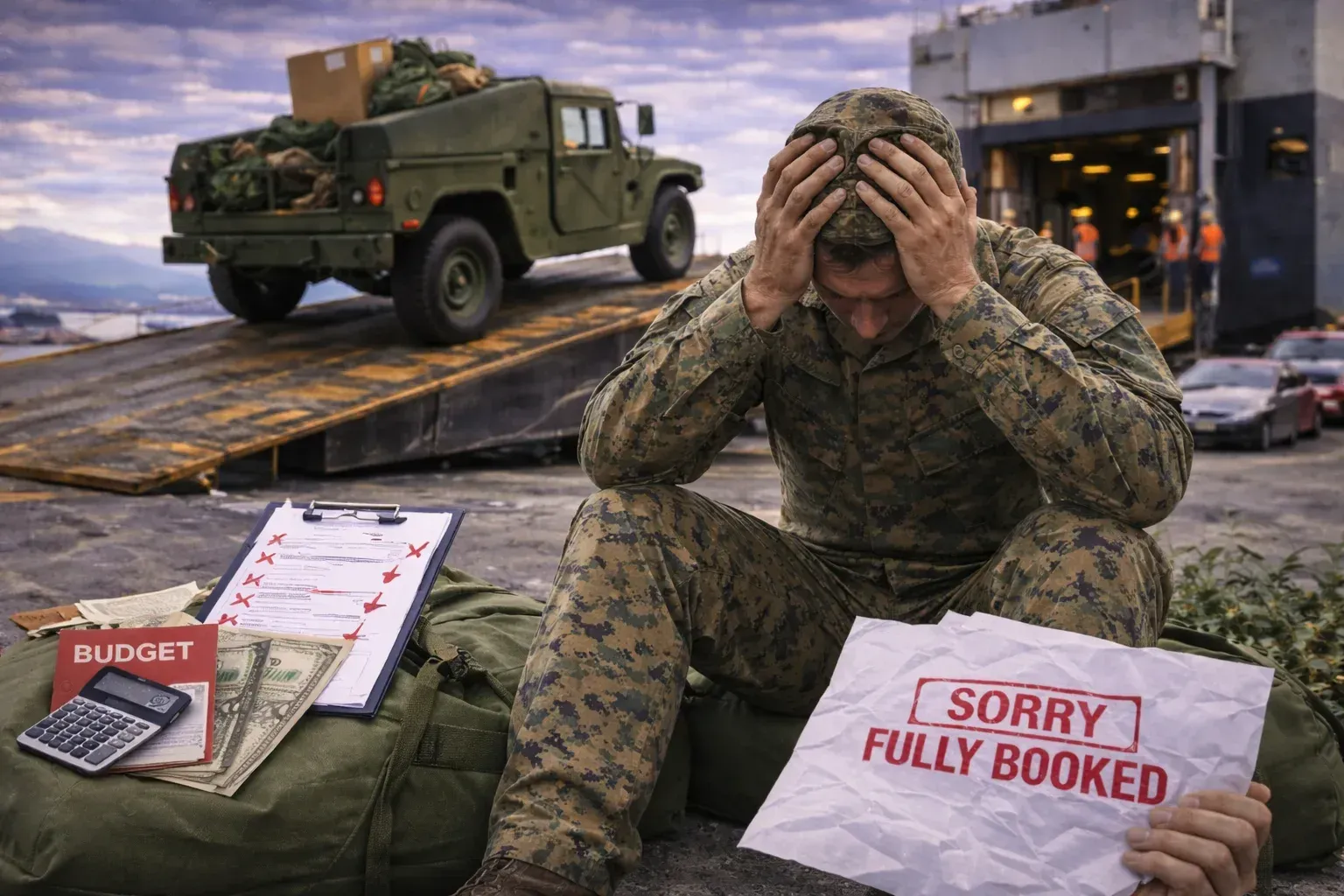
- Seasonal demand: the summer PCS military relocation season between May and August drives the highest Hawaii car shipping volumes of the year in both the inbound and outbound directions. Shipping in the fall or winter months typically offers better scheduling flexibility and more competitive pricing than peak-season periods.
Service type: Port-to-Port service where the owner delivers the vehicle to the Port of Honolulu and picks it up at the mainland terminal is consistently the lowest-cost option. Door-to-Port service, where a carrier driver picks up the vehicle from the owner’s Oahu address and delivers it to the departure terminal, adds an inland transport charge that reflects the distance between the pickup location and the Sand Island terminal.
Ship Car From Honolulu to Mainland
Virtually every vehicle that ships from Hawaii to the mainland US departs from the Port of Honolulu’s Matson terminal at Sand Island, which is the primary vehicle shipping facility in Hawaii and the departure point for all Matson vehicle carrier sailings to the West Coast. The Port of Honolulu handles the vast majority of Hawaii’s total vehicle import and export volume, and its weekly sailing schedule to Long Beach, Oakland, and Tacoma gives Hawaii-based owners more departure options than the Neighbor Island ports, which have less frequent sailings.
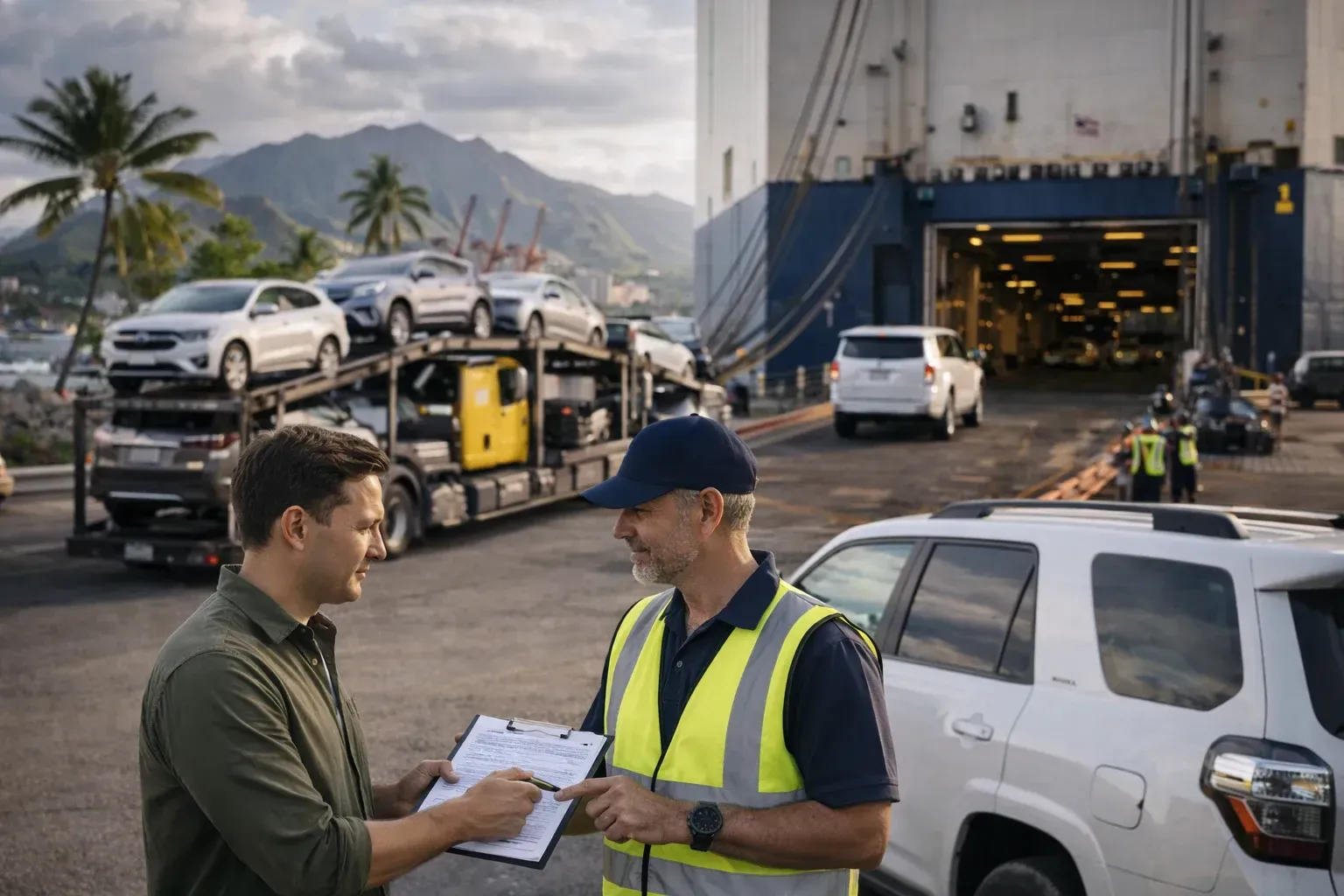
For owners who ship car from Honolulu to mainland, Port-to-Port service means delivering the vehicle to the Matson terminal at Sand Island during the acceptance window for the target sailing, typically one to two business days before the vessel’s scheduled departure. The terminal conducts a walk-around condition inspection and generates the bill of lading at check-in, which documents the vehicle’s condition at the moment of handover and serves as the baseline for any damage claims filed after mainland delivery. The vehicle is then loaded onto the vessel, crosses the Pacific over five to seven days, and is available for owner pickup at the mainland terminal after vessel arrival and port processing.
Owners shipping from Neighbor Islands, including Maui, the Big Island, and Kauai, have two options: ship directly from their island’s port if Matson operates outbound vehicle service from that terminal, or arrange inter-island transport of the vehicle to Oahu for departure from the Port of Honolulu. The most appropriate option depends on the specific island, the Matson sailing schedule for that port, and whether the inter-island transport cost and logistics justify departure from the home island versus consolidating to the Honolulu terminal. Confirming departure port options for Neighbor Island origins is a key early step in the booking process.
Read Also:
What to Prepare Before Shipping Your Vehicle: A Complete Checklist
Auto Transport Logistics for Hawaii Vehicle Shipping
The auto transport logistics of shipping a car from Hawaii to the mainland follow the same ocean freight framework as mainland-to-Hawaii shipments, with Matson Navigation Company vessels operating on weekly sailing schedules from the Port of Honolulu to West Coast arrival terminals. Understanding the sequential steps of the auto transport logistics process helps owners plan their departure timeline accurately and avoid the most common causes of delay.
- Booking and scheduling: the first step is confirming a departure date and vessel sailing with your chosen carrier. Matson operates weekly departures from Honolulu to each West Coast port, and the vehicle must be accepted at the terminal within the acceptance window for the target sailing, typically one to two business days before vessel departure. Booking at least two to three weeks in advance ensures access to your preferred sailing date and gives adequate time to gather documentation and prepare the vehicle.
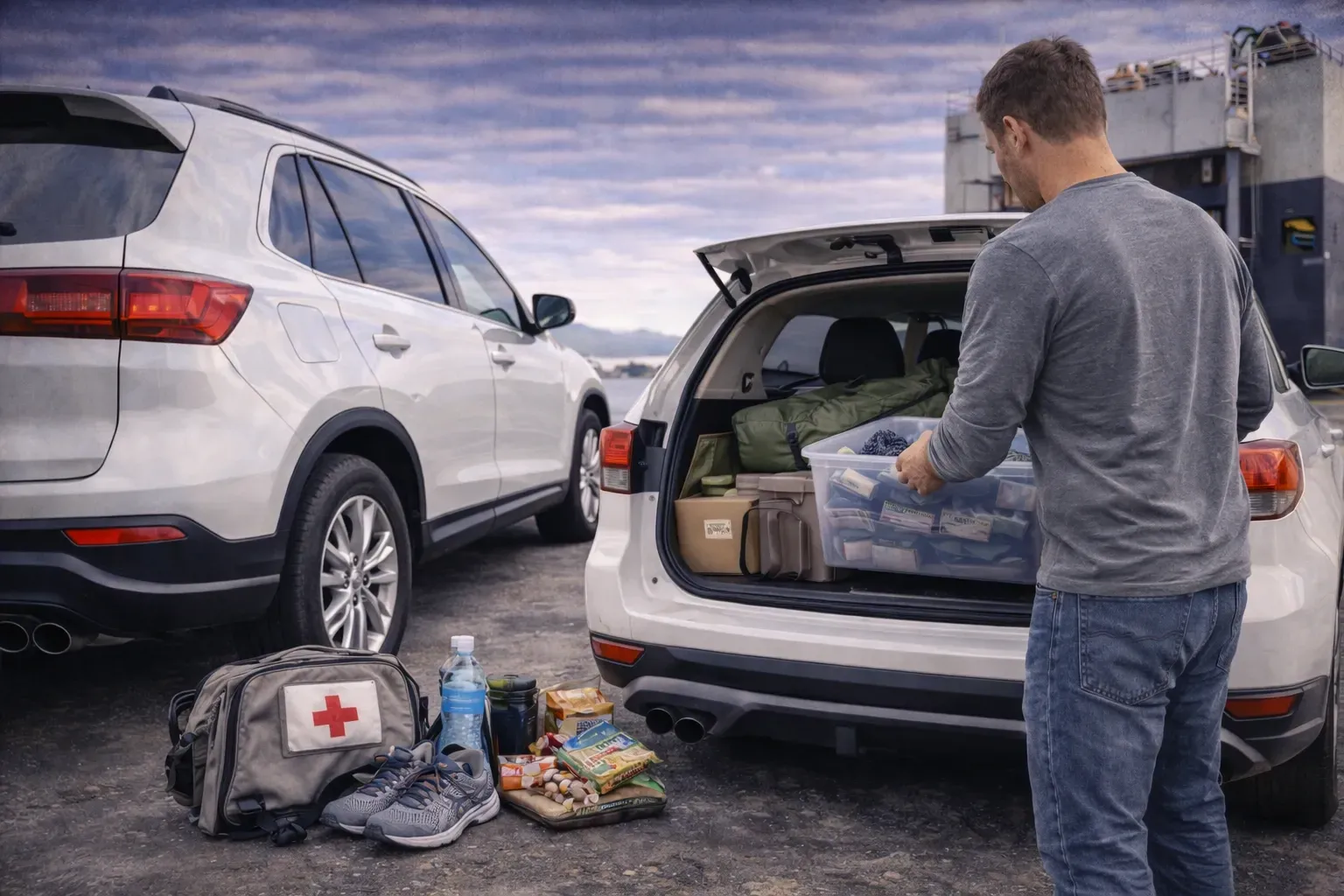
- Vehicle preparation and port delivery: clean the vehicle thoroughly, remove all personal belongings, reduce fuel to one quarter tank or less, and confirm the vehicle is in operable condition for drive-on loading. Take independent timestamped photographs of all exterior surfaces and the odometer before delivering to the terminal. Deliver the vehicle during the acceptance window with all required documents: vehicle title or registration, valid photo ID, and lien authorization letter if the vehicle is financed.
- Bill of lading and condition inspection: at the terminal, an inspector conducts a walk-around condition assessment and generates the bill of ladingdocumenting any pre-existing damage. Review every notation carefully before signing. The bill of lading you receive at Honolulu check-in is the document you will need to present at the mainland arrival terminal for vehicle release.
- Ocean crossing and arrival notification: your shipping coordinator will confirm vessel departure and provide an estimated mainland arrival date. The ocean crossing from Honolulu to West Coast ports takes approximately five to seven days. After vessel arrival, the mainland terminal processes the unloading sequence and notifies you when the vehicle is available for pickup, typically one to two business days after vessel arrival.
- Mainland port pickup: bring the original bill of lading and valid photo ID to the mainland terminal to claim the vehicle. Inspect the vehicle thoroughly before leaving the terminal and note any transport-related damage on the delivery documentation before signing the delivery receipt. Damage noted on the delivery receipt is a prerequisite for filing a successful damage claim with the carrier.
Vehicle Shipping Insurance Explained
Vehicle shipping insurance is the coverage that protects your vehicle’s value against damage that occurs while it is in the carrier’s custody during the Hawaii-to-mainland ocean transport process. Understanding what vehicle shipping insurance covers, what it excludes, and where supplemental coverage may be appropriate is important for any owner shipping a vehicle across the Pacific, where the ocean transit introduces risks that differ from domestic land-only auto transport.
Every legitimate Hawaii car shipping company carries cargo liability insurance that covers vehicles in their possession against damage caused by the carrier’s negligence during loading, ocean transit, and unloading. This baseline cargo liability coverage applies automatically to every vehicle shipped without requiring any additional action by the owner. However, the coverage limit and deductible terms vary across carriers, and owners should confirm the specific per-vehicle coverage limit and deductible before booking rather than discovering the terms for the first time after a damage event occurs.
- What vehicle shipping insurance typically covers: damage caused by the carrier’s negligence during loading and unloading operations, damage resulting from vessel motion or weather conditions during the ocean crossing, theft while the vehicle is in the carrier’s custody at the terminal or on the vessel, and fire damage occurring during transport. Coverage applies from the moment the vehicle is accepted at the Port of Honolulu through delivery at the mainland arrival terminal.
- What vehicle shipping insurance typically excludes: any damage documented as pre-existing on the bill of lading at Honolulu check-in, mechanical failures or breakdowns that are not caused by carrier handling, damage caused by personal items left inside the vehicle contrary to carrier requirements, and cosmetic wear that occurs during normal transport. Pre-shipping photography and careful bill of lading review at check-in are the owner’s primary protections against disputes about pre-existing versus transport-caused damage.
- Supplemental marine cargo insurance: owners of classic cars, high-value vehicles, and modified builds whose market value exceeds the carrier’s standard cargo liability limit can purchase supplemental marine cargo insurance through the shipping company or through independent marine insurance providers. Supplemental coverage closes the gap between the carrier’s standard limit and the vehicle’s full replacement value and provides agreed-value protection that is more appropriate for non-standard vehicles than standard market-value coverage.
- Personal auto insurance during ocean transport: some personal auto insurance policies extend coverage to vehicles during ocean transport, while others explicitly exclude it. Confirming the coverage position of your existing policy before the shipment departs may eliminate the need for supplemental coverage or may reveal a gap that supplemental coverage should address.
Tips to Reduce Hawaii Car Shipping Cost
While the ocean freight component of the Hawaii car shipping cost is largely fixed by market rates on the Honolulu to mainland corridor, several strategies reduce the total cost to ship car from Hawaii without compromising service quality or vehicle protection.
- Book two to three weeks in advance: securing your vehicle’s sailing slot well before the target departure date gives you access to standard pricing and the full range of available sailing dates. Last-minute bookings during high-demand periods may require premium pricing to secure available vessel space and carrier scheduling.
- Choose Port-to-Port service: delivering the vehicle to the Matson terminal at Sand Island yourself and picking it up at the mainland arrival terminal yourself eliminates land transport charges on both ends of the journey. For owners who can get to the Honolulu terminal independently and who are relocating to a mainland location within practical distance of a West Coast arrival port, Port-to-Port is consistently the lowest cost to ship car from Hawaii option available.
- Avoid the summer PCS peak: the May through August military relocation season is the highest-demand period for Hawaii vehicle shipping in both directions. Shipping in the fall, winter, or early spring months typically offers better pricing and scheduling availability. Owners with flexibility in their departure date should consider timing the shipment outside the peak season window.
- Select the optimal mainland arrival port: choosing the arrival port that is closest to the final mainland destination minimizes or eliminates the inland transport cost for the second leg. For a vehicle going to the San Francisco Bay Area, Oakland is the more economical arrival port than Long Beach. For Pacific Northwest destinations, Tacoma eliminates the need for additional northbound land transport from a California arrival port.
- Prepare documents and the vehicle before the acceptance window: documentation delays at the terminal, such as a missing lien authorization letter or an expired registration, can prevent vehicle acceptance and cause the shipment to miss its target sailing, resulting in a week’s storage fee and rebooking on the next available vessel. Completing all preparation steps, including document gathering, vehicle cleaning, and personal belongings removal, before the port delivery date prevents these avoidable costs.
How Car Shipping Hawaii Helps With Vehicle Transport
Car Shipping Hawaii is a veteran-owned vehicle shipping company based in Honolulu and a Matson-certified shipping specialist with direct carrier access to weekly sailings from the Port of Honolulu to Long Beach, Oakland, and Tacoma. While our name reflects our Hawaii focus, we handle vehicle transport in both directions, helping customers ship vehicles from the mainland to Hawaii and from Hawaii back to the mainland with the same standard of service, documentation support, and milestone communication.
For outbound Hawaii-to-mainland shipments, our transport coordinators walk customers through every preparation step, including the documents required for Honolulu port check-in, the vehicle condition photography process that protects owners in any damage dispute, and the fuel and personal belongings requirements that prevent delays at the Sand Island terminal. We provide departure confirmation, vessel sailing updates, and mainland arrival notification for every vehicle we ship, so customers always know exactly where their vehicle is in the transport sequence.
We offer Port-to-Port service for customers who can self-deliver to the Sand Island terminal and self-pickup at the mainland arrival port, Door-to-Port service for customers who need carrier pickup from their Oahu address, and enclosed transport for classic cars, high-value vehicles, and modified builds requiring maximum ocean transit protection. Military families completing PCS moves from Hawaii to mainland installations can access our dedicated military shipping service, which is structured around PCS order timelines and documentation requirements. Our team is available Monday through Friday, 8AM to 6PM HST.
Final Thoughts on Shipping a Car From Hawaii to Mainland
- The cost to ship car from Hawaii to mainland US on the Port-to-Port RoRo route typically ranges from one thousand to fifteen hundred dollars for a standard passenger vehicle to West Coast arrival ports, with higher total costs for larger vehicles, enclosed container service, and shipments requiring inland land transport from the West Coast arrival port to the final mainland destination.
- Shipping car from Hawaii to California is the most popular and most cost-effective route, served by weekly Matson sailings toLong Beach and Oakland that give owners the highest frequency of departure options and the most competitive pricing on any Hawaii-to-mainland corridor.
- Auto transport logistics for Hawaii-to-mainland shipments follow the same Port of Honolulu departure, bill of lading check-in, Matson ocean crossing, and mainland terminal pickup sequence as the inbound direction, with the same preparation steps, documentation requirements, and milestone communication framework applying to both route directions.
- Vehicle shipping insurance covering carrier-caused damage during loading, ocean transit, and unloading is standard with all legitimate Hawaii car shipping companies; supplemental marine cargo coverage is recommended for vehicles whose replacement value exceeds the carrier’s standard liability limit, and owners should confirm whether their personal auto policy extends to ocean transit before booking.
- Reducing total Hawaii car shipping cost is most effectively achieved by booking two to three weeks in advance, choosing Port-to-Port service where self-delivery and self-pickup are practical, avoiding the May through August peak season where possible, selecting the mainland arrival port closest to the final destination, and completing all document gathering and vehicle preparation before the port acceptance window to prevent sailing misses and storage fee accumulation.
Moving from Hawaii to the mainland? Car Shipping Hawaii helps transport your vehicle safely and efficiently so you can focus on your relocation.
Camilo Jaime
Camilo Jaime is an experienced Hawaii auto transport specialist with deep knowledge in car shipping logistics, Matson vessel coordination, port protocols, military PCS relocations, and a wide range of ocean freight services. He understands the challenges that come with shipping vehicles to and from the Hawaiian islands for families, service members, and businesses alike.
Through his blogs at Car Shipping Hawaii, Camilo shares practical shipping tips, cost-saving advice, and insights drawn from real coordination experience. His goal is to help readers make confident decisions about Hawaii vehicle transport and learn straightforward ways to navigate port requirements, sailing schedules, and service options. With a clear and honest writing style, Camilo focuses on real solutions that make the car shipping process simple, stress-free, and affordable for every customer.
You Might Also Like