
Hawaii's Public Transportation System: A Guide for New Residents
This is paragraph text. Click it or hit the Manage Text button to change the font, color, size, format, and more. To set up site-wide paragraph and title styles, go to Site Theme.




Moving to Hawaii? Most people assume life in the islands is entirely about surfboards and convertibles. But if you are moving here to live and work, you need to know the practical logistics of getting around.
While shipping your vehicle is usually necessary for island life (especially for weekend exploring and grocery runs), Hawaii—specifically Oahu—has a surprisingly robust public transit system that can save you thousands in parking fees and gas money if used correctly.
Here is the real breakdown of how to navigate the islands without a car, and when you’ll definitely need one.
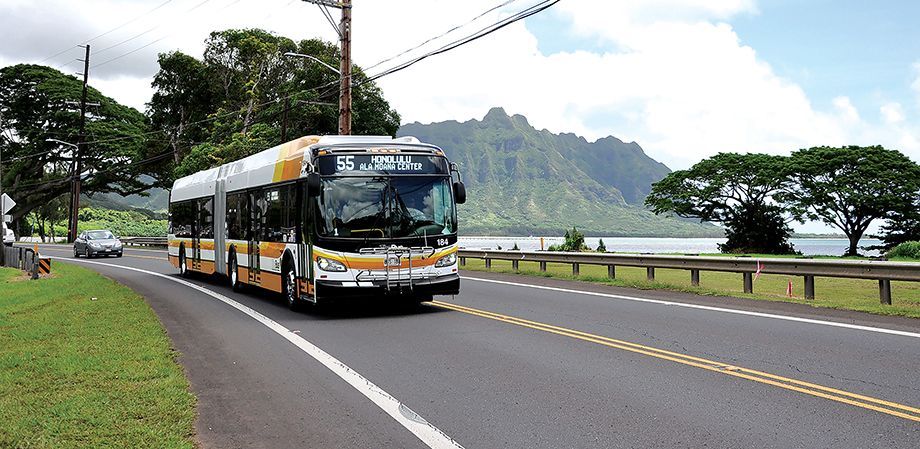
Unlocking Hawaii's Public Transportation System: A Guide for New Residents
In this comprehensive guide, we will explore Hawaii's public transportation system, providing valuable insights and tips for new residents.
Oahu: The "TheBus" and The Rail (Skyline)
If you are moving to Honolulu, you have the best transit options in the state. Oahu is the only island where living "car-lite" is genuinely feasible.
TheBus (Yes, that’s the official name)
Oahu’s bus system is widely recognized as one of the best in the nation. It covers almost the entire island, from the urban center of Honolulu to the rural North Shore.
- The Cost: As of 2026, a standard one-way fare is $3.00.
- The Secret Weapon (The HOLO Card): Do not use cash. To ride TheBus effectively, you need a HOLO Card. This is a smart card you can buy at ABC Stores, 7-Eleven, or Times Supermarkets.
- Fare Capping: This is a huge perk for residents. You are never charged more than $7.50 per day or $80.00 per month, no matter how many times you tap. Once you hit that cap, the rest of your rides are free.
- Transfers: The HOLO card automatically handles transfers (free within 2.5 hours). Paper transfers are no longer issued.
Skyline (The Rail)
New residents may not know that Oahu now has a rail system.
The Route: Currently, Phase 1 connects Kapolei (West Oahu) to the Aloha Stadium area. It does not yet go all the way into downtown Honolulu or Waikiki, though future phases are under construction.
Best For: Commuters living in the "Second City" (Kapolei) who want to skip the H-1 freeway traffic for part of their journey.
Don't guess the schedule. "Island time" is real, but the bus trackers are accurate.
- DaBus2: The app locals use to see real-time arrival of buses.
- Google Maps: Excellent for trip planning across bus and rail.
The Neighbor Islands: Maui, Kauai, and The Big Island
If you are moving to a neighbor island, the reality is different. While bus systems exist, they are designed more for basic connectivity than daily convenience.
The Big Island (Hele-On Bus)
The "Hele-On" bus covers massive distances on the Big Island.
- The Reality: Routes are infrequent. A bus might only come a few times a day. It is useful for getting between Hilo and Kona, but difficult to rely on for a timed commute.
- Cost: Hele-On has experimented with fare-free ridership in recent years. Check the official Hele-On website for the current status upon your arrival.
Maui (Maui Bus)
- The Service: Costs generally run $2.00 per ride or $4.00 for a daily pass. The bus is reliable for getting between major towns like Kahului, Kihei, and Lahaina/Kaanapali, but it does not service residential backroads or upcountry hiking spots well.
Kauai (The Kauai Bus)
- The Service: Similar to Maui, it connects the main towns (Lihue, Kapaa, Hanalei). It is clean and friendly, but service stops relatively early in the evening.
Why You Still Need to Ship Your Car
After reading about the bus, you might wonder: "Do I even need to ship my car?"
For 95% of residents, the answer is yes.
While public transit is excellent for the M-F commute (saving you high monthly parking costs in downtown Honolulu), Hawaii is an outdoor state.
- Access: The best hikes, secluded beaches, and Costco runs are rarely convenient by bus.
- Time: A 20-minute drive can turn into a 90-minute bus ride with transfers.
- Island Hops: You cannot take your car on a ferry between islands. You will generally keep your car on your "home" island and rent cars when visiting others.
The Pro Strategy: Many residents use TheBus or Skyline for work to save money and avoid traffic stress, but keep their personal vehicle for evenings and weekends to truly enjoy the island lifestyle.